





Word Count: About 900 words
Reading Time: About 5 minutes
When people start running, they often assume there is one rule: Once you start running, you should keep running.
But that mindset can make running much harder to maintain. Instead of pushing through until you are exhausted, you can slow down, walk for a while, and then start running again.
This is the idea behind the Run-Walk-Run Method developed by Jeff Galloway. The goal isn't simply to run less. It is to alternate running and walking to manage fatigue and make your workout easier to complete.
1、Do You Really Have to Run From Start to Finish?
When people first start running, they often assume there is one “standard answer”: you have to run from start to finish without stopping.
But this idea itself can limit the possibilities of running.
The Run-Walk-Run Method is meant to break this way of thinking: Running doesn’t mean running nonstop, and taking a walking break doesn’t mean you’re being lazy.
Instead, what often affects whether you can keep running is not whether you stop, but whether you adjust your pace at the right time.
In this method, running and walking are equally important parts:
Run for a while → walk for a while → run again → repeat.
The key is not to “keep going without stopping,” but to switch actively. When you start to see running this way, it becomes less about pushing through and more about managing your rhythm.
Walking isn’t an interruption. It’s part of the rhythm—a way to recover and keep moving forward.
Once you accept this, the pressure of running can drop significantly—you no longer need to “push through,” but can simply “adjust.”

Image Source & Copyright Notice
This image is sourced from the book Are You Really Going to Run? That’s Great! and is used for informational and reference purposes only. The copyright of the original image belongs to the book’s author and the respective copyright holders.
2、Why Can Walking Earlier Help You Run Longer?
Running creates more impact and muscle demand, while walking is generally easier to sustain for longer periods.
Instead of waiting until your muscles are already very tired, adding walking intervals earlier gives you a chance to adjust your pace and manage fatigue.
Run-Walk-Run can help you:
- Break a longer workout into smaller, more manageable sections
- Control fatigue more proactively
- Reduce the feeling of continuously building exhaustion
- Finish your workout feeling more comfortable
- Adjust your running-to-walking ratio based on how you feel that day
That is also why Run-Walk-Run isn't only a beginner's transition method.
Experienced runners can also use different run-walk ratios to manage their training pace and fatigue.
You don't have to push yourself to exhaustion every time you run.
3、How to Start Your First Run-Walk-Run Workout
If you are new to running, keep your first goal simple.
STEP 01
Walk for a Few Minutes
Start with an easy walking pace to warm up and get your body moving.
STEP 02
Add Short Running Intervals
Try running for 5–10 seconds, then return to walking.
STEP 03
Repeat 3–6 Sets
If you feel good, keep the same ratio. If you feel tired, there is no need to force yourself to continue. Simply extend the walking interval.
STEP 04
Gradually Adjust the Ratio
Once running for 30 seconds feels comfortable, keep the running time and gradually shorten the walking interval. After that, you can slowly increase your running time.
Whenever you feel noticeably fatigued, it's okay to walk longer.
The goal isn't to prove how much fatigue you can tolerate. It is to gradually help your body adapt to running.
4、You Can Practice Run-Walk-Run at Home
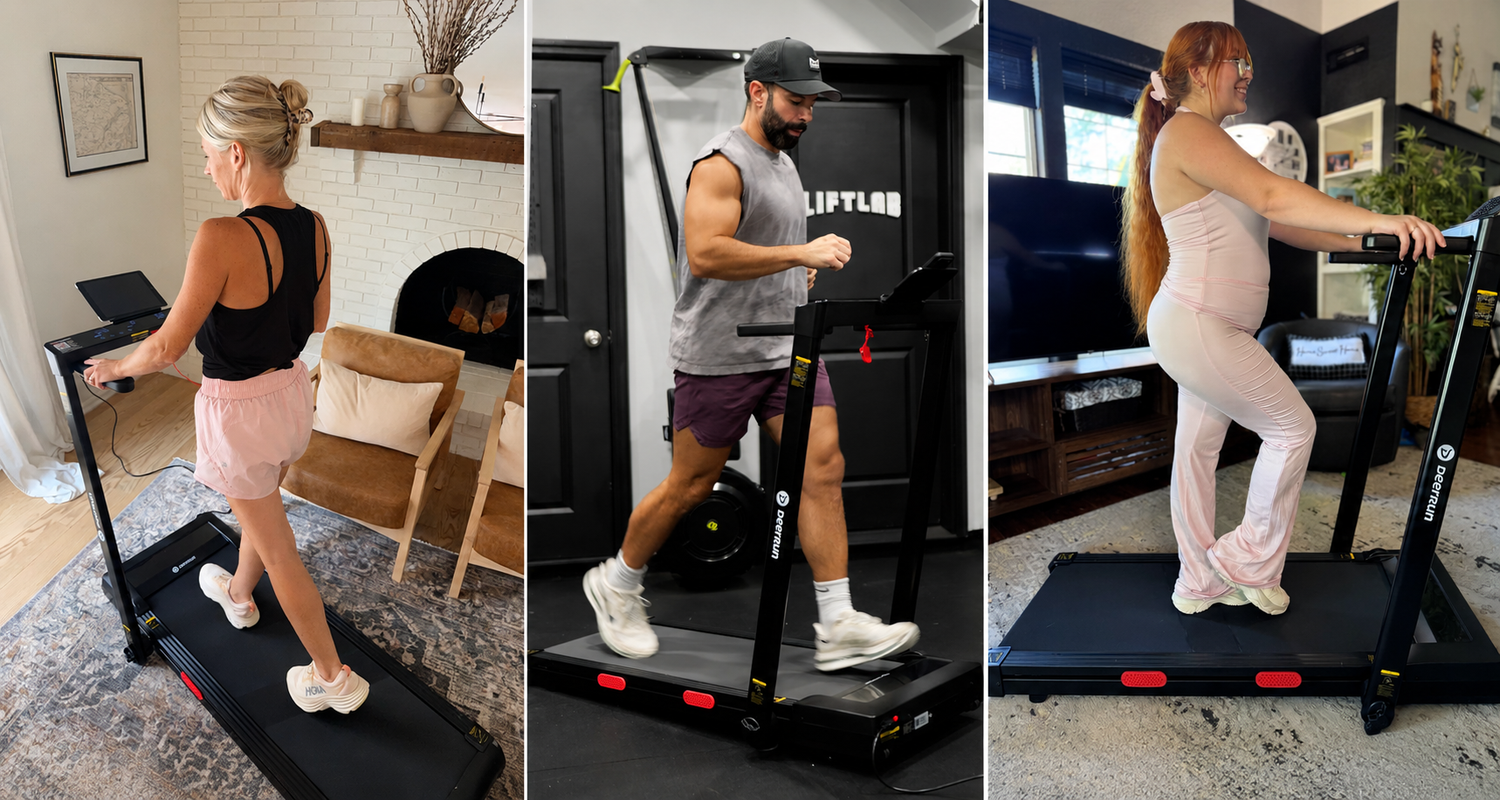
If you want to train without worrying about weather, schedules, or outdoor conditions, a treadmill can be a convenient tool for practicing this method at home.
The DeerRun Z10 Pro features a 12% auto incline, allowing you to adjust the challenge as your training progresses.
You can start with walking as a warm-up, add a short running interval, and then reduce the speed to return to walking.
As your fitness improves, you can gradually increase your running time. If you are feeling tired on a particular day, you can simply run less and walk more.
Your training can adjust to how your body feels instead of forcing your body to follow a fixed number.

5、Don’t Think of Walking as Pausing Your Workout
The most important idea behind Run-Walk-Run is simple:
Walking isn't a break from training. It is part of the training.
You don't need to chase a faster pace or longer distance every time. You also don't need to wait until you are exhausted before stopping.
Run for a while. Walk for a while. Then run again.
Breaking your workout into smaller, more manageable intervals can help you manage fatigue and reduce the mental pressure that often comes with running.
Whether you are just starting out or already have some running experience, you can find a run-walk ratio that works for your current fitness level.
Want More Running Tips?
Subscribe to the DeerRun Newsletter for more treadmill training methods, at-home workout ideas, and practical running tips.
Subscribe to DeerRun UpdatesYou Don't Have to Run Nonstop to Go Further
Running doesn't have to mean staying in motion from the first minute to the last.
Sometimes, walking before you become exhausted can help you conserve energy and complete more of your workout.
Start with 5–10 seconds of running + 1–2 minutes of walking, then gradually adjust the ratio based on how you feel.
The DeerRun Z10 Pro can help you practice this Run-Walk-Run approach at home with a flexible training setup.
Don't worry about running faster right away.
First, find a pace you can keep coming back to.
Find a Running Rhythm That Works for You
Running doesn’t have to mean going nonstop or pushing yourself to exhaustion.
Try Run-Walk-Run and adjust your pace based on how you feel, making every workout easier to stick with.
Start your Run-Walk-Run routine with the DeerRun Z10 Pro.
Ready to Find Your Running
Start your next workout at home.


Leave a comment
This site is protected by hCaptcha and the hCaptcha Privacy Policy and Terms of Service apply.