






Word Count: ~1,150 words Estimated Reading Time: ~5 minutes
If you buy a walking pad based on just one person's habits, the other two family members will likely try it once or twice and then let it collect dust. At DeerRun, we've heard this feedback countless times: "It's not that we don't want to use it, it's just that this machine only fits me." These real voices made us think deeply during product design: How can we make the same machine adapt to completely different usage habits within one family?
With this goal in mind, DeerRun has created different configuration combinations across running belt sizes, handrail designs, and speed modes. Our purpose is to help ordinary families find fitness equipment that suits everyone's needs, so you can buy with confidence and keep using it consistently.
1. Is the Belt Size Suitable? Ensuring Everyone Walks Comfortably
1.1 Different Heights and Strides: Why Belt Length Matters
A common scenario: A 5'5" mother buys the base model first and has a great experience. However, when her 6'0" son comes home and tries it, he says his stride feels restricted and stops using it.
To address this, DeerRun offers two belt lengths in the Q2 Urban series. Both have the same width but differ in length:
| Model | Belt Size (L × W) | Recommended Height Limit |
|---|---|---|
| Q2 Urban | 35.43 × 14.96 inches | 5'9" |
| Q2 Urban Plus | 39.37 × 14.96 inches | 6'2" |
Note: Height ranges are for reference only. Actual experience also depends on personal stride, walking speed, and habits.
The Plus version is about 4 inches (10 cm) longer than the base model, accommodating heights up to 6'2". DeerRun launched the Plus version for a simple reason: to let taller family members walk naturally, instead of changing their walking habits to accommodate the machine.
1.2 Belt Width and Weight Capacity: The Foundation for the Whole Family
Width affects the space under your feet. If you constantly adjust your steps while walking, the belt might be too narrow and uncomfortable for long-term use.
When multiple people take turns using it, weight capacity is even more critical. For example, Dad is 190 lbs, Mom is 130 lbs, and the college kid is 150 lbs. They are all well below the 300 lbs limit, but it's always best to check against the heaviest person in the house for peace of mind.
The maximum weight capacity for both DeerRun Q2 Urban and Q2 Urban Plus is 300 lbs. Before buying, confirm if your heaviest family member is within this range.
| Model | Belt Size (L × W) | Max Weight Capacity |
|---|---|---|
| Q2 Urban | 35.43 × 14.96 inches | 300 lbs |
| Q2 Urban Plus | 39.37 × 14.96 inches | 300 lbs |
Note: Belt length determines stride comfort, width determines foot space, and weight capacity determines if the machine meets everyone's basic requirements. Look at all three together.
DeerRun wants to ensure that when a family takes turns using the machine, no one has to compromise due to weight differences.
2. Does the Handrail Configuration Fit Everyone? Balancing Experience and Storage
Different family members have different needs for handrails. Some prefer holding onto a handrail for extra support, while others prefer a handrail-free design to slide the machine under a desk.
Therefore, when choosing, don't just look at whether it has a handrail. Consider your family's habits, device placement, and storage. To meet these diverse needs, DeerRun offers both handrail-free and full-handrail configurations for the Q2 Urban.
2.1 Do Seniors Need a Handrail?
If you have older family members or someone who feels more comfortable holding onto something while walking, a handrail design is a better fit. It provides a clear gripping point for support when getting on, off, and during the walk.
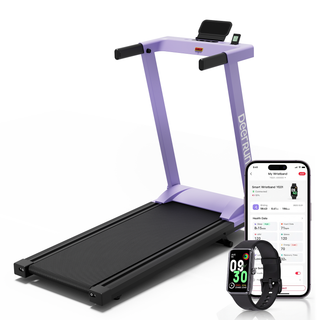
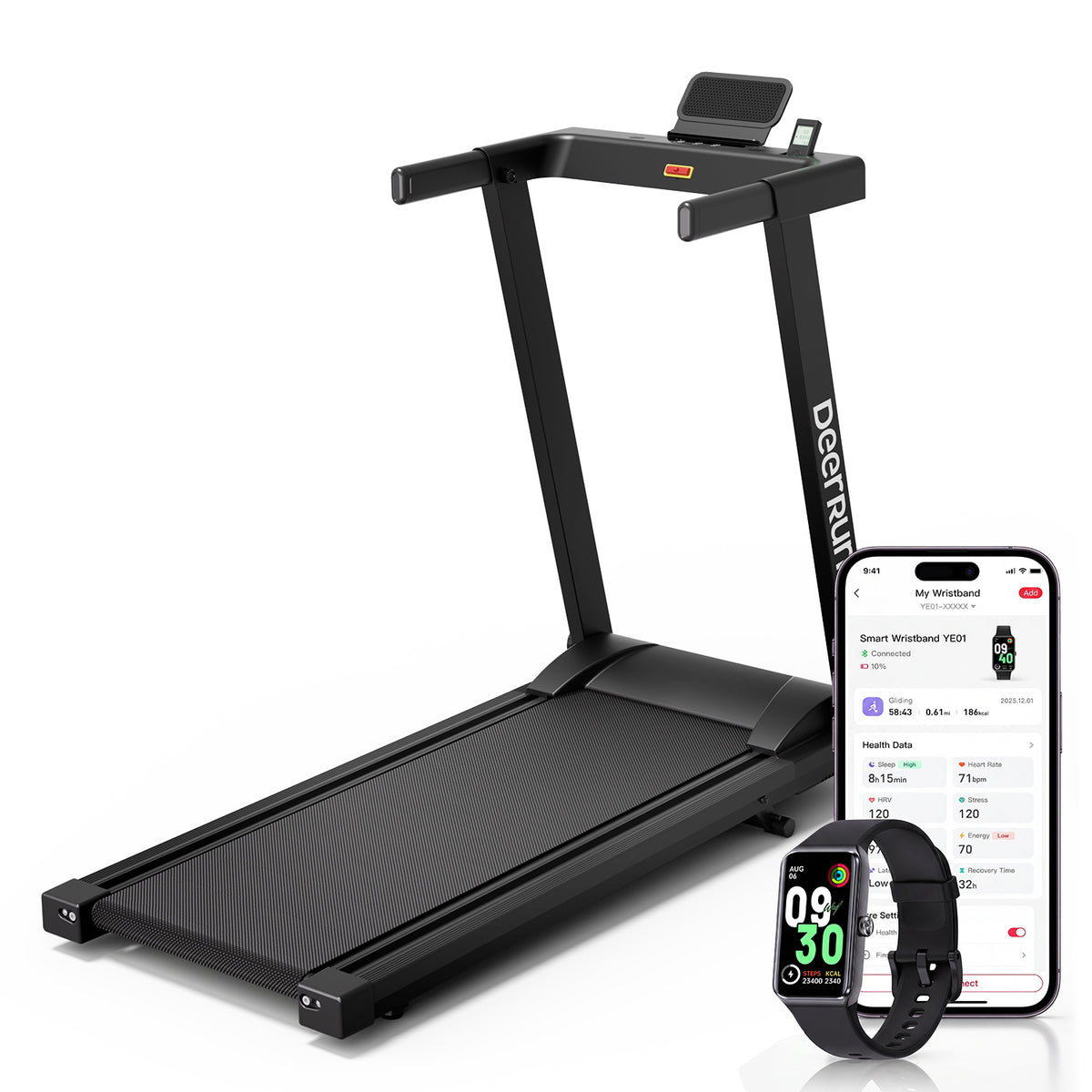
The DeerRun Q2 Urban with Handrail adds a full-length handrail to the base model, perfect for users wanting extra support. In contrast, the handrail-free version has a cleaner design and is more suitable for independent walkers who want to use it under a desk.
| Model | Handrail Configuration | Key Features |
|---|---|---|
| Q2 Urban | No Handrail | Compact design, ideal for under-desk walking and easy storage |
| Q2 Urban with Handrail | Full-length Handrail | Provides a grip point for users needing extra hand support |
Please note: Handrails provide physical support but cannot replace the user's own balance and safety judgment. If you have seniors at home, consider their physical condition and balance abilities alongside the handrail configuration.
2.2 Flexible Scenarios: Is It Easy to Place and Store?
Many families focus on the machine's weight when buying but overlook how easy it is to store after use. In reality, if you have to spend time moving the equipment every time, it will reduce your usage frequency over time.
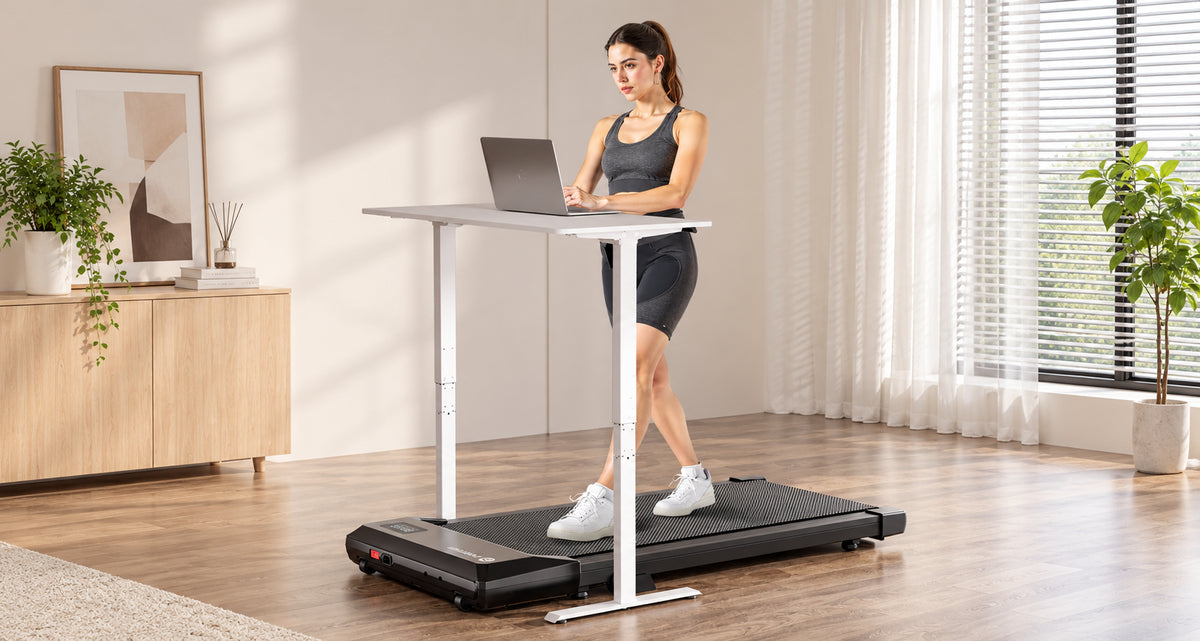
If you plan to use it while working, pay attention to the machine's thickness, weight, and how well it fits under a desk. The DeerRun Q2 Urban features a handrail-free design, is approximately 3.94 inches thick, and weighs about 35 lbs. It is perfect for adding daily steps under a desk while minimizing spatial footprint.
With a compact body design, DeerRun aims to reduce the space the device takes up, making it easier to integrate walking into your work and daily life without rearranging your home every time.
3. Walking or Jogging? Understanding the Workout Modes
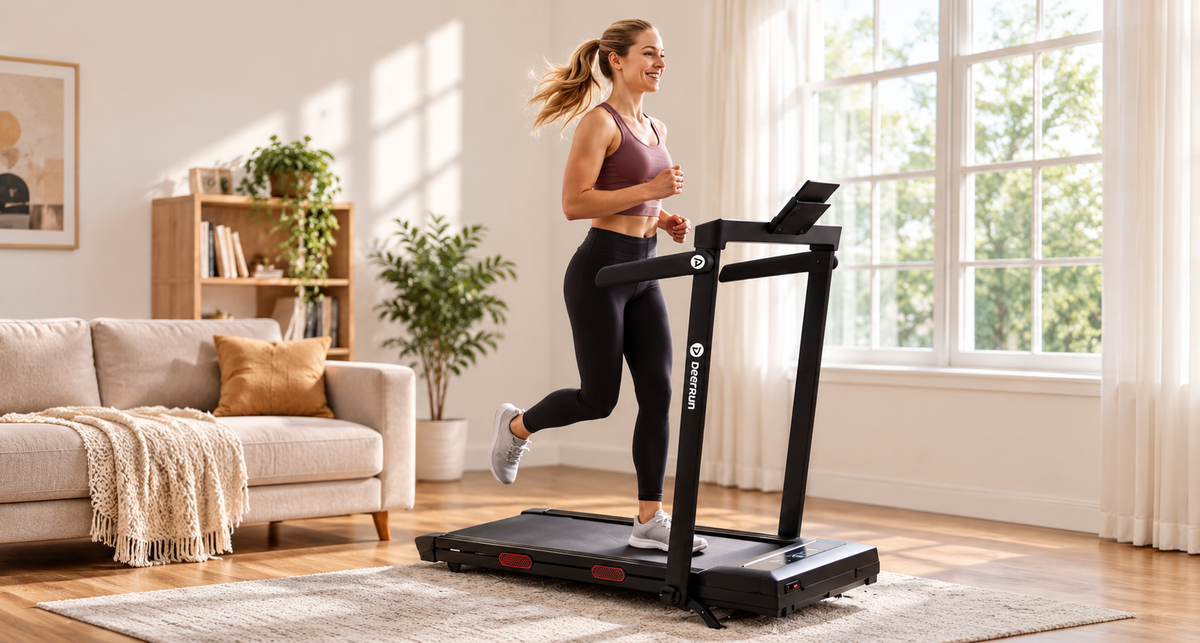
If the family's fitness needs are mainly daily walking, a standard walking pad may suffice. However, if someone wants incline training or plans to jog at home, you need to compare the top speeds and workout modes further.
3.1 For Daily Light Exercise: Don't Blindly Chase High Speeds
If the main needs are after-dinner walks, daily activity, or walking while working from home, you don't necessarily need a high top speed. DeerRun's pure walking models have a max speed of 3.8 mph. The main differences lie in belt size and incline configuration:
| Model | Max Speed | Incline | Primary Use Case | Comparable Outdoor Activity |
|---|---|---|---|---|
| Q2 Urban | 3.8 mph | 7% Manual | Daily walking, under-desk use | Flat slow walking |
| Q2 Urban Plus | 3.8 mph | 7% Manual | Daily walking, users needing a longer belt | Flat trail walking, more spacious stride |
| Z10 | 3.8 mph | 12% Auto | Daily walking, incline training | Brisk hill walking, closer to climbing |
If you want to increase intensity during your walk, pay attention to the incline. Manual incline is suitable for setting it beforehand and walking at a fixed intensity, while auto incline makes it easy to adjust during the workout without stopping.
If no one in the family plans to run, you don't need to choose a walk-and-run model just for the higher speed. Belt size suitability, incline meeting training needs, and daily operation convenience are more important.
3.2 For Jogging Needs: Prioritize Models with Running Modes
If someone wants to jog occasionally besides daily walking, DeerRun's walk-and-run models support both modes, with a max speed of 7.5 mph. Take the Z10 Pro and A6 Plus as examples:
| Model | Max Speed | Incline | Suitable Workout Needs |
|---|---|---|---|
| Z10 Pro | 7.5 mph | 12% Auto | Daily walking, incline training, and running |
| A6 Plus | 7.5 mph | 5% Manual | Daily walking and light jogging |
For family users, first distinguish the main fitness needs. If walking is the priority, compare belt size and incline. If running is needed, prioritize confirming if the device supports the corresponding running mode and speed range to avoid realizing later that it can't meet some family members' plans.
4. FAQs About Sharing a Walking Pad
4.1 How many people can use one walking pad?
Multiple people taking turns is no problem; there is no fixed limit. What really matters is whether everyone's weight is within the capacity, the belt size fits each person, and the speed range meets individual needs. If family members vary greatly in height, weight, and habits, double-check these before buying. DeerRun lists belt size, weight capacity, and speed range on all product pages specifically to help users compare.
4.2 Is choosing a handrail model enough for seniors?
Not necessarily. Handrails provide extra support but cannot replace balance or eliminate risks. Besides the handrail, consider the senior's mobility, ease of operation, ability to start at very low speeds, and whether someone can assist them. If there are significant mobility or balance issues, consult a medical professional first.
4.3 If someone wants to run, should we buy a walking pad or a treadmill?
It depends on the family's actual needs. If it's mostly slow walking and adding activity during work or rest, a standard walking pad is usually enough. If someone wants to jog or train more regularly, choose a product that explicitly supports running modes and check top speed, belt size, capacity, and motor. For families needing both, a walk-and-run model is more suitable. DeerRun differentiates pure walking pads from walk-and-run models precisely so families can choose based on actual needs, rather than finding out it's insufficient after buying.
5. A Walking Pad for the Whole Family: The Core is Choosing the Right Configuration
So, can one walking pad really work for the whole family? Yes, provided it meets the actual needs of most family members, rather than just one person.
You don't necessarily need the one with the most features, highest speed, or highest price. What's truly worth choosing is a device that balances the family's main needs, is convenient to use at home, and everyone is willing to use long-term.
This is exactly what DeerRun has always been doing: helping ordinary families find fitness equipment that suits everyone's needs, so you can buy with confidence and keep using it.


Leave a comment
All comments are moderated before being published.
This site is protected by hCaptcha and the hCaptcha Privacy Policy and Terms of Service apply.