





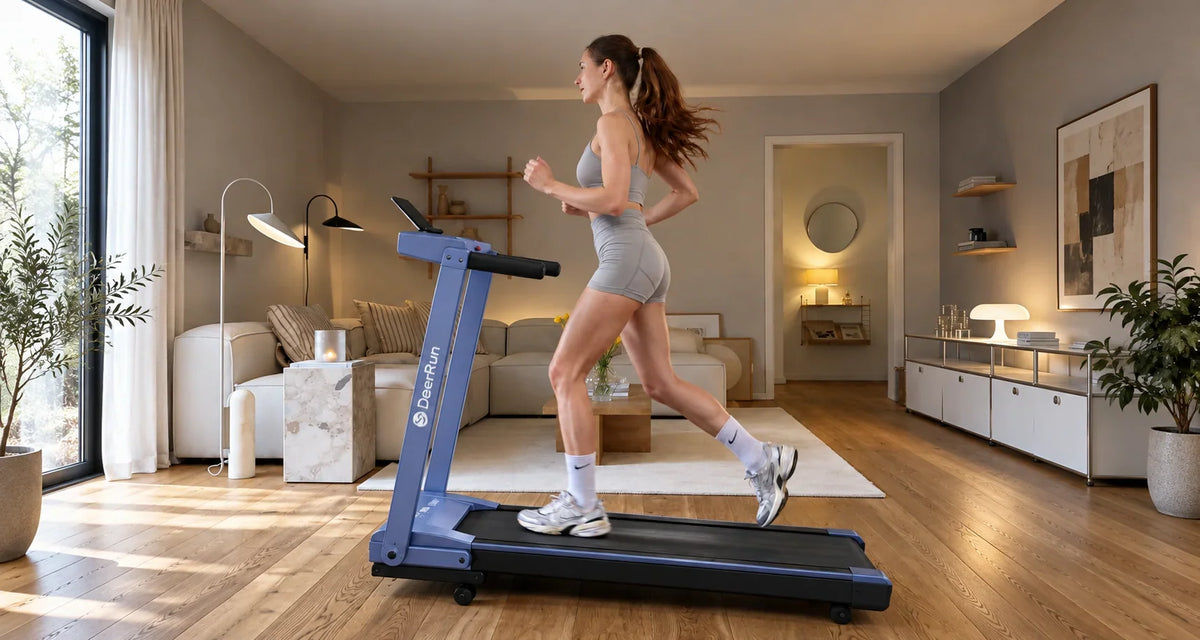
Word Count: ~1,350 words Estimated Reading Time: ~6 minutes
If you have elderly family members, children, or pets at home, you absolutely cannot just look at belt size and speed when choosing a walking pad. For family members who need protection, an unsafe walking pad is a ticking time bomb. The anti-entrapment design at the rear of the machine, the gaps between moving parts, and the stability of the chassis in emergencies—these invisible details often determine the outcome when an accident occurs.
This is exactly why DeerRun insists on third-party testing by SGS. As a globally recognized authoritative inspection agency, SGS has long provided product quality and safety testing services for companies worldwide. DeerRun Q2 Urban has officially passed the dual standards of ASTM F2115-25 and ASTM F2276-23 and obtained SGS certification. This is our most reliable safety commitment to every family. Below, combined with the report, we will teach you how to identify a walking pad that is "truly suitable for the family."
1. Why Do Home Walking Pads Need to Focus on Structural Safety?
1.1 Hidden Dangers in the Home Environment
Compared to large commercial treadmills, home walking pads are usually more compact, and some models do not have traditional long handrails. While this design is convenient for storage and daily use, it also means consumers need to pay more attention to the machine's structural protection.
For example:
- Belt Entrapment Risk: There are moving parts around the rear roller and the running belt, requiring reasonable protective designs to reduce the possibility of body parts or objects coming into contact with dangerous areas.
- Gap Pinching Risk: If there are inappropriate gaps between fixed parts and moving parts of the machine, it may create a risk of pinching or crushing.
- Stability During Use: The chassis needs to remain stable when the user gets on/off the machine, walks normally, or adjusts the speed.
- Emergency Stopping Capability: If the user loses balance or needs to stop exercising immediately, the emergency stop device should be able to function.
These issues cannot be judged solely by the product's appearance; they need to be evaluated in conjunction with specific structural requirements and test results.
1.2 What Do ASTM F2115 and ASTM F2276 Focus On?
Before understanding specific test items, you can first familiarize yourself with two ASTM standards related to treadmill structural safety.
- ASTM F2115: Treadmill product specification, involving belt protection, stability, emergency stop devices, motorized drive systems, and other requirements.
- ASTM F2276: General specification for fitness equipment, involving stability, support structures, edge treatment, pinch protection, and load requirements.
These two standards focus not only on whether the treadmill can operate normally, but also on whether the product possesses corresponding safety designs during its intended use.
2. What Protective Designs Are Around the Running Belt?
2.1 Rear Roller Protection: Reducing Entrapment Risk
There is a continuously moving mechanical structure between the rear roller of the treadmill and the moving running belt. If body parts or objects approach these areas, there is a risk of entrapment.
Therefore, ASTM F2115 has clear requirements for the protection of the treadmill's rear roller area: the protective structure should reduce the risk of entrapment and function continuously under different incline and speed conditions.
In the SGS test report for the DeerRun BA series, Clause 4.2.1 of ASTM F2115-25 on page 10 shows that the test result for the rear roller protection item is Pass. The report also records that requirements such as the width of the relevant protective structure and the clearance between it and moving parts also meet the corresponding test requirements.

The significance of the test lies in: the rear roller area cannot rely solely on the user actively avoiding it; structural designs are needed to reduce the possibility of accidental contact with dangerous parts.
It should be noted that protective design does not mean children, pets, or other objects can be near a running treadmill. A safe distance should still be maintained during use.
2.2 Gap and Pinch Protection: Avoiding Dangerous Clearances
In addition to the rear roller, the gaps between the fixed housing and moving parts are equally worthy of attention.
Clause 4.4.1.1 of ASTM F2276-23 stipulates the gaps that may cause finger pinching: under applicable test conditions, if only fingers could be pinched, the spacing between relevant parts should be less than 9.5 mm or greater than 25 mm, to avoid creating dangerous gaps that easily trap fingers.
Page 3 of the SGS test report for the DeerRun BA series records that the test result for this item is Pass.
For consumers, this means that when shopping, you should not only observe the surface of the running belt, but also pay attention to the sides of the machine, around the rollers, and other accessible moving parts.
3. Is the Chassis and External Structure of the Walking Pad Stable Enough?
3.1 Stability and Support Structure Testing
The size of a walking pad is usually smaller than a traditional treadmill, but a compact design does not mean chassis stability can be ignored.
Clause 4.1 of ASTM F2276-23 requires fitness equipment to remain stable during storage, unloaded conditions, and loaded conditions for intended use; Clause 4.2.1 requires that the support structure should not suffer structural damage during normal use and when additional loads are applied by the user.
On page 3 of the SGS test report for the DeerRun BA series, the stability and support structure related items both achieved Pass.

These tests focus on whether the equipment can remain stable under specified conditions and whether the support structure can withstand the corresponding loads, rather than simply judging whether the machine wobbles when placed on the ground.
3.2 Static Load Test: Verifying the Load-Bearing Capacity of the Running Deck Structure
The treadmill will continuously bear pressure from the user during use. To evaluate the load-bearing capacity of the running deck and related support structures, the ASTM standard has set up a static load test.
According to Clause 5.1 of ASTM F2276-23 on page 6 of the SGS report, user support surfaces for consumer-grade fitness equipment need to withstand a specified static load with a loading factor of 2.5 times. The maximum user weight recorded in the report is 136 kg, so the corresponding test load is approximately 340 kg, which is about 750 lbs.
The test result for this item is Pass.
It is important to distinguish here: approximately 750 lbs is the static test load under standard-specified conditions. It does not represent the product's maximum user weight, nor does it mean the treadmill can be used long-term by a 750 lbs user. Consumers should still adhere to the maximum user weight marked on the product.

3.3 Edge, Corner, and Metal Tube End Treatment
Home walking pads are often placed in living rooms, bedrooms, or near office desks. When users get on and off the machine, or walk around it, they may also come into contact with the machine's edges and metal structures.
Clause 4.3 of ASTM F2276-23 sets requirements for edges, corners, and tube ends in accessible areas, including:
- Accessible edges should be free of burrs or sharp edges;
- Accessible corners should be rounded or chamfered;
- Exposed and accessible tube ends should be closed off by other components or plugs.
Page 3 of the SGS report shows that the test results for the above items are all Pass.
These seemingly inconspicuous details can help reduce the risk of being scratched or bumped by sharp edges during daily contact.
4. In an Emergency, Can the Walking Pad Stop in Time?
4.1 Emergency Stop Pull Cord: Allowing Users to Actively Stop the Machine
During exercise, if the user suddenly loses balance or finds that they cannot maintain a normal pace, it is very important to be able to stop the running belt in time.
Clause 4.6.1 of ASTM F2115-25 sets requirements for the treadmill's emergency stop device, including the device's accessibility, location, identification method, and stopping performance after triggering.
Page 14 of the SGS test report for the DeerRun BA series shows that the test results for the relevant emergency stop items are Pass, including:
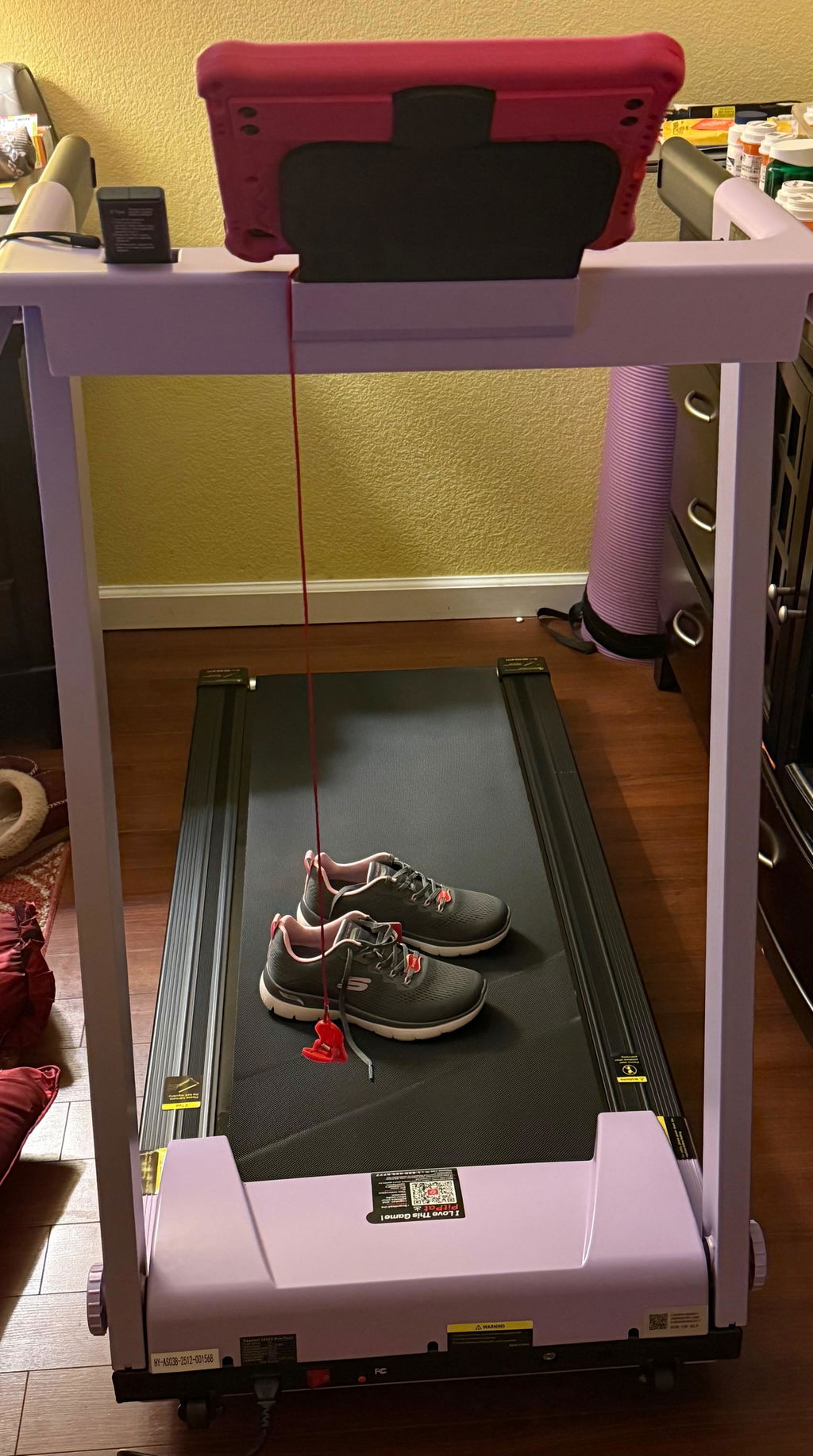
- The emergency stop device uses a pull cord form;
- The pull cord should be easily accessible to the user or a third party;
- The pull cord actuator should be red for easy identification;
- After triggering the emergency stop, the moving running belt should decelerate until it stops.
The report also records that the trigger force requirement for the pull cord is related to the force required to detach it from typical exercise clothing, and the maximum trigger force specified by the standard is 50% of that detachment force.
In actual use, users should correctly wear the emergency stop clip according to the product instructions and ensure the pull cord is in a position where it can function.

4.2 Control of Starting Speed and Stopping Process
In addition to the emergency stop device, the starting and deceleration performance of the motorized drive system also affects the user experience.
Clause 4.7 of ASTM F2115-25 sets requirements for the drive system of motorized treadmills.
According to page 15 of the SGS report:
- Starting Speed: Under no-load conditions, the initial starting speed of the running belt shall not exceed 2.4 km/h (1.5 mph).
- Acceleration Speed: Under no-load conditions, the acceleration of the running belt shall not exceed 3.2 km/h/s (2.0 mph/s).
- Maximum Deceleration: Under specified load conditions, the maximum deceleration during the stopping process shall not exceed 9.7 km/h/s (6.0 mph/s).
The test results for the above items are all Pass.

These requirements help control the speed changes during the start and stop processes. For consumers, it is still a necessary safety habit to stand firm before starting and confirm the emergency stop pull cord is correctly connected before beginning to exercise.
5. DeerRun Q2 Urban: Integrating Structural Safety into Daily Walking
Having understood the structural safety tests, let's return to actual usage scenarios: is a home walking pad suitable for placing in the living room, bedroom, or next to an office desk?
DeerRun Q2 Urban is designed for daily home walking scenarios, featuring a compact design and providing a speed range suitable for daily walking. For users who wish to increase their activity level during work breaks or in home life, it can serve as an option for a daily walking device.
5.1 Belt Size and Daily Walking Space
The Q2 Urban Plus utilizes a belt size of 39.37 × 14.96 inches, providing corresponding activity space for daily walking.
When choosing a walking pad, in addition to focusing on belt size, you should also judge whether it is suitable based on your height, stride, and usage habits. During use, maintain a natural gait and avoid deliberately walking to the edge of the belt.
5.2 Home Walking Pad Safety Usage Guide
Even if the product has passed relevant tests, correct usage is still not to be ignored. The following habits can help reduce risks during daily use:
| Usage Phase | Safety Operation Advice |
|---|---|
| Before Starting | Check if there is any debris on the belt and around; wear non-slip athletic shoes; correctly connect the emergency stop pull cord; confirm the machine is placed stably. |
| During Use | Start from a lower speed; gradually adjust the speed according to your own condition; avoid sudden turns or stepping off the belt; keep children and pets away from the running equipment. |
| After Use | Stop the machine and unplug the power; place the remote control out of reach of children; clean and inspect the equipment regularly according to the manual. |
If the user is new to walking pads, it is recommended to start with a lower speed and shorter duration, and gradually increase the usage time after becoming familiar with the operation.
5.3 Daily Usage Features of Q2 Urban
In addition to structural safety, whether the product meets daily usage needs is also very important. Q2 Urban also has the following features:
- Extended Belt: A 39.37 × 14.96-inch belt provides more spacious activity room for daily walking and reduces the risk of stepping off during natural strides.
- Manual Incline: Supports 7% manual incline adjustment, meeting users who wish to try different walking intensities or incline training.
- Dual Control: Supports remote control and PitPat App Bluetooth control, facilitating daily equipment adjustments and reducing distractions caused by bending over to operate.
For those who wish to maintain regular walking at home or in the office space, they can choose the appropriate device based on their spatial conditions, walking habits, and training needs.

6. Frequently Asked Questions (FAQ)
Q1: Is a walking pad without a long handrail safe?
Not having a long handrail does not necessarily mean the device is unsafe. Consumers should also pay attention to chassis stability, protective designs around the belt, emergency stop devices, and whether the product meets relevant test requirements.
If the user has weak balance ability or needs additional support, it is recommended to prioritize products with suitable handrails. For example, DeerRun Q2 Urban specifically offers a version with a full-length handrail, providing a nearby grip point when getting on and off, adjusting speed, or using the incline, helping you enter your exercise rhythm more steadily.
Q2: Can I use a walking pad if I have children or pets at home?
It can be used under the premise of taking appropriate safety measures, but children and pets should not be near a running treadmill. Before use, clear the surrounding space; after use, stop the equipment and unplug the power, and place the remote control and other accessories out of reach of children.
Q3: How to judge the structural safety of a home walking pad?
It is recommended that consumers check whether the product has clear safety structure descriptions, applicable ASTM test bases, and third-party test reports that correspond to the specific model, rather than just looking at the words "safety design" on the promotional page.
7. Conclusion: Don't Ignore the Invisible Safety Details When Choosing a Walking Pad
When choosing a home walking pad, belt size, speed, and folding design are certainly important, but rear roller protection, gap treatment, structural stability, and emergency stop functions are equally worthy of attention.
ASTM standards provide a clear evaluation basis for these safety designs, and third-party test reports can help consumers understand the actual performance of the tested product under specified conditions.
DeerRun Q2 Urban has been tested according to standards such as ASTM F2115 and ASTM F2276. For consumers who wish to integrate walking into their home and office life, understanding the product's structural design and test basis is an important step in making a rational choice.
Experience Powerful Incline Training at Home
Explore the DeerRun Q2 Urban and discover the perfect balance of SGS-tested structural safety, compact design, and daily walking comfort.
Explore DeerRun Q2 Urban →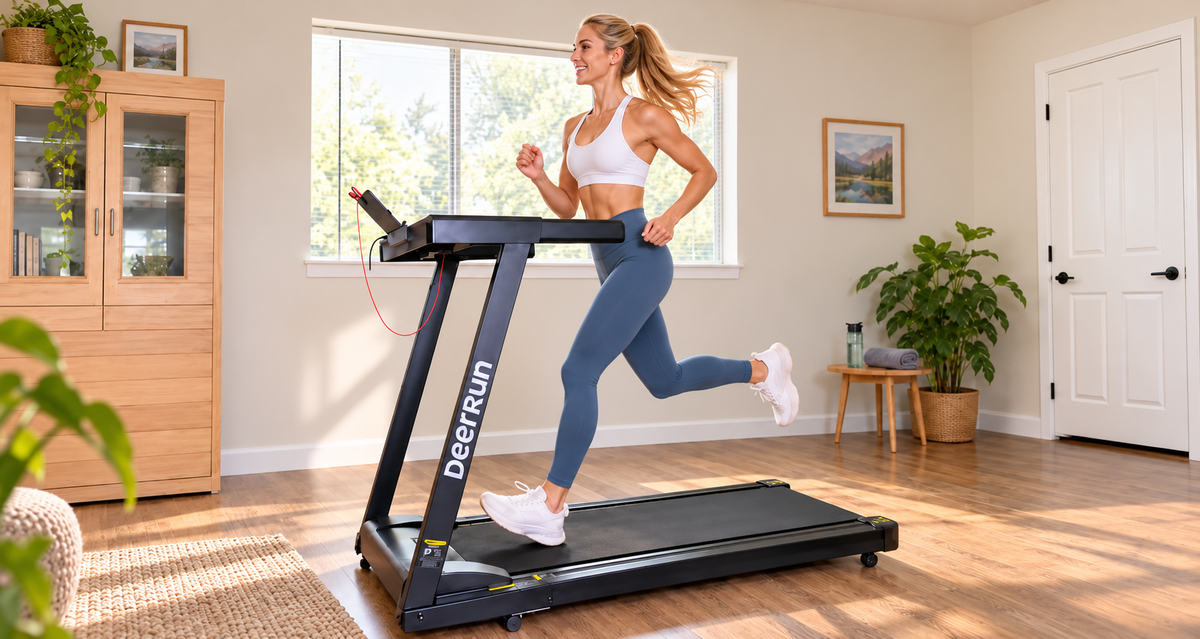


Leave a comment
This site is protected by hCaptcha and the hCaptcha Privacy Policy and Terms of Service apply.