





Word Count: Approx. 1,500 words
Reading Time: About 7 minutes
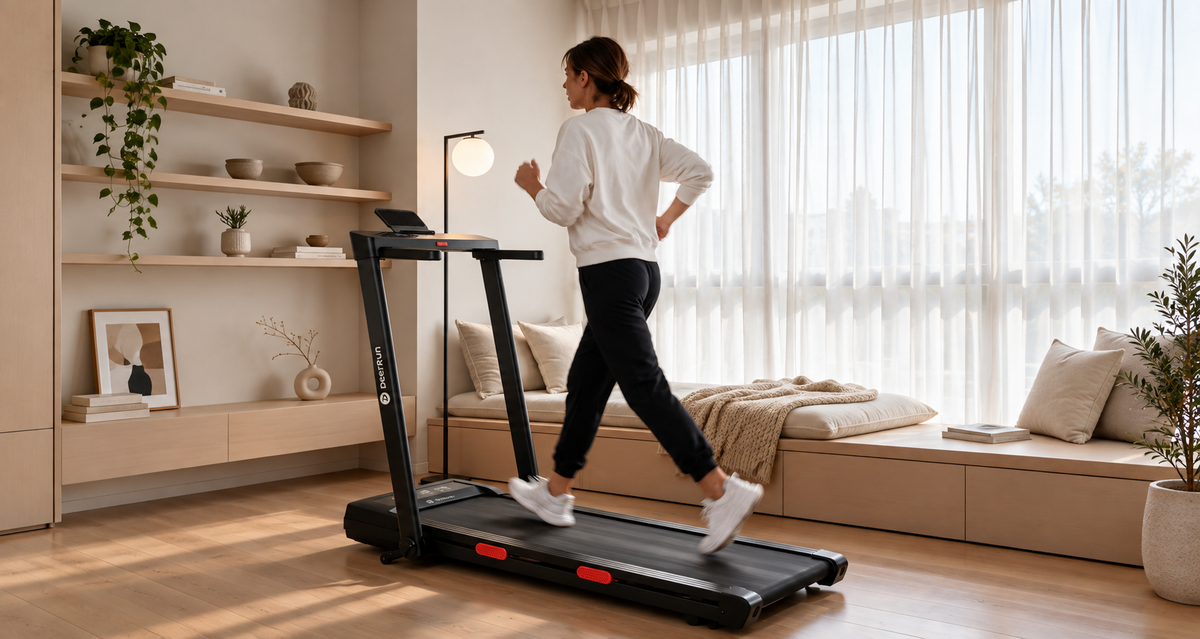
With a budget under $400, you already have several different types of treadmills for home to choose from: a Walking Pad for everyday walking, a 2-in-1 treadmill for both walking and running, or a treadmill with automatic incline for more varied workouts.
The real question isn’t which treadmill has the most features. It’s which features you’ll actually use regularly.
If you mainly walk, prioritize footprint, storage, and the experience at lower speeds. If you plan to walk and run, look more closely at maximum speed, running belt size, and stability. If incline training is already part of your plan, incline range and adjustment method become more important.
At this price point, three specifications are especially useful when comparing treadmills: maximum speed, incline adjustment, and running belt size.
Start with how you actually plan to use your treadmill. Then compare the specs that matter for that type of workout. That makes it much easier to avoid paying extra for features you rarely use.
1. Mainly Walking? You Don’t Need to Pay for a Higher Top Speed
If your main goal is simply to walk more every day and you don’t plan on doing regular running workouts, there’s little reason to spend more for running performance you may rarely use.
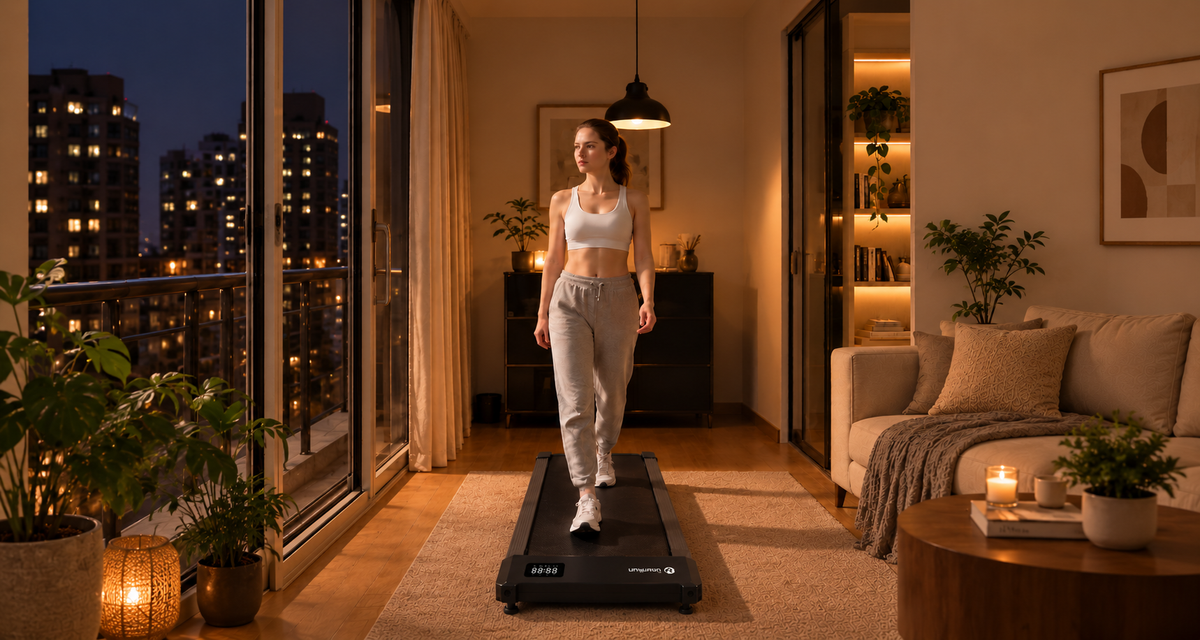
For example, the DeerRun Q2 Urban has a speed range of 0.6–3.8 MPH, covering slow walking while working from home, easy walking while watching TV, and faster 20–30 minute walking sessions.
That speed range is much closer to what most everyday Walking Pad users actually need.
The Q2 Urban measures approximately 42.62"D × 19.69"W × 3.94"H, with a footprint of around 5.83 sq. ft.—roughly the amount of floor space taken up by a small coffee table.
At only about 3.94 inches thick, its low-profile design also makes it easier to store under a desk, under a bed, or beside a sofa.

If walking is what you’ll actually do every day, spending more money on a top speed above 7 MPH may not make much sense. A compact Walking Pad for home that is easy to pull out, use, and store may offer more practical value.
For example:
10 minutes — Walk between work meetings.
15 minutes — Add another walking session during lunch.
20 minutes — Walk while watching TV in the evening.
None of these situations requires a particularly high top speed. What matters more is whether the Walking Pad fits naturally into your daily routine.
For someone who mainly walks, a treadmill you’ll actually pull out and use every day can be more useful than a higher-spec machine that rarely gets turned on.
2. Walking and Running? Prioritize Speed and Running Belt Size
If you walk during the workday but also want to run in the evening or on weekends, the speed range of a standard Walking Pad may eventually become limiting.
The DeerRun A6 Plus is a 2-in-1 walking and running treadmill. With the handrail lowered, it supports speeds from 0.6–3.8 MPH for walking. Raise the handrail, and the maximum speed increases to 7.5 MPH, allowing the same machine to handle both everyday walking and light running workouts.
The A6 Plus running belt measures approximately 14.96" × 41.34", or about 38 × 105 cm.
As running speed increases, stride length often increases as well. That means belt dimensions become more noticeable during a continuous 20–30 minute run than during low-speed walking.
For someone looking for a treadmill for walking and running, the budget is often better spent on:
Enough range for both everyday walking and running.
A belt sized for actual running, not just low-speed walking.
Easy switching between walking and running.
If you only jog occasionally, a top speed around 7.5 MPH can cover many everyday home workouts.
If you plan to do frequent high-intensity or faster running, however, don’t judge the treadmill by top speed alone. Belt length, belt width, stability, and your individual stride should all be considered together.
The important question isn’t simply, “Can this treadmill reach my running speed?”
It’s also, “Will it still feel practical when I’m running continuously for 20 or 30 minutes?”
3. Is Automatic Incline Worth Paying For? It Depends on How Often You’ll Use It
If most of your workouts consist of easy walking or flat jogging, incline may not be a feature you use every day.
But if incline walking is already part of your routine—or you want more ways to change the difficulty of a 20–30 minute workout without simply running faster—an automatic incline treadmill starts to make more sense.
The DeerRun Z10 Pro reaches a maximum speed of 7.5 MPH and supports up to 12% automatic incline.
With the handrail lowered, it supports 0.6–3.8 MPH for walking. With the handrail raised, the speed range extends to 0.6–7.5 MPH for running. Its foldable 2-in-1 design also allows it to cover several different workout styles in one machine.

For example, you could use it for:
Incline walking: 2.5–3.0 MPH
Easy running: 4.0–5.0 MPH
Workout variation: Alternate between flat and incline walking.
Running variation: Adjust incline during a run to add more workout variety.
What matters here isn’t only the 12% maximum incline.
The way the incline adjusts matters too.
With manual incline, you generally need to stop and physically change the incline setting. With automatic incline, you can change the grade during the workout, making it much easier to alternate between different incline levels without interrupting your session.
So if incline training is something you already know you’ll use regularly, spending more of your $400 budget on automatic incline can be worthwhile.
If you rarely plan to change the incline, however, a higher incline specification may simply become another feature that goes unused.
4. With a $400 Budget, Which Treadmill Features Are Worth Paying For?
The easiest way to compare treadmills under $400 is to start with your main workout style rather than asking which model has the longest feature list.
| Main Use | Features to Prioritize | Recommended Model | Price | Key Features | Best For |
|---|---|---|---|---|---|
| Daily Walking | Low-speed experience, everyday convenience, storage | Q2 Urban | $139 | 0.6–3.8 MPH; slim profile; approx. 5.83 sq. ft. footprint; approx. 3.94" thick; easy low-profile storage | WFH users, daily step goals, small spaces, primarily walking |
| Walking + Running | Maximum speed, running belt size, 2-in-1 switching | A6 Plus | $249 | 0.6–3.8 MPH with handrail down; up to 7.5 MPH with handrail raised; 2-in-1 design; approx. 14.96" × 41.34" belt | People who walk during the workday and run in the evening or on weekends |
| Running + Incline Training | Automatic incline, running speed, incline adjustment, workout variety | Z10 Pro | $369 | Up to 7.5 MPH; 12% automatic incline; supports flat running, incline walking, and changing incline during workouts | Regular runners who want incline workouts and more training variety |
There are a few other differences worth understanding.
Both the A6 Plus and Z10 Pro are 2-in-1 foldable treadmills. With the handrail lowered, they can be used for walking. Raise the handrail, and they can support running.
The biggest difference is that the Z10 Pro adds 12% automatic incline and has a slightly wider running belt at approximately 15.75" × 41.34", compared with approximately 14.96" × 41.34" on the A6 Plus.
The Q2 Urban, meanwhile, is a dedicated Walking Pad. It doesn’t need to fold because its low-profile frame is already designed for compact storage. At approximately 42.62"D × 19.69"W × 3.94"H, it works particularly well under a standing desk, under a bed, or beside a sofa.
So the decision can be simplified to three use cases:
When shopping for a treadmill under $400, you don’t need the model with the most features.
You need the model that puts your budget into the features you’re most likely to use.
Your Budget Sets the Range—Your Workout Style Determines What to Buy
If you mainly walk, prioritize the everyday Walking Pad experience. A speed range around 3–4 MPH can already cover many common home and under-desk walking situations.
If you also plan to run, prioritize maximum speed and running belt size. A treadmill that reaches around 7.5 MPH and provides enough belt space for continuous running will generally be more useful than paying for extra features unrelated to your routine.
If incline workouts are part of your plan, then automatic incline becomes worth considering. The important question isn’t only how high the treadmill can incline—it’s whether you can adjust that incline conveniently during your workout.
A $400 budget isn’t about collecting as many treadmill features as possible.
It’s about paying for the features you’ll actually use.
Spend Your Budget on the Features That Matter to You
Choose a DeerRun treadmill for home based on how you actually plan to walk, run, and train with incline.
Explore DeerRun Treadmills →Want More Treadmill & Training Tips?
Subscribe to the DeerRun Newsletter for practical home workout ideas, treadmill guides, and training tips.


Leave a comment
This site is protected by hCaptcha and the hCaptcha Privacy Policy and Terms of Service apply.