





Word Count: Approx. 1200 words | Read Time: About 6 minutes
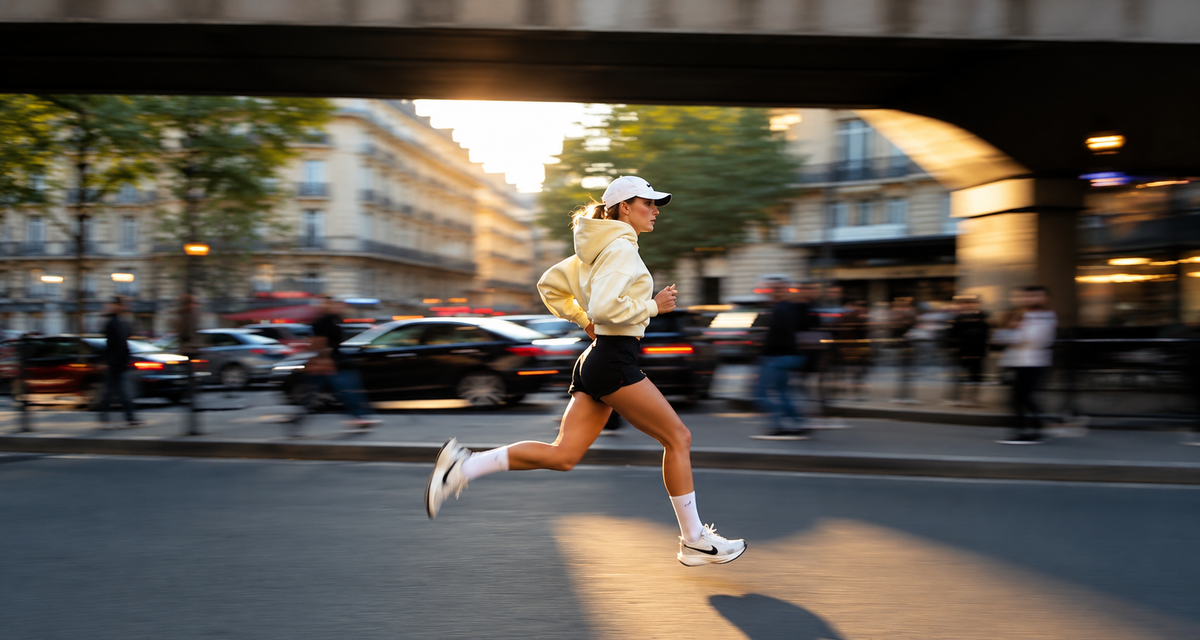
You check your fitness watch and see that your cadence is only 155 or 160 steps per minute. Then you remember the “180 steps per minute” number that keeps appearing online, and you start wondering:
Is my cadence too low? Does that mean there’s something wrong with my running form?
Not necessarily.
180 steps per minute isn’t a standard that every runner needs to reach.
The number became widely known partly because of American running coach and exercise physiologist Jack Daniels. At the 1984 Los Angeles Olympics, he observed approximately 47 elite runners and found that only one had a cadence below 180 steps per minute.
However, those observations involved elite athletes competing at Olympic race pace. They were field observations made during competition—not a controlled experiment—and cannot simply be turned into a universal standard for recreational runners.
For most runners, what matters more than “How far am I from 180?” is:
At your current speed, do your cadence and stride length work naturally together, and does your running feel stable and relaxed?
1. If Your Cadence Is Below 180, Does That Mean Your Running Form Is Wrong?
Running cadence, also called cadence or step rate, refers to the total number of steps both feet take in one minute. It is usually measured in steps per minute (SPM).
This number naturally changes with running speed and individual movement patterns. The same runner may have a relatively lower cadence during an easy jog, while cadence will usually increase as running speed increases.
So if your cadence is 160 SPM during an Easy Run, that number alone doesn’t mean your running form is “wrong.”
Instead of focusing only on the number, pay attention to:
- Are your legs reaching noticeably far in front of your body when you try to run faster?
- Is your stride becoming so long that your movement starts to feel stiff?
- Can your body remain stable as you increase your speed?
- Does your current rhythm feel natural, relaxed, and sustainable?
Cadence is only one part of your running mechanics. It isn’t a scorecard for your running form.
2. Cadence and Stride Length Matter More Than 180
A study published in Medicine & Science in Sports & Exercise tested 45 healthy recreational runners. Researchers had them run at the same speed using their natural cadence and then at cadences 5% and 10% higher than their preferred rate.
The results showed that increasing cadence shortened stride length and also changed several measures related to movement and loading at the knees, hips, and other areas.
This shows that adjusting cadence isn’t simply about “moving your feet faster.” It also changes stride length and the way your feet land.
So instead of forcing yourself to chase 180 SPM, look at what your current workout actually requires.
| Training Situation | How to Think About Cadence |
|---|---|
| Easy Run | If your stride feels natural and your movement is stable, there’s no need to intentionally increase your cadence. |
| Want to Run Faster | Don’t rely only on making your stride longer. You can try increasing your cadence slightly by around 3%–5%. |
| Tempo Run | Your cadence can increase naturally as your speed increases. There’s no need to lock it at 180 SPM. |
| New to Running or Returning After a Break | Focus on getting your movement stable first before thinking about changing your cadence. |
The goal isn’t to find one universal number. It’s to help your speed, cadence, and stride length work together more naturally.

3. Want to Adjust Your Cadence? Don’t Jump Straight From 160 to 180
If you do want to experiment with your cadence, start from your natural rhythm and make only a small adjustment.
For example, if your natural cadence is 160 SPM, you could first increase it by around 3%–5%, bringing it to approximately 165–168 SPM, rather than jumping straight to 180.
| Adjustment | Example Based on 160 SPM | What to Observe |
|---|---|---|
| Maintain natural cadence | 160 SPM | Establish your baseline without rushing to change it. |
| Increase by about 3% | About 165 SPM | Does your stride naturally shorten? Does your body stay relaxed? |
| Increase by about 5% | About 168 SPM | Does your movement feel smoother? Is the rhythm easier to maintain? |
| Increase by about 10% | About 176 SPM | Does the effort noticeably increase? Are your steps becoming short and choppy? |
A 2022 systematic review and meta-analysis published in Sports Medicine – Open included 37 studies examining how changes in running cadence affect biomechanics, performance, and injury.
The findings showed that increasing cadence generally shortened stride length and changed some biomechanical and loading measures at the knees, hips, ankles, and other areas.
However, current evidence is still insufficient to show that increasing cadence will necessarily reduce running injuries or improve running performance.
So the goal of adjusting cadence isn’t to “train until you reach 180.”
It’s to see whether a small change makes your running feel more natural and stable.
4. Use 15 Minutes on a Treadmill to Find Your Natural Cadence
When using the DeerRun A6 Plus, choose an Easy Run speed that you can maintain comfortably. Keep your speed and incline relatively consistent while observing how your cadence changes.
4.1 0–5 Minutes: Run at Your Natural Rhythm | About 160 SPM
With the handrail raised, the DeerRun A6 Plus supports speeds up to 7.5 MPH.
Choose a comfortable Easy Run speed and use around 160 SPM as an example reference point. Don’t intentionally change your cadence yet. Simply notice how your stride and overall movement feel at your natural rhythm.
4.2 5–10 Minutes: Increase Slightly | About 165 SPM
Try to keep your speed the same while increasing your cadence from 160 SPM to around 165 SPM, or roughly 3%–5%.
Pay attention to whether your stride naturally becomes shorter and whether your body can remain relaxed.
4.3 10–15 Minutes: Return to Your Natural Rhythm | About 160 SPM
Finally, return your cadence to around 160 SPM and compare how the two rhythms feel.
If your movement feels smoother at 165 SPM, you can continue practicing this kind of small adjustment in future workouts. If you feel more tense instead, there’s no need to deliberately increase your cadence.
With the handrail lowered, the DeerRun A6 Plus supports 0.6–3.8 MPH, while raising the handrail allows speeds up to 7.5 MPH (1–12 kph), covering different training intensities from walking to jogging.
Combined with PitPat for tracking speed and workout duration, you can experiment with small cadence adjustments at a fixed speed, change only one variable at a time, and find the rhythm that genuinely works for you.

Conclusion | 180 Isn’t a Passing Grade for Running
If you see that your cadence is below 180 SPM, you don’t need to correct it immediately.
First, look at whether your speed, stride length, and overall movement feel natural. If you do want to experiment with cadence, follow this order:
Record Your Natural Cadence → Increase by 3%–5% → Keep a Similar Speed → Compare How Your Movement Feels
Current research supports the idea that changing cadence can affect running mechanics and certain measures of physical loading.
But there still isn’t enough evidence to say that every runner should aim for a higher cadence.
So don’t chase 180.
Start by finding a rhythm that feels natural, stable, and right for you.
🎃 This Halloween, Run at Your Own Rhythm
Don’t let one fixed number dictate the way you run. Find a cadence that feels more natural and stable.
Explore DeerRun A6 Plus →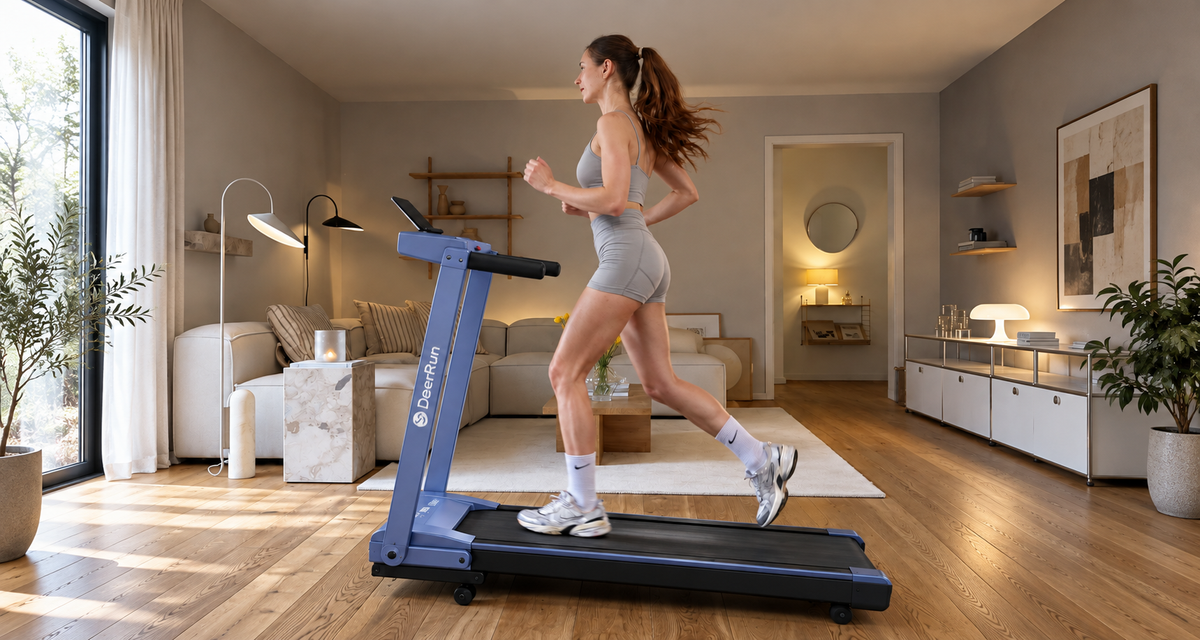


Leave a comment
This site is protected by hCaptcha and the hCaptcha Privacy Policy and Terms of Service apply.