





Word Account: 1300 Words | Read Time: About 6 mins
When the treadmill speeds up or the incline gets steeper, many people instinctively reach for the handrails.
Holding on briefly to maintain balance is usually fine. But if you need to rely on the handrails for most of your workout, it may be a sign that your current speed, incline, or level of fatigue has gone beyond what your body can naturally control.
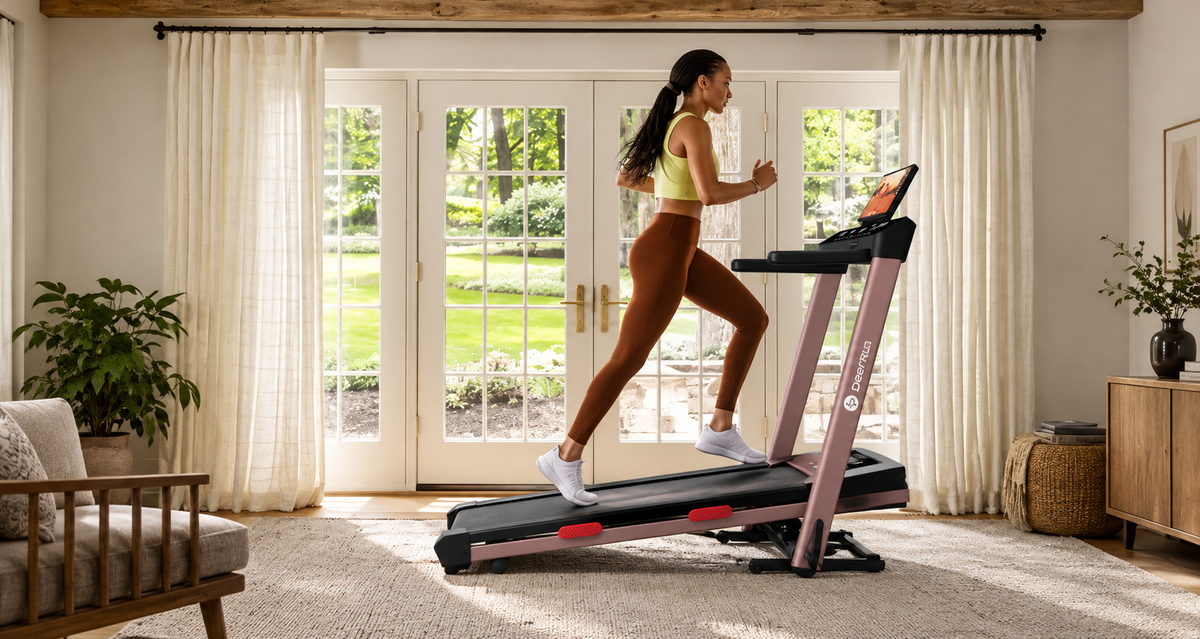
Effective training isn’t about pushing the numbers on the screen as high as possible. It’s about being able to maintain a steady stride, natural arm swing, and good posture without constantly relying on the handrails.
1. Does Holding the Treadmill Handrails Affect Your Workout?
Yes. Continuously relying on the handrails may reduce the actual training load your body has to handle.
A study published in the Journal of Cardiopulmonary Rehabilitation compared physiological responses in healthy adults while using a treadmill with a natural arm swing, resting their hands on the handrails, and gripping the handrails firmly.
The results showed that when participants gripped the handrails firmly, both heart rate and oxygen consumption were lower than when they walked with a natural arm swing.
Another treadmill experiment involving female participants also found that continuous handrail use reduced oxygen consumption and some cardiovascular responses during exercise.
So the speed and incline displayed on the treadmill don’t necessarily represent the actual training intensity your body is experiencing. To judge whether the workout is appropriate, you also need to consider whether you can maintain a natural arm swing and stable stride without constantly holding the handrails.
2. Why Do You Keep Wanting to Hold the Handrails?
2.1 The Speed Is Too High
If you can’t keep up with the belt as soon as you let go, it’s usually a sign that you should slow down.
You may notice your stride becoming less controlled, your body leaning backward, your arms no longer swinging naturally, or a feeling that the belt is pulling you along as soon as you release the handrails.
Maintaining the same speed at that point will only make your movement increasingly stiff and unnatural.
2.2 The Incline Is Too High
If you have to pull on the handrails with both hands to keep going, the current incline is already too high.
The purpose of incline training is to make your legs, glutes, and core do more work—not to use your arms to “pull” your body uphill.
Continuously relying on the handrails can also change the way forces are distributed through your body.
2.3 Fatigue Has Built Up
If your movement feels normal during the first half of your workout but you gradually start relying more and more on the handrails later, fatigue may already be affecting your ability to control your movement.
In this situation, the handrails are more like a signal:
It’s time to reduce the intensity—not increase the speed or incline.

3. Keep Reaching for the Handrails? Make These 3 Adjustments First
If you feel unstable as soon as you let go, don’t force yourself to continue at the same intensity.
Remember this order:
Reduce Speed → Reduce Incline → Add Intensity Back Once Your Movement Is Stable
Step 1: Reduce Speed by 0.3–0.5 MPH
For example, if you’re brisk walking or jogging at 4.0 MPH but can’t keep up comfortably once you release the handrails, reduce the speed to around 3.5–3.7 MPH.
Stay there for 2–3 minutes and see whether you can return to a natural arm swing and stable stride.
Step 2: Reduce Incline by 2–3 Percentage Points
If the speed already feels comfortable but you still need the handrails at a higher incline, lower the incline as well.
For example:
12% → 8–10% → 6–8%
After each adjustment, maintain the new setting for 2–3 minutes and check whether your movement starts to feel natural again.
Step 3: Stay Stable for 3–5 Minutes Before Adding Intensity Back
Once you can maintain all of the following for 3–5 continuous minutes:
✓ No constant gripping of the handrails
✓ Natural arm swing
✓ Stable stride length and cadence
✓ No obvious forward or backward leaning
Then consider increasing your speed or incline again.
Change only one variable at a time.

4. A 20-Minute Plan to Reduce Handrail Dependence
If you frequently find yourself grabbing the handrails during incline walking, try a short workout focused on restoring natural movement.
| Time | Speed | Incline | Focus |
|---|---|---|---|
| 0–5 min | 2.0–2.5 MPH | 0–2% | Warm up with a natural arm swing |
| 5–10 min | 2.5–3.0 MPH | 3–4% | Maintain a stable stride |
| 10–15 min | 2.5–3.0 MPH | 5–6% | If you want to grab the handrails, lower the incline first |
| 15–20 min | 2.0–2.5 MPH | 0–2% | Gradually slow down and cool down |
The goal of this workout isn’t to reach a higher incline. It’s to find out:
As the speed and incline increase, can you still maintain natural movement?
If you already need to continuously hold the handrails at 5–6% incline, stay at a lower incline for now. There’s no need to rush toward 8%, 10%, or even 12%.
5. Don’t Use the Handrails to Force Your Way Through Incline Training
If a high incline requires you to hold the handrails just to complete the workout, lowering the incline is more useful than forcing yourself through it.
Take the DeerRun Z10 Pro as an example. It supports a speed range of 0.6–7.5 MPH and up to 12% Auto Incline.
The real advantage of automatic incline isn’t that you should use 12% every time. It’s that you can adjust the incline based on how well you’re moving.
For example, if you can still walk steadily with a natural arm swing at 8% incline, stay there. If increasing to 10% or 12% makes you grab the handrails constantly, simply lower it back to 6–8%.
Completing 8% incline naturally without holding the handrails is usually more meaningful for your workout than forcing your way through 12% while gripping them.
6. How Can You Tell Whether the Intensity Is Right?
Don’t focus only on the speed and incline numbers on the screen.
When the intensity is appropriate, you should generally be able to:
✓ Avoid using the handrails to support your body
✓ Maintain a natural arm swing
✓ Keep your cadence and stride length stable
✓ Avoid obvious forward or backward leaning
✓ Maintain your movement for several minutes without your form noticeably breaking down
If you lose stability as soon as you let go, or your movement clearly starts to change, reduce the speed or incline slightly.
Treadmill settings are just numbers. What really determines the quality of your workout is whether you can complete it naturally and steadily.
Don’t Let the Handrails Do the Hard Work for You
Treadmill handrails can be useful when getting on and off the machine, briefly maintaining balance, or responding to an unexpected situation. But they shouldn’t become your main source of support throughout the entire workout.
Next time you notice yourself constantly reaching for the handrails, follow this order:
Reduce Speed → Reduce Incline → Gradually Add Intensity Back Once Your Movement Is Stable
The right training intensity isn’t the highest number on the screen. It’s the speed and incline that allow you to maintain a steady stride, natural arm swing, and good posture without constantly relying on the handrails.
Let Your Training Intensity Follow Your Movement
The DeerRun Z10 Pro offers flexible speed adjustment and Auto Incline, making it easier to adjust your training intensity based on how your movement feels.
Explore DeerRun Z10 Pro →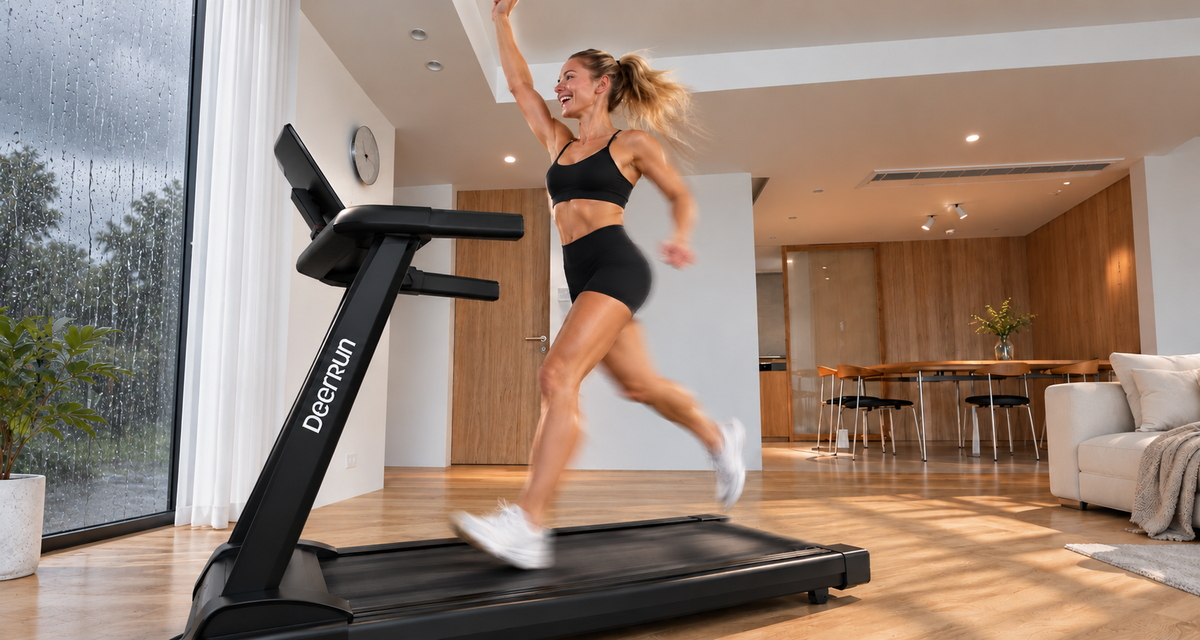


Leave a comment
This site is protected by hCaptcha and the hCaptcha Privacy Policy and Terms of Service apply.