





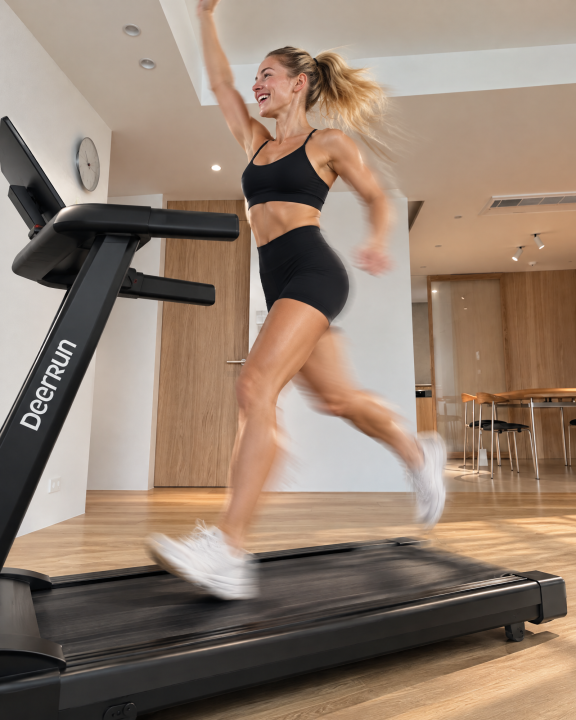
Pregnancy doesn't mean giving up on staying active, and doing it safely and easily at any time comes down to one secret: choosing the right form factor to find the most stable support in a limited space.
Based on the real-world experience of a 7-month pregnant mom (Rose H.), this article looks at how walking pads perform in small spaces during pregnancy and provides buying and usage advice that balances both portability and safety.
1. The Small Space Dilemma: Why It’s So Hard for Pregnant Women to "Get Moving" at Home
1.1 The Necessity of Exercise During Pregnancy vs. The Reality of "Not Wanting to Move"
The benefits of exercise during pregnancy are well-documented. Moderate exercise helps reduce the risk of excessive gestational weight gain, gestational diabetes, and gestational hypertension, and also has a positive effect on mental health. (Note: This article is for health education purposes only. Always consult your doctor regarding your pregnancy exercise plan.)
"Moderate intensity" doesn't sound like a high bar—a brisk walk can achieve it. However, for women in the third trimester, physiological changes such as a forward shift in the center of gravity, increased joint laxity, and decreased balance make "just walking around the house" not so simple. Walking continuously without support significantly increases pressure on the lower back and pelvis.
1.2 The Double Squeeze of Space Limitations and Safety Concerns
The first practical problem for small families is space: it simply doesn't fit. A standard home treadmill typically occupies a length of over 1.5 meters (approx. 5 feet), which is a hard threshold for living rooms or bedrooms that are already tight on space.
The second problem is more hidden: Walking Pads are originally designed to "tuck under a desk," which means they usually lack handrails. According to a 2024 Consumer Reports test of nine under-desk walking pads, most lack handrails, and optional handrails are often too short or not stable enough, potentially posing a fall risk. For the average person, this might be acceptable; but for women in the third trimester whose balance has noticeably decreased, this is a real safety concern.
2. DeerRun's Solution: Maximizing the "Hideaway" Capability
2.1 Ultra-Slim Folding Design to Free Up Space in Small Homes
The core design logic of DeerRun's walking pad line is to make the machine "disappear" as much as possible when not in use. Take the Q2 Urban series as an example: the machine height is only 3.94 inches (approx. 10 cm), and the net weight is 35.05 lbs (approx. 15.9 kg). It features built-in transport wheels, making it easy to push under the bed, sofa, or behind a door. This thickness means it won't become an unavoidable obstacle in the room.
For small families, this "use it and hide it" capability directly determines whether the machine will be used frequently or end up as a clothes rack.
2.2 Quiet Enough to Walk and Work Simultaneously
Mothers often exercise at home in fragmented moments—while the child is napping, during a work break, or right before dinner. If the machine's startup noise is loud enough to affect family members or neighbors, the psychological barrier to using it increases.
The Q2 Urban operates at a noise level of less than 45 dB. This volume is roughly equivalent to the ambient sound of a quiet library, making it sufficient for use while family members rest or watch TV without causing significant disturbance. Of course, a quiet motor doesn't mean quiet footsteps, which we will discuss in the next section.
3. Real User Tested: What Is It Like to Use a Walking Pad Without a Handrail?
The following feedback comes from a real U.S. buyer, Rose H., a woman 7 months pregnant who used a DeerRun walking pad in an industrial-style office (cubicle approx. 6x8 feet) and in her home of less than 1,000 sq ft.

3.1 What She Found "Great": Portable, Quiet, Easy to Store
Rose's core review of the walking pad was: "It perfectly tucks under my desk, acts as a walking pad, and the sound is minimal." She specifically mentioned that the sound of her footsteps might be louder than the machine itself, and with the background HVAC system running, the footsteps were almost unnoticeable.
Regarding storage, her description was specific: "It rolls just as easily when folded and looks like a large suitcase." This analogy is accurate—it's not lightweight, but an average person can move it. For a pregnant mom who needs to set it up and put it away frequently, this design is reasonable.
She also mentioned a key use case: She plans to take it home and continue using it postpartum. This shows that in her eyes, this machine is not a one-time purchase for pregnancy, but a tool that can integrate into long-term home life.
3.2 Her Candid "Compromises": Beeping Sounds and the Missing Handrail
Rose noted one downside: the only time she found the sound loud was the "beeping" prompt when the machine started or when using the remote, and she was even trying to find a way to reduce the sound to avoid disturbing colleagues. But actually, the product already has a perfect solution for this pain point. In response to user concerns about electronic beeps, DeerRun has provided a solution: simply connect the walking pad to the PitPat App, and in the "Device Sound" settings, users can use the "One-Tap Mute" function to turn off the startup sound, shutdown sound, and prompts during operation. In a quiet office environment or next to a sleeping baby, you can truly "walk whenever you want, completely silently."

Beyond sound, another challenge is balance. Rose wrote: "There's no desk in front to balance myself (which might feel uncomfortable during pregnancy), so it's hard to adapt. I just set a dining chair next to me to hold onto for balance when needed." Rose solved her balance issue with a chair, but DeerRun actually has a safer, more comprehensive, and mature product solution.
4. DeerRun Offers Multiple Product Options for Those Who Need Safe, Balanced Experiences, Such as Pregnant Women, the Elderly, and Children
4.1 DeerRun Q2 Urban with Handrail — Making Exercise Stable and Relaxed
Rose's feedback reveals a product tiering issue: not everyone is suited for a handrail-less walking pad. Women in the third trimester, seniors with decreased balance, or users who simply want support while walking need a different design.
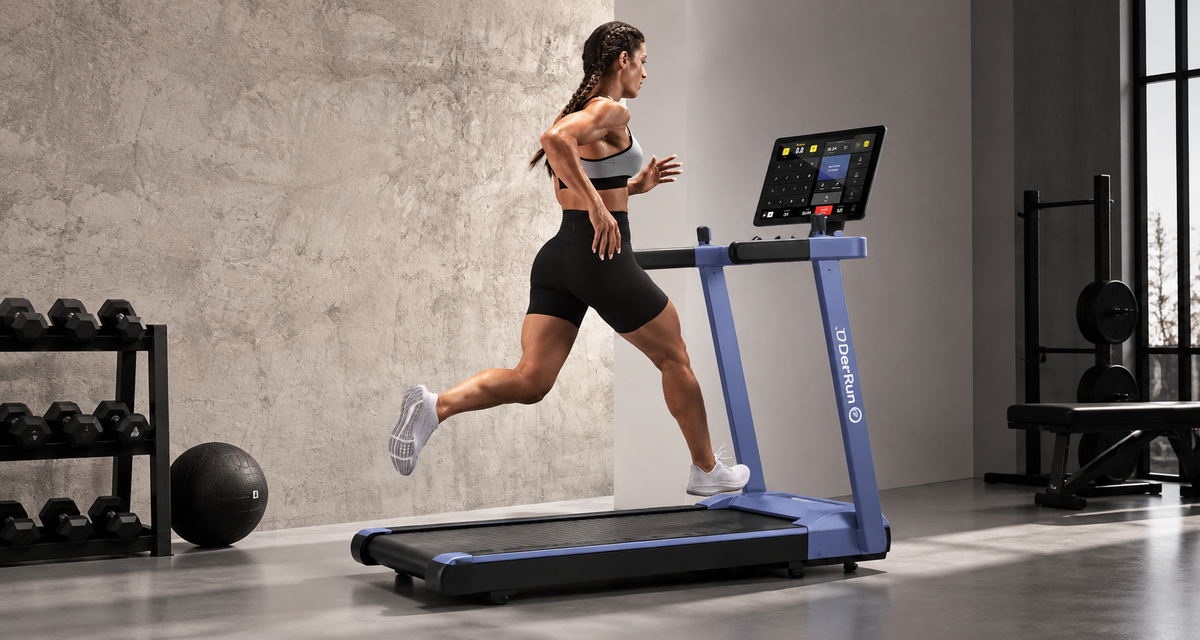
The DeerRun Q2 Urban with Handrail exists precisely for this need. It retains the core specifications of the Q2 series (such as 7% manual incline, 0.6–3.8 MPH speed range, 300 lbs weight capacity, and <45 dB noise levels) while adding a full-length handrail.
The purpose of this handrail is very specific: to provide a stable grip point when stepping onto the machine, adjusting speed, and walking on an incline. If you need to use it under a standing desk, the handrail-less version is more suitable; if you want a "more supportive walking experience," the handrail version is the better choice.
A noteworthy detail is that the handrail on the Q2 Urban with Handrail is designed to be detachable, remaining compact for storage when removed. This means that "having a handrail" and "being easy to store" are no longer mutually exclusive choices.
If you have higher requirements for incline training, the DeerRun Sleek R1 with Handrail offers a 22% automatic incline, and its handrail is also designed to "provide extra balance when needed," rather than the fixed long handrails of traditional treadmills.
4.2 Safety Principles for Using a Walking Pad During Pregnancy
If you choose to use a handrail-less walking pad during pregnancy, there are several principles worth following:
- Prioritize speed over distance. The goal of exercise during pregnancy is to maintain activity level, not to chase pace. A slow walking speed of 0.6–1.5 mph (approx. 1–2.5 km/h), with a remote control for easy start/stop, is a safer approach.
- Keep external support within reach. Just as Rose did, place a sturdy chair next to the walking pad or stay near a wall to ensure you can grab onto something whenever needed.
- Wear supportive shoes. Walking pad belts are usually limited in width; walking in slippers or barefoot significantly increases the risk of slipping or spraining. Choose well-fitting, non-slip athletic shoes.
- Note the safety lanyard/clip. Some walking pads are equipped with a safety lanyard device, with one end clipped to clothing and the other magnetically connected to the machine, cutting power immediately if detached. Confirm whether your machine has this function and use it correctly.
5. Conclusion
If you are a pregnant mom, or have family members with balance needs, ask yourself one question before buying: Do I need a handrail? If the answer is yes, the DeerRun Q2 Urban with Handrail or the Sleek R1 with Handrail provide a "safe without compromise" solution under the premise of being "small-space friendly." If the answer is "I can accept using a chair for support," then the ultimate portability of the handrail-less version remains a reasonable choice for small families.
The ultimate goal of home exercise isn't owning a perfect machine, but owning a machine you are willing to step on every day. Choosing the right form factor is more important than choosing the right specifications.


Leave a comment
This site is protected by hCaptcha and the hCaptcha Privacy Policy and Terms of Service apply.