





Word Count: Approx. 1,000 words
Reading Time: About 5 minutes
Have you ever noticed that you don't have to walk fast for an incline workout to feel challenging?
A speed of around 3 mph may feel easy on a flat treadmill, but add a significant incline and your breathing and leg muscles can feel very different.
That's because incline training isn't just about speed.
Incline, speed, workout duration, and your fitness level all affect how difficult a workout feels. The goal isn't to use the highest incline possible—it’s to find an intensity that matches your current ability and allows you to progress.
If incline walking is going to become part of your regular routine, a treadmill with adjustable incline can also make it easier to gradually change your training intensity.
1. Why Is Incline Walking So Challenging?
Treadmill incline is usually measured as a percentage. As the incline increases, your body has to work harder to move upward against gravity.
As a general reference:
- 0–5%: Light incline
- 5–10%: Noticeably increased training load
- 10–15%: Moderate-to-high incline training
- 15–20%: High-intensity incline training
- 20%+: Very steep incline
As the incline increases, your glutes, thighs, and calves have to work continuously, while your cardiovascular system also has to work harder.
That's why a slower speed doesn't necessarily mean a low-intensity workout.
However, incline alone doesn't tell the whole story. The same incline and speed can feel completely different for a beginner compared with someone who trains regularly.
2. How Should Different Fitness Levels Train on an Incline Treadmill?
Beginners: Start by Adapting
If you don't exercise regularly, start with a low incline, comfortable speed, and shorter sessions.
0–3% incline + 1.5–2.0 mph + 15–20 minutes
Once that feels comfortable, gradually increase either the incline or workout duration.
At this stage, focus on:
- Building a consistent exercise habit
- Getting used to incline walking
- Maintaining a steady walking pattern
- Developing basic endurance
There's no need to jump straight into steep inclines.
Some Exercise Experience: Build Incline Endurance
If you already walk, run, or do other forms of cardio regularly, you can gradually move toward 5–10% incline.
5–8% incline + 2.0–2.8 mph + 20–30 minutes
As your fitness improves, you can gradually increase the incline or extend the workout.
This is also a good stage to start paying attention to:
- Whether your heart rate stays controlled
- Whether your breathing remains manageable
- Whether you can maintain the workout without frequent breaks
- How well you recover afterward
The goal shifts from “Can I handle the incline?” to “Can I handle it consistently?”
Regular Exercisers: Add Moderate-to-High Inclines and Intervals
If you already train regularly, you can try 8–15% incline and introduce steady incline sessions or simple intervals.
For example:
10–12% incline → 3 minutes
5–6% incline → 2 minutes of recovery
Repeat as appropriate.
This approach can increase the training challenge without requiring a major increase in speed, while also working your cardiovascular fitness and lower-body endurance.
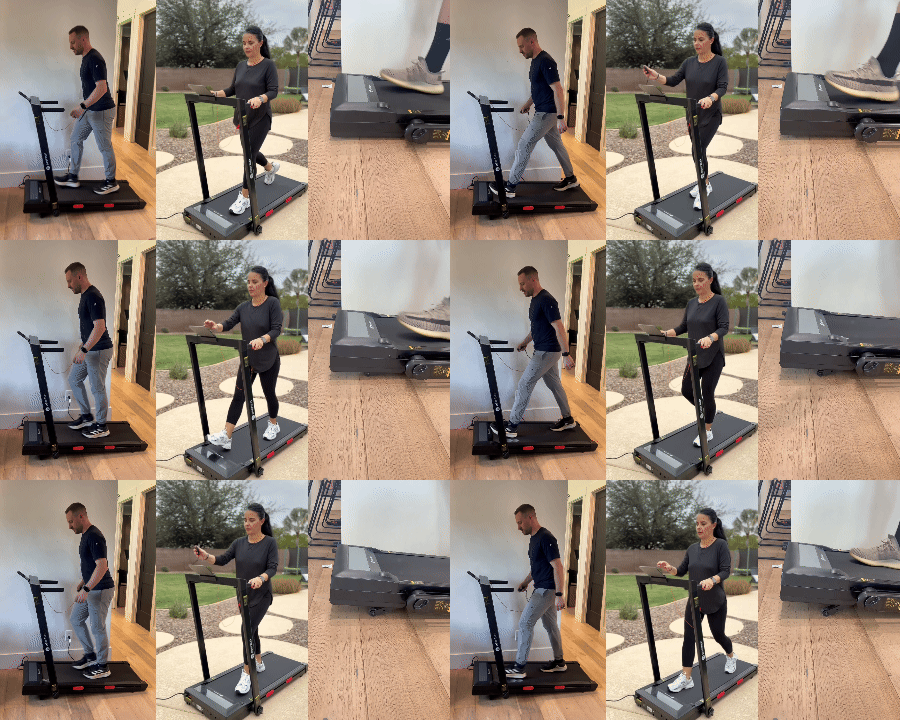
If you want more flexibility in your incline workouts, the DeerRun Z10 Pro is designed for this type of progression. It offers 12% automatic incline with 12 incline levels, allowing you to adjust the intensity as your training develops. The incline can also be controlled through the remote or Bluetooth/app controls, making it easier to change intensity during a workout.
You can start with a lower incline and gradually work upward instead of using the same intensity every time.
Advanced Exercisers: Challenge Yourself Without Going All-Out Every Time
If you have a strong fitness base, you can try 10–15% inclines or introduce more varied training methods.
You can choose:
- High-incline intervals: 12–15% incline for 1–3 minutes
- Moderate-to-high incline steady training: 8–12% incline for 15–30 minutes
- Alternating inclines: 12% incline for 2 minutes, followed by 5–6% incline for 2 minutes of recovery
- Combining incline and speed: 10–12% incline at around 2.5–3.5 mph
For example:
12% incline + 2.5 mph → 2 minutes
6% incline + 2.0–2.5 mph → 2 minutes of recovery
Repeat several times, adjusting the number of sets and intensity based on your fitness level.
The DeerRun Z10 Pro can support everything from everyday incline walking to running workouts. It offers 12% automatic incline with 12 incline levels and reaches speeds of up to 7.5 mph in running mode, giving you more flexibility to combine incline and speed as your fitness improves.
At this stage, the goal isn't simply to chase a higher incline number. It's to maintain stable form, breathing, and rhythm as the intensity increases.

3. How Do You Know If Your Incline Workout Is Right for You?
Don't just ask:
“What's the highest incline I can handle?”
A better question is whether you can complete the workout while maintaining good movement and control.
Look at Incline, Speed, and Duration
These three factors need to be considered together.
The training demand of 10% incline at a slower speed is different from 10% incline at a much faster speed. Likewise, handling an incline for five minutes is different from maintaining it for 30 minutes.
Pay Attention to Breathing and Heart Rate
If you can maintain relatively steady breathing and rhythm, the current intensity is more manageable.
If you quickly become extremely breathless, the workout may be too demanding for your current level.
Notice How Much You Rely on the Handrails
If you need to hold the handrails for most of a steep-incline workout, that's a sign you may need to reduce the intensity.
Check Your Form
Watch for:
- Excessive leaning backward
- Walking on your toes
- An unstable stride
- Constantly changing speed to keep going
If you have to change your natural movement just to maintain the incline, it's better to reduce the intensity.
Look at Recovery and Repeatability
Completing a difficult incline workout once doesn't necessarily mean you're ready to train at that level regularly.
A more meaningful sign of progress is being able to repeat similar workouts with better control and gradually less effort.
Consistency matters more than one extreme workout.

4. The Most Common Incline Training Mistakes
Chasing the Highest Incline
A 20% incline isn't automatically better than 10%.
The right intensity matters more than the biggest number.
Looking Only at Incline
Incline, speed, duration, and your individual fitness level all matter.
Relying Too Much on the Handrails
Use the handrails for necessary stability, but don't rely on them as the main way to handle a steep incline.
Changing Your Form to Handle More Incline
If you have to lean excessively backward, walk on your toes, or lose a stable stride, reduce the intensity.
Making Every Workout Extremely Difficult
Hard workouts also require recovery.
Progress doesn't mean pushing to your limit every time.
5. Effective Incline Training Means Choosing the Right Incline for You
There is no single “ideal” treadmill incline for everyone.
Beginners need to adapt and build consistency. People with some training experience can gradually increase incline and workout duration. Regular exercisers can add intervals and more varied incline workouts.
If you want a treadmill that can support that progression, the DeerRun Z10 Pro offers 12% automatic incline, 12 incline levels, remote/Bluetooth control, and speeds up to 7.5 mph in running mode, giving you more room to adjust your workouts as your fitness level develops.
So instead of asking:
“What's the highest incline I can handle?”
Ask:
“Can I complete this workout at an appropriate intensity and gradually improve over time?”
Find the right combination of incline, speed, and duration, and make your workouts challenging enough to progress—but manageable enough to keep doing.
Ready to Add More Incline to Your Home Workouts? ⛰️
Build a more flexible incline training routine at home and adjust your workout intensity as your fitness level develops.
Explore DeerRun Z10 Pro →


Leave a comment
This site is protected by hCaptcha and the hCaptcha Privacy Policy and Terms of Service apply.