






Word Count: Approx. 900 words
Reading Time: About 5 minutes
When many people start running, the first thing they check is:
“How many miles did I run today?”
Then comes the next question:
“What was my pace?”
If they don't hit their target 5K time, they may feel like they weren't fast enough. If they only run a few miles, they may feel like the workout wasn't enough.
But if your goal is better health, weight management, improved cardiovascular fitness, or building a long-term running habit, distance and pace don't always need to be your most important numbers.
For many beginners, two things may matter more:
How long you run and how hard your body is actually working.
In other words:
Run by time, not distance.
Run by heart rate, not pace.
1. Run by Time, Not Distance
Distance Doesn't Have to Be the Goal of Every Workout
If you're not training for a race and your goal is health, weight management, or building a consistent exercise routine, you don't necessarily need to tell yourself:
“I have to run 5K today.”
Try thinking about your workout differently:
“I'm going to exercise for 40 minutes.”
Whether you cover 3 km or 4 km during that time isn't the main point.
For beginners, being able to complete your workouts consistently is often more important than hitting a specific distance.

Image Source & Copyright Notice
This image is sourced from the book Are You Really Going to Run? That’s Great! and is used for informational and reference purposes only. The copyright of the original image belongs to the book’s author and the respective copyright holders.
Why Can Time-Based Goals Work Well for Beginners?
① Less Pressure
You don't have to feel like you failed because you only covered 2.5 km.
② Easier Intensity Control
You can adjust your speed based on how you feel instead of speeding up just to finish a fixed distance.
③ Easier to Build a Routine
Scheduling a 40-minute workout can be simpler than setting a specific mileage target.
④ Progress Becomes Easier to See
At first:
40 minutes → 3 km
After some training:
40 minutes → 3.5 km
Later:
40 minutes → 4 km
You didn't force yourself to run faster. Your fitness simply improved.
That's real progress.
2. Run by Heart Rate, Not Pace
This is another point beginners often overlook.
Why Do Beginners Tend to Run Too Fast?
Because pace is such an easy number to compare.
You see someone running faster and think:
“Maybe I should run that fast too.”
So you speed up right from the beginning.
A few minutes later, you're breathing heavily, the workout becomes uncomfortable, and you may start thinking:
“Maybe I'm just not a runner.”
But the problem may not be your ability.
You may have simply started too fast.

Image Source & Copyright Notice
This image is sourced from the book Are You Really Going to Run? That’s Great! and is used for informational and reference purposes only. The copyright of the original image belongs to the book’s author and the respective copyright holders.
3. Heart Rate Can Tell You More About Intensity Than Pace
The same pace can feel completely different for different runners.
An experienced runner may find a certain pace comfortable, while a beginner may already be working much harder at the same speed.
Instead of focusing only on pace, pay attention to your heart rate and how your body feels.
One simple approach is the talk test:
If you can still speak relatively comfortably while running, the intensity is usually manageable.
If you're struggling to complete a sentence, you may need to:
Slow down.
A smartwatch, heart-rate monitor, or chest strap can also help you understand how your heart rate changes during a workout.
So How Can You Estimate Your Target Heart Rate?
You can start with a simple estimate for your maximum heart rate:
Maximum Heart Rate (MHR) ≈ 220 − Age
For example, a 30-year-old runner would have an estimated maximum heart rate of around 190 bpm. If you use 60%–80% of MHR as a general reference range for beginner aerobic training, that works out to approximately 114–152 bpm.
Keep in mind that this is only an estimate. Maximum heart rate varies between individuals based on age, fitness level, genetics, and other factors.
For beginners, heart rate is a tool for controlling intensity—not a number you have to chase.
4. Why Running Easier Can Eventually Help You Run Faster
It's easy to assume:
Run faster → Improve faster.
But for beginners, consistent low-to-moderate intensity aerobic training can also play an important role in building fitness.
As your cardiovascular fitness and endurance improve, you may notice something interesting:
At the same heart rate, you can run faster than before.
After more training:
At the same heart rate, you can run faster and farther.
That's the real idea behind running by heart rate instead of chasing pace.
Don't worry about making today's pace impressive. Give your body time to become more efficient.
5. Why Is a Treadmill Useful for This Type of Training?
One of the biggest advantages of treadmill running is simple:
You can control the training variables.
If your goal is to maintain a lower exercise intensity:
Heart rate 5–10 bpm above your target range → Reduce speed by 0.2–0.5 MPH
Heart rate 5–10 bpm below your target range → Increase speed by 0.1–0.3 MPH
Heart rate stable → Maintain your speed; when you need more challenge, increase the incline by 1–2%.
Compared with outdoor running, a treadmill reduces variables such as wind, changing terrain, and traffic interruptions.
That makes it a useful environment for beginners who want to learn how to control exercise intensity based on heart rate.
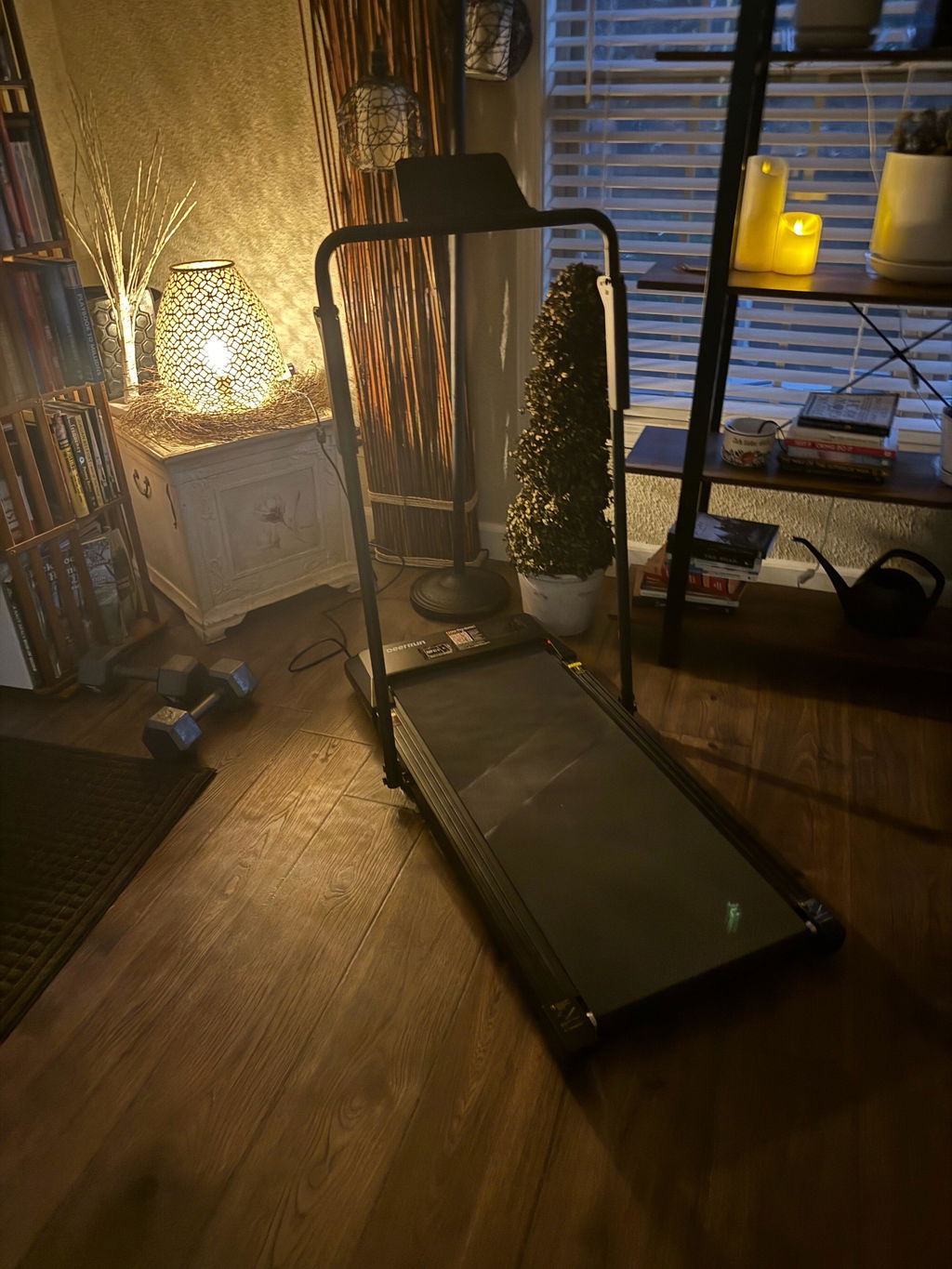
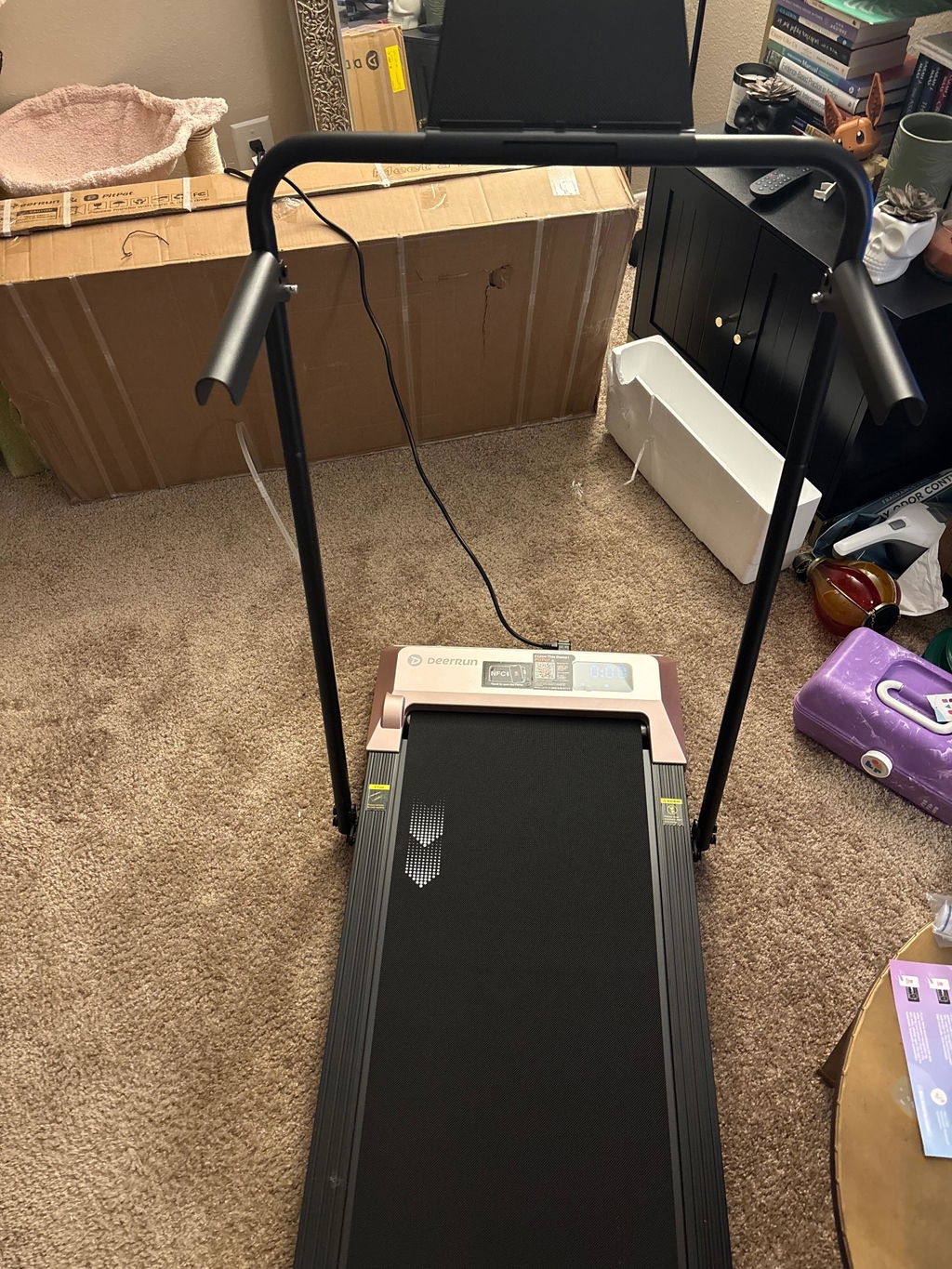
A treadmill like the DeerRun Z10 Pro offers up to a 12% automatic incline, allowing you to adjust your workout through speed and incline instead of simply trying to run faster.
The goal isn't to run faster. It's to run at the right intensity for you—and build from there.

📩 Want to Learn How to Run Smarter?
Looking for more practical tips on running training, heart-rate control, and healthy exercise habits?
Subscribe to the DeerRun Newsletter for useful running advice, training tips, and healthy lifestyle content.
Learn More About DeerRun →6. Build Consistency Before Chasing Speed
If you're new to running, remember these four principles:
Don't chase distance.
Focus on completing your planned workout time.
Don't chase pace.
Focus on controlling your intensity.
Build consistency first.
Make running a sustainable habit.
Let speed come naturally.
As your fitness improves, you'll gradually be able to run faster at the same heart rate.
Using PitPat to track your running and workout data can also help you monitor workout duration, training frequency, and changes over time.
You don't need to chase a new personal record every time you run.
Learn to run comfortably and consistently first. Then let speed come later.
Run Smarter, Not Just Faster 🏃
If you're just getting started, you don't need to chase every mile or every second on the clock.
Focus on:
Time, heart rate, and consistency.
Build a more controlled indoor training routine with the DeerRun Z10 Pro.
Explore Z10 Pro →


Leave a comment
This site is protected by hCaptcha and the hCaptcha Privacy Policy and Terms of Service apply.