






Word Count: Approximately 1,150 words
Estimated Reading Time: 6 minutes
Have you ever felt exhausted all day, even though you haven't done anything physically demanding? Or slept seven to eight hours, only to wake up feeling groggy and drained?
It's easy to assume that feeling this way is simply part of getting older. But these changes may also reflect what's happening inside your body: gradual muscle loss and rising levels of chronic inflammation.
For many people, the first solution that comes to mind is more exercise—running, brisk walking, or aerobic workouts.
However, a 2026 study involving adults aged 50–65 suggests another approach: resistance training just three times a week for four weeks may produce measurable changes in inflammation and markers associated with brain health.
1. Resistance Training: An Overlooked Anti-Inflammatory Exercise
In August 2026, the international journal Brain and Behavior published a study involving 500 healthy, relatively inactive adults between the ages of 50 and 65.
Researchers examined what happened when participants began a structured resistance training program over just four weeks.
The findings highlighted two notable changes: lower levels of inflammatory markers and higher levels of a protein associated with brain health.
The Study at a Glance
500
Participants
50–65
Age Range
4
Weeks
12
Training Sessions
1.1 What Did the Training Program Include?
Participants completed three supervised resistance training sessions per week, scheduled for Monday, Wednesday, and Friday.
Each session lasted approximately 50 minutes:
Inside a 50-Minute Session
Warm-up
Circuit-based strength training
Cool-down
The program included six exercises:
Over four weeks, participants completed a total of 12 supervised resistance training sessions.
1.2 What Changed After Four Weeks?
Researchers reported two key findings.
1. Inflammatory markers decreased
Two markers associated with systemic inflammation showed measurable reductions:
IL-6
−0.74
pg/mL average decrease
TNF-α
−0.49
pg/mL average decrease
BDNF
+2.7
ng/mL average increase
2. A brain-related growth factor increased
Levels of brain-derived neurotrophic factor (BDNF) increased by an average of 2.7 ng/mL.
BDNF is a protein involved in neuronal growth, maintenance, and repair. It also plays an important role in processes associated with learning and memory.
These findings suggest that even a relatively short period of regular resistance training may positively influence inflammatory and neurological biomarkers.

2. How Resistance Training May Help Slow Age-Related Changes
As we move through middle age, several physiological changes can occur simultaneously.
Muscle mass gradually declines, chronic low-grade inflammation may become more common, and changes in bone density and brain function can emerge.
Resistance training may help address several of these processes.
Four Areas Resistance Training May Support
01 · Inflammation
May help improve inflammatory markers.
02 · Muscle
Helps maintain strength and physical function.
03 · Brain Health
May support markers associated with brain health.
04 · Bone Density
Provides mechanical stimulus that supports bone adaptation.
2.1 Rising Chronic Inflammation: Resistance Training as an Anti-Inflammatory Strategy
Chronic low-grade inflammation becomes increasingly relevant with age.
Unlike inflammation caused by an obvious injury, it may not produce noticeable redness, swelling, or pain.
However, persistent inflammation has been associated with metabolic disorders, cardiovascular disease, and cognitive decline.
A 2025 meta-analysis published in Ageing Research Reviews examined community-dwelling adults aged 40 and older.
The analysis reported that elevated C-reactive protein or high-sensitivity C-reactive protein was associated with a 1.54-fold higher risk of all-cause mortality, while elevated IL-6 was associated with a 1.47-fold higher risk.
The 2026 Brain and Behavior study adds to the evidence suggesting that resistance training may help improve inflammatory markers.
2.2 Gradual Muscle Loss: Resistance Training Helps Preserve Muscle
Muscle loss is another important age-related change.
Chinese Academy of Engineering academician Zhong Nanshan previously explained in an interview that muscle mass generally peaks around age 25 before gradually declining.
He noted that after age 40, muscle mass may decrease by approximately 8–10% per decade, with the rate potentially accelerating to around 15% per decade after age 70.
Resistance training works by challenging muscles against an external force.
During training, muscle fibers experience mechanical tension and microscopic stress. With sufficient recovery and adaptation, this stimulus can promote muscle growth and improvements in strength.
Regular resistance training can therefore play an important role in maintaining muscle mass and physical function as people age.

2.3 Brain Aging: Resistance Training May Support Brain Health
Brain aging does not necessarily progress at a constant rate.
A 2024 study published in the Proceedings of the National Academy of Sciences (PNAS) identified changes in brain aging patterns, including a transition around age 44 and another around age 67.
Research has also explored whether exercise can influence biological markers of brain aging.
A February 2026 study published in GeroScience reported that after one year of resistance training, participants showed an estimated 2.3-year reduction in brain age compared with the study's reference measure.
Participants who did not engage in resistance training did not show the same effect.
These findings suggest that strength training may offer benefits extending beyond muscle development, potentially supporting aspects of brain health as people age.
2.4 Declining Bone Mass: Resistance Training Supports Bone Density
Bone density also changes throughout life.
Cong Li, Director of the Department of Endocrinology and Metabolism at the Fifth Affiliated Hospital of Sun Yat-sen University, explained that bone mass increases substantially from birth through early adulthood.
Peak bone density generally occurs around ages 30–40, followed by gradual bone loss. This decline can accelerate after menopause.
Yu Bin, a clinical dietitian at Wuhan First Hospital, explained that when muscles contract, they place mechanical stress on bones.
This stimulus can encourage bone adaptation and mineral deposition, helping maintain bone density.
Resistance training can therefore be an important component of strategies aimed at supporting bone health and reducing osteoporosis-related risks.
3. Want to Start Strength Training? Begin With These Steps
You don't need an elaborate gym routine to introduce resistance training into your week.
The key is to choose manageable exercises, practice consistently, and gradually increase the challenge.
3.1 Five Resistance Training Exercises to Try
The following five movements can be included in a strength training routine:
Choose exercises that match your current strength and experience. More technical movements, particularly kettlebell swings, are best learned with qualified instruction before adding resistance.
3.2 Training Frequency: Start With Two Sessions a Week and Progress Gradually
In March 2026, the American College of Sports Medicine (ACSM) released an updated position stand on resistance training prescription for adults.
According to the guidance described in the source article, even a relatively modest training routine can produce meaningful improvements in strength, muscle development, and physical function.
For beginners, a practical starting point may include:
Your Beginner Strength Training Plan
1–2
Sessions per week
2–3
Movements per session
1–3
Sets per exercise
This approach may be particularly accessible for beginners, busy adults, older individuals, and people returning to exercise after a period of inactivity.
You also don't need to train to complete muscular failure.
Instead, use progressive overload—gradually increasing the challenge as your strength improves.
For example, after practicing an exercise consistently, you might increase the weight slightly or perform one or two additional repetitions per set.
3.3 Safety Tips: Keep Breathing and Stop if You Feel Unwell
Breathing naturally during resistance training is important.
Avoid holding your breath unnecessarily, as doing so may contribute to significant changes in blood pressure.
If you experience any of the following symptoms during exercise, reduce the intensity or stop:
Know When to Stop
- Chest pain or tightness
- Dizziness
- Heart palpitations
- Unusual shortness of breath
- Excessive or unexpected fatigue
- Significant joint or muscle pain
Seek medical attention when necessary, particularly if symptoms are severe or persistent.
4. Conclusion: Resistance Training Is About More Than Building Muscle
Resistance training is often associated with lifting heavier weights or building stronger muscles.
But emerging research suggests its potential benefits may extend much further.
From reducing inflammatory markers and helping preserve muscle mass to supporting bone density and brain health, regular strength training can contribute to healthy aging in several ways.
The encouraging takeaway is that you don't necessarily need an intensive training schedule to begin seeing measurable benefits.
Starting with a manageable routine, practicing consistently, and gradually building strength can be a practical way to support long-term health.
Make Movement Part of Your Everyday Routine
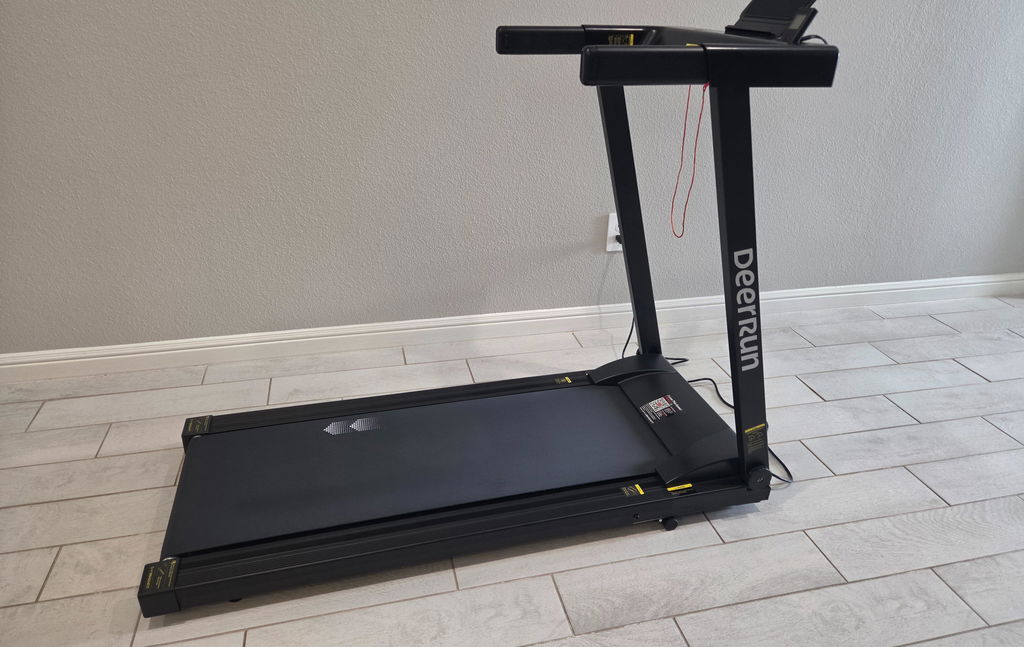
Build a consistent fitness routine with equipment that fits your home and lifestyle.
Explore DeerRun Treadmills →



Leave a comment
All comments are moderated before being published.
This site is protected by hCaptcha and the hCaptcha Privacy Policy and Terms of Service apply.