





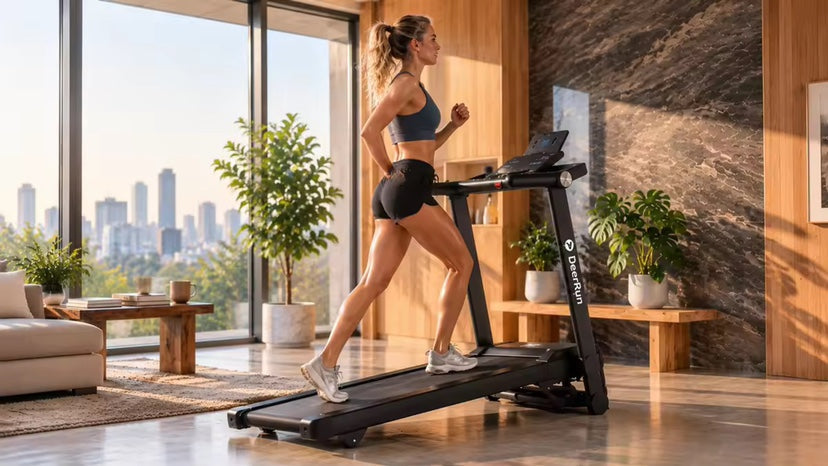
1. Why Does Incline Walking Help with Fat Loss?
1.1 Why is Incline Walking More Strenuous? The Reason: Working Against Gravity
Flat walking mainly relies on moving the body forward, while incline walking also requires overcoming the upward load brought by gravity, so the body needs to consume more energy. A study published in the Journal of Biomechanics tested 16 participants on a treadmill, comparing walking at 0%, 5%, and 10% inclines. The results showed that compared to flat walking, the net metabolic cost increased by an average of about 52% at a 5% incline and about 113% at a 10% incline. The study also found that the activity patterns of lower limb muscles, such as the soleus and vastus lateralis, are closely related to energy expenditure. This indicates that, under the same testing conditions, appropriately increasing the treadmill incline can significantly increase the energy expenditure of walking.
When speed and other conditions are similar, increasing the incline usually increases exercise intensity. However, actual energy expenditure is also affected by factors such as body weight, speed, and personal fitness. It is not necessarily true that the higher the incline, the better the training effect.
1.2 What is the Impact of Incline Walking on Belly Fat?
Incline walking cannot directly target and burn belly fat, but it can help the body reduce overall body fat by increasing exercise intensity and total energy expenditure. Belly fat mainly includes subcutaneous fat and visceral fat. The body will not preferentially burn fat in a specific area just because of a particular type of exercise. Therefore, regular incline walking, combined with a reasonable diet, helps to gradually reduce overall body fat, and belly fat may decrease accordingly.
2. 4 Key Factors Affecting the Fat Loss Effect of Incline Walking
2.1 Incline: Progress Gradually, Don't Blindly Chase High Inclines
When you first start training, you don't need to directly challenge high inclines. You can adjust gradually according to your exercise foundation:
- Beginners: 1%–3% incline. You can start at a speed of around 3 km/h to feel the slight uphill resistance. This stage is mainly about adapting to the incline and maintaining a natural gait. Under normal circumstances, you should still be able to talk easily.
- Some Foundation: 3%–5% incline. You can appropriately increase the speed according to your physical condition, for example, trying 3.5–4.5 km/h. At this time, your thighs and calves will feel more obvious exertion, and your breathing and heart rate may also gradually increase.
- Advanced Trainees: 5%–8% incline. You can try a speed of around 4–5 km/h, but it should be based on your own exercise capacity. At this stage, the uphill resistance is more obvious, and both leg muscle load and cardiovascular exercise intensity will increase. It is not recommended to force yourself to maintain speed just to pursue high intensity.
The above are general training references, not fixed standards. If you experience obvious fatigue, unstable gait, or physical discomfort, you should reduce the incline in time.
If you want to perform more flexible incline training at home, you can consider the DeerRun Z10 Pro. It supports automatic incline adjustment up to 12%, making it convenient to adjust the incline according to different training stages. It is suitable for home exercisers who want to combine flat walking and uphill walking.

2.2 Duration and Frequency: Regular Training is More Important Than Occasional Sprints
Beginners can start with 15–20 minutes per session, 3 times a week, and gradually extend the training time after adapting.
The Centers for Disease Control and Prevention (CDC) recommends that adults engage in at least 150 minutes of moderate-intensity aerobic exercise or 75 minutes of high-intensity aerobic exercise per week, and arrange at least 2 days of muscle strength training per week.
You don't have to do high-incline training every day. Combining incline walking with flat brisk walking, cycling, and other activities can also help you gradually reach your weekly exercise goals.
2.3 Diet: Don't Rely Only on the Treadmill
Regular exercise can increase energy expenditure, but if the calories consumed over time exceed the body's consumption, the fat loss effect may also be affected.
You can pay attention to the following points in your daily routine:
- Reduce sugary drinks and high-calorie snacks.
- Ensure the intake of protein, vegetables, and dietary fiber.
- Avoid overeating after exercise.
- Maintain a regular diet and do not rely on extreme diets.
Combining exercise with a reasonable diet is more conducive to long-term weight management.

3. How to Arrange Treadmill Incline Walking Training?
If you don't know how to start, you can refer to the following approximately 25-minute beginner training plan.
| Training Phase | Time | Suggested Settings |
|---|---|---|
| Warm-up | 5 mins | 0%–1% incline, comfortable speed |
| Phase 1 | 5 mins | 2%–3% incline |
| Phase 2 | 5 mins | 3%–5% incline |
| Recovery Phase | 5 mins | Lower incline, slow down speed |
| Cool Down | 5 mins | 0% incline, walk slowly |
Note: The above is a training reference for general healthy adults. Beginners can lower the incline or shorten the time, and the speed should be based on maintaining a stable gait.
You can arrange 3 training sessions per week first, and then gradually increase the duration or intensity after adapting. During training, keep your upper body naturally upright, look straight ahead, and do not rely on the handrails for a long time to support your body.
4. 3 Mistakes to Avoid During Incline Walking
- Relying too much on handrails: Supporting the body with arms for a long time may affect natural gait. Try to maintain a normal walking posture. Handrails are mainly used for getting on and off the treadmill or for temporary balance.
- Blindly pursuing high incline and high speed: Excessive incline may increase the burden on the body. If you cannot maintain a stable pace, you should reduce the incline or speed in time.
- Ignoring strength training: Incline walking cannot completely replace strength training. You can add basic strength exercises twice a week, such as squats, lunges, and glute bridges, to help maintain muscle strength.
5. Frequently Asked Questions (FAQ)
Q1: Can daily incline walking reduce belly fat?
You don't need to walk every day, and you can't rely solely on walking. If you do high-intensity incline walking every day, your body lacks recovery time, which can easily lead to excessive fatigue and even joint strain. It is recommended to arrange 3–4 incline walks per week, and intersperse flat brisk walking or rest on other days. In addition, the reduction of belly fat depends on a "total body calorie deficit." You must control the intake of high-sugar and high-fat foods in your diet. Sweating on the treadmill every day alone will not flatten your stomach.
Q2: Which is better for fat loss, incline walking or running?
Both can increase energy expenditure. Incline walking is suitable for people who want to increase exercise intensity through walking, while running can provide higher-intensity aerobic training. You can choose according to your physical fitness and exercise habits.
Q3: How long does it take to see results from incline walking?
4–8 weeks. Don't stare at the scale every day. It is recommended to take a side photo and measure your waistline before starting training. If you can stick to moderate-intensity incline walking 3-4 times a week for more than 30 minutes each time (combined with diet control), you will usually feel your pants getting loose around 4 weeks; you can see obvious waistline data changes around 8 weeks. Paying attention to changes in waist circumference is more meaningful than focusing on weight fluctuations.
6. Conclusion: Stick to Scientific Training, It's More Important Than Chasing High Inclines
Start with an incline and speed that suits you, and gradually increase the training volume. Establishing an exercise habit that you can maintain for the long term is more important than challenging a high incline once. If you want to perform more flexible incline training at home, you can learn about the DeerRun Z10 Pro treadmill with 12% automatic incline adjustment to make home fat loss more efficient.
Ready for More Confident Incline Workouts?
Explore the DeerRun Z10 Pro and discover a more flexible way to enjoy incline training at home.
Explore DeerRun Z10 Pro →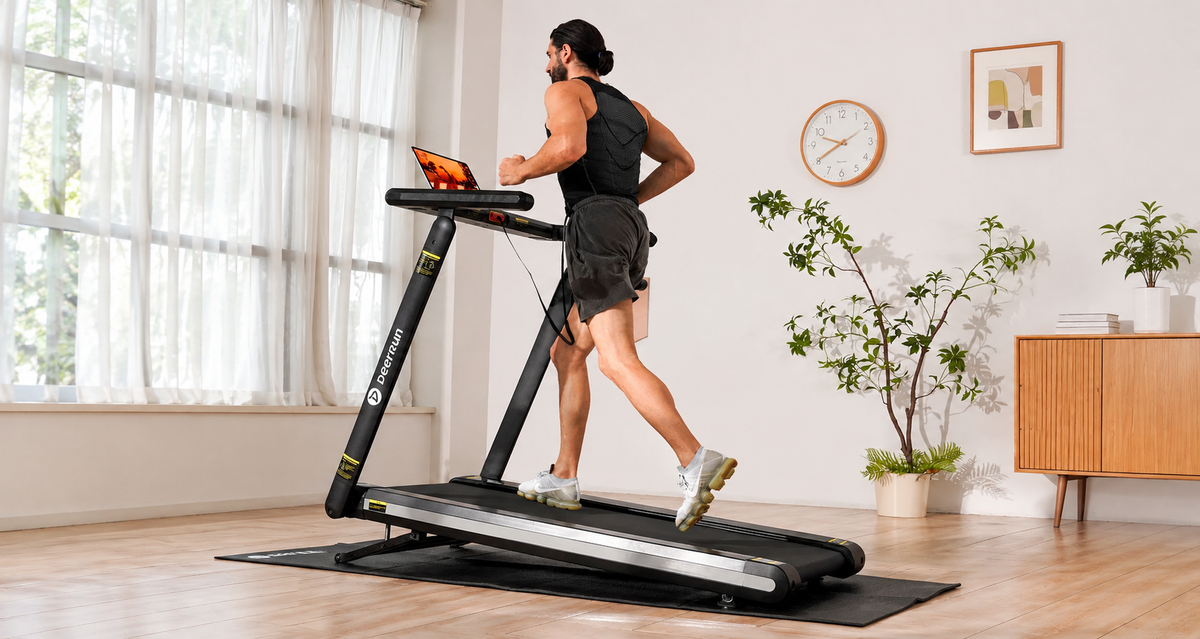


Leave a comment
All comments are moderated before being published.
This site is protected by hCaptcha and the hCaptcha Privacy Policy and Terms of Service apply.