






Once you start running, it's easy to fall into a familiar pattern: you begin with a few runs a week, feel like your body is adapting well, and gradually add more distance, increase your speed, or even turn your rest days into training days.
Then one day, your knees, calves, feet, or another part of your body starts to hurt.
Running-related injuries can happen suddenly, such as after a fall or twist, or develop gradually from repeated stress over time. For runners, the lower body is particularly exposed to repetitive loading.
So reducing your risk of injury isn't about simply running less. It's about knowing when to increase your training, when to slow down, and when to give your body more time to adapt.
1. When Does Running Actually Become "Too Much"?
1.1Acute Injury vs. Overuse Injury
Usually happens because of a sudden event, such as a fall or twist.
Develops gradually when repeated training stress builds up over time.
For recreational runners, overuse injuries are more common. Some problems are not caused by a single run, but develop gradually when training volume, intensity, and recovery remain out of balance.
1.2 Where Do Running Problems Usually Occur?
Running-related discomfort most often affects the lower body, with the knees and feet among the areas most commonly affected. Some runners may also experience discomfort in multiple areas at the same time.
It's also important to distinguish DOMS (Delayed Onset Muscle Soreness) from an actual running injury. Muscle soreness after a workout usually improves gradually. If pain persists, gets worse, or affects your running form or daily activities, don't simply try to push through it.

2. Are You Making Any of These 7 Running Mistakes?
1) Increasing Your Mileage Too Quickly
Going from running three times a week to five, or suddenly adding a large amount of distance, may give your body more load than it has had time to adapt to.
Changing one major training variable at a time is easier to manage than increasing frequency, distance, and intensity all at once.
2) Running Hard Every Time
If every run is about going faster or farther, recovery demands can quickly accumulate.
An easy run isn't a "wasted" workout. Lower-intensity sessions are an important part of creating variation in your overall training load.
3) Skipping Your Warm-Up
Going straight from standing or sitting into a faster run means your body has less time to gradually transition into exercise.
Your warm-up doesn't need to be complicated. A few minutes of easy walking or jogging can help you gradually get into your workout.
4) Running Through Pain
Fatigue and pain are not the same thing.
If pain continues, becomes more noticeable, or changes the way you move, don't rely on willpower alone to finish the workout.
5) Treating Recovery Like "Doing Nothing"
The training stimulus happens during exercise, but your body needs recovery time to adapt.
Sleep, rest days, and low-intensity activity are all part of a well-rounded training plan.
6) Increasing Speed, Distance, and Incline at the Same Time
For example, you might increase a 30-minute run to 45 minutes while also running faster and adding incline.
Each change may seem manageable on its own, but combining them can cause your overall training load to rise quickly.
7) Training at Your Old Fitness Level
If you used to run five miles comfortably, that doesn't necessarily mean you should start at five miles again after taking several months off.
When returning to running, rebuild your base according to your current fitness level and recent training volume, not your previous best.
3. Don't Skip These Two Steps Before and After Your Run
Before Your Run: Give Your Body Time to Warm Up
You can spend 5–10 minutes warming up, starting with easy walking and gradually moving into brisk walking or light jogging.
The goal isn't to turn your warm-up into another workout. It's simply to give your body time to transition into exercise.
After Your Run: Gradually Reduce the Intensity
Instead of stopping immediately after a harder effort, spend around 5 minutes gradually reducing your pace—for example, moving from jogging to walking and then to an easy pace.
You can then add some gentle mobility or stretching based on your workout and how your body feels.
If you experience persistent or significant pain after training, recovery doesn't mean simply pushing through it. Consider stopping the activity that aggravates the pain and seeking professional evaluation.

4. The Goal Isn't to Run Less—It's to Manage Your Training Load
Reducing injury risk doesn't necessarily mean running less. It means learning how to manage changes in your training.
Keep these three principles in mind:
Increase training time before adding more speed, or use incline to change the challenge without immediately increasing pace.
Avoid stacking hard workouts day after day. Give your body a mix of easier and harder training sessions.
Strength and coordination in the core, glutes, thighs, and calves can also be valuable parts of a long-term running routine.
5. Different Training Goals Call for Different Treadmills
Choosing the right treadmill cannot directly prevent running injuries, but equipment that matches your training style can help you better control speed, incline, and workout intensity, reducing unnecessary strain caused by using equipment that doesn't fit your needs.
For Walking and Lower-Intensity Movement
If your main goal is walking, recovery, or simply adding more daily movement, a walking treadmill such as the DeerRun Q2 Urban is better suited to lower-intensity use.
Measuring just 42.62 × 19.69 × 3.94 inches, it is designed for everyday walking, working from home, and small-space use.
For Progressing From Walking to Running
If you're gradually moving from walking to jogging and running, consider a treadmill such as the DeerRun Z10 Pro, which covers a wider range of training intensities.
Its automatic incline and wider speed range allow you to progress from easy walking to steady running on the same machine.
For Regular Running and Structured Workouts
For runners who already have a regular running routine and want a more stable training experience, the DeerRun A6 Plus is better suited to everyday running and structured workouts.
It also supports the PitPat App for tracking and managing your workouts. It can accommodate everything from walking and jogging to regular running.
6. Create a Science-Based Training Plan Before You Run
Many runners know they shouldn't overtrain, but there's a more practical question:
This is where smart training features can be useful.
With AI Coach, the DeerRun A6 Plus can work with the PitPat App to make a treadmill session more structured instead of simply getting on and running for a while.
A workout can include a warm-up, main training phase, and recovery period. Different training days can also have different purposes rather than always trying to run faster or farther.
It's about matching the training stimulus to what your body can handle right now.
You need to give your body a chance to adapt to the next one.
If you're rebuilding your running routine, start by understanding how you want to train, then choose equipment that matches your needs—whether that's walking, progressing from walking to running, or maintaining a regular running routine.
Ready to Build a Smarter Running Routine?
Choose the treadmill that matches your training goals and gives you more control over your workout.
Explore DeerRun Treadmills →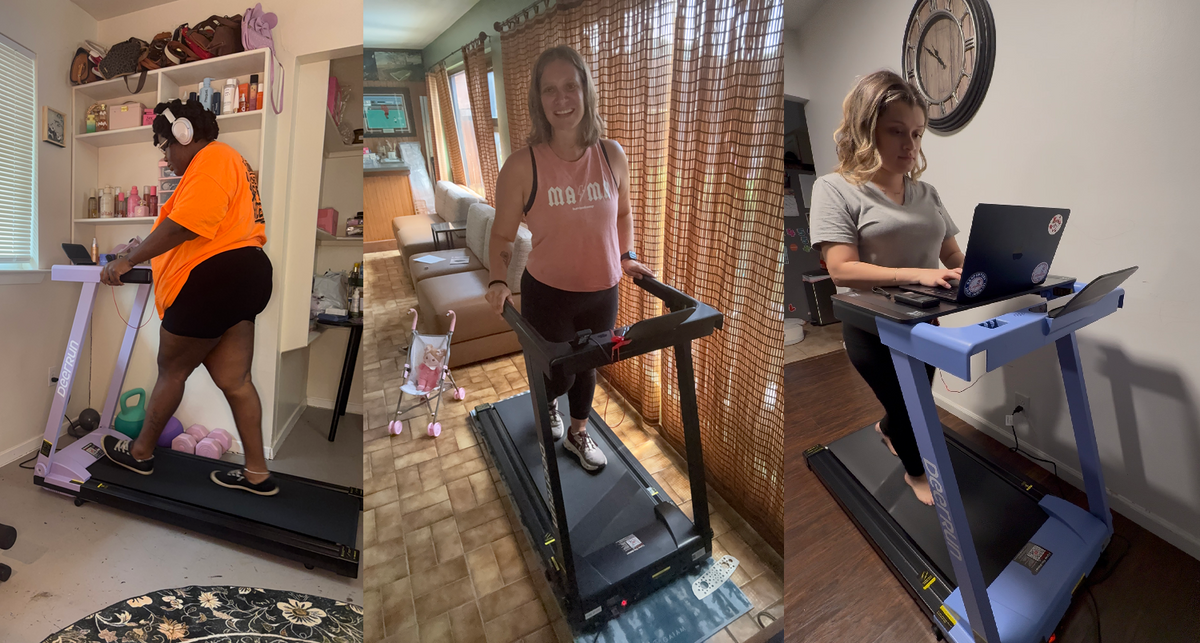


Leave a comment
This site is protected by hCaptcha and the hCaptcha Privacy Policy and Terms of Service apply.