





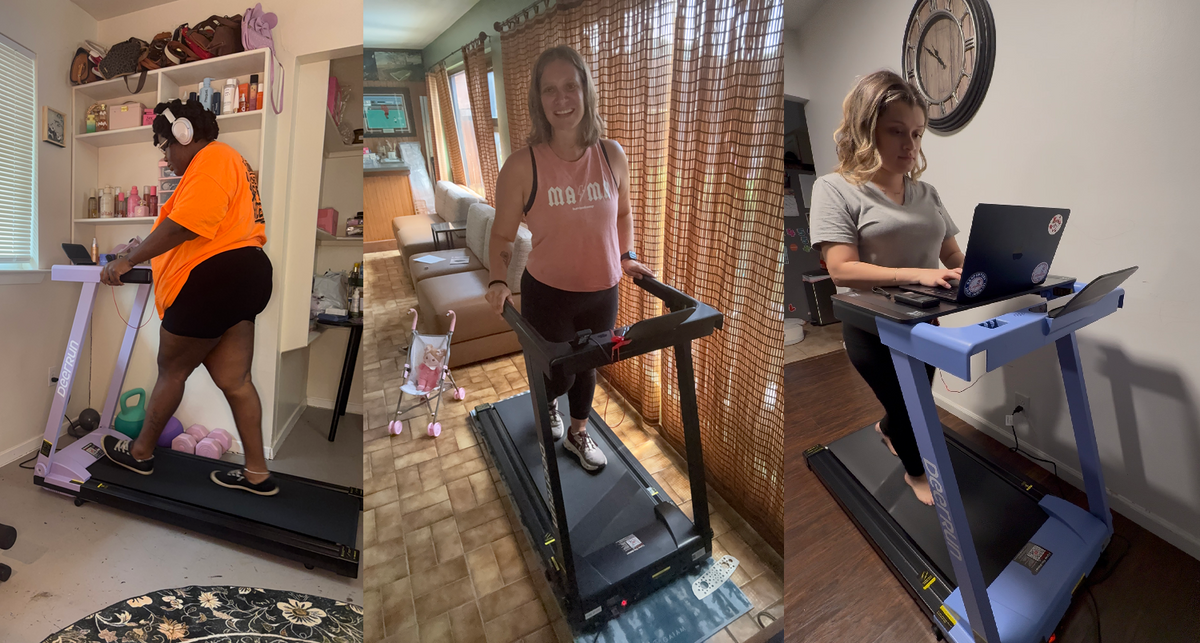
When you open the product pages of several treadmills, it’s easy to get distracted by a long list of specifications.
10% incline, 12 MPH, 15 workout modes, a large screen, App connectivity…
There are more and more numbers, but that doesn’t necessarily mean you are getting closer to the right answer.
Because buying a treadmill is not a “specification competition.”
If you mainly use a treadmill at home for walking, power walking, jogging, or daily cardio, what really affects your experience is often the speed range, running belt space, stability, weight capacity, incline, and whether the machine can fit your home space.
Some features may look advanced, but if you only use them a few times a year, they don’t have much value for you.
So instead of asking:
“Which treadmill has the most features?”
It’s better to ask first:
“Which features will I actually use?”
1. How Are You Planning to Use This Treadmill?
If you mainly do daily walking, factors such as incline, operating noise, and storage are more important. If you plan to jog or run, then running belt size, stability, and speed range become more important.
You can first use this simple way to judge:
For example, if you only power walk for 30 minutes every day, a speed of around 2–4 MPH can cover most daily walking and power-walking needs, while a certain amount of incline adjustment can increase workout intensity without significantly increasing your speed.
But if you currently power walk and want to start jogging later, you can prioritize a model with a speed range of around 2–6 MPH and support for at least 5%–10% incline adjustment, leaving room for future progression.
There is no absolute good or bad when it comes to specifications. The key is whether they match the way you use the treadmill.

Choose a Treadmill That Grows With You
Your workout needs can change over time. Discover 5 things to look for when choosing a home treadmill that can keep up with your progress.
Explore the 5 Things →2. Which Specifications Affect Your Workout Experience?
After determining how you will use the treadmill, you can then look at the specific specifications.
2.1 Is a Higher Top Speed Always Better? First Look at How Much You Actually Need
Speed determines what types of workouts you can do.
People who mainly walk do not need to increase their budget just for a very high top speed. People who plan to jog or run should leave some room for future workout intensity.
Take the DeerRun A1 Pro as an example. Its maximum speed is 10 MPH.
For people whose workouts mainly consist of daily walking, power walking, light jogging, and home cardio, this range already covers a relatively wide range from walking to higher-intensity workouts. There is no need to pay simply for a higher speed specification.
2.2 Is a Bigger Machine Always Better? Don’t Ignore Running Belt Size
Running belt dimensions are more worth comparing carefully than many additional features.
When walking, your stride and body movement are relatively limited. As your speed increases, especially when entering a jogging or running state, your forward and backward movement will increase significantly.
At the same time, don’t confuse these two concepts:
The overall dimensions determine how much space the treadmill takes up, while the running belt dimensions determine how much space you have when exercising.
2.3 Is the Weight Capacity Enough? Don’t Just Look at “It’s More Than My Weight”
It is best to leave some room when considering the weight capacity.
Running creates dynamic loads rather than simply the static weight of standing on the machine. Therefore, if you plan to use it frequently, weight capacity and overall stability should be considered together.
The DeerRun A1 Pro has a rated weight capacity of 350 lbs, which can meet a wide range of home-use needs.
Having reasonable extra capacity is usually more reassuring than just meeting the standard.
2.4 Do You Need Incline? First Look at Your Workout Style
Even while maintaining the same speed, increasing the incline can increase the difficulty of your workout and make power walking more challenging.
The DeerRun A1 Pro provides a 6% manual incline, which can meet the needs of power walking, home cardio, and people who want to gradually increase their workout challenge.
But if you enjoy high-intensity hill-climbing challenges and want the feeling of mountain climbing, you need a more professional model that can provide a wider incline range of 15%–48%, such as the APEX Titan 1.
2.5 How Much Floor Space Does It Take? Check Your Space First
When buying a home treadmill, calculate the floor space in advance. The unfolded dimensions determine whether you can fit the treadmill and have enough room to exercise freely; the storage design determines whether it will take over your living space.
The DeerRun A1 Pro measures 53.35 × 24.06 × 44.57 inches (L × W × H) when unfolded, taking up approximately 4.4 feet in length and 2 feet in width. Its size is roughly similar to the mattress of a standard twin bed, but narrower.
But note: 8.91 square feet ≠ all the space you need to prepare. When actually placing the treadmill, you also need to consider:
- The range of your body movement while running.
At the same time, the DeerRun A1 Pro uses a foldable design, so after use, it can be folded and stored under a bed or in a narrow space.

3. How Should You Choose If Your Budget Is Limited?
Consider your options in this order: “Workout needs → User experience → Smart features.”
What Should You Prioritize?
First Priority: Make Sure the Workout Capabilities Are Covered
First confirm whether the speed, running belt, weight capacity, stability, and incline meet your needs.
These are the basic functions of a treadmill and are also the parts that are hardest to make up for with other features.
Second Priority: Look at the Home-Use Experience
- Is it easy to operate?
- Is it easy to move?
- Can it be folded?
- Is it easy to store without taking up space?
These factors may not look like “performance,” but they directly affect whether you will continue using the treadmill.
The DeerRun A1 Pro supports folding and is equipped with a mobility design. If the treadmill needs to be placed in a bedroom, living room, or shared space, this type of design has more practical value than simply adding several workout modes.
Third Priority: Consider Smart Features
Finally, consider whether the supporting App provides workout data tracking, community challenges, and even personalized AI personal trainer workout plans.
For example, the DeerRun A1 Pro can connect to the PitPat App, which offers a variety of gamified sports community challenges, an active club atmosphere, daily workout data tracking, and personalized AI training plans.
4. Before Placing Your Order, Check This List Once
Before making your final decision, go through the following questions:
Pay for the workout capabilities you really need, rather than paying for unnecessary features you won’t use.
The DeerRun A1 Pro offers a 10 MPH maximum speed, 6% manual incline, 350-lb weight capacity, and foldable design, while also supporting the PitPat App for workout data tracking and training interaction. But whether it is right for you ultimately depends on your workout style and home space.
Don’t pay for the most impressive numbers on the specification sheet.
First determine what you will actually use, then spend your budget on those things.
Ready to Buy a Treadmill?
Find the Configuration That Truly Fits Your Needs.
Explore DeerRun A1 Pro →


Leave a comment
This site is protected by hCaptcha and the hCaptcha Privacy Policy and Terms of Service apply.