






Word count: ~1050 words | Estimated reading time: 6 minutes
“Running damages your knees” is one of the biggest concerns people have before starting a running routine. Many people want to boost their health through consistent jogging but hold back over persistent worries:
- Is running bad for your knees and will regular running lead to premature knee degeneration years down the line?
The critical truth most people miss: running itself is not the root cause of knee pain or degradation.
- Why do some runners stay pain-free for decades, while newbies feel knee discomfort quickly?
The critical truth most people miss: running itself is not the root cause of knee pain or degradation. Joint strain almost always stems from four controllable factors: improper training volume, flawed running mechanics, weak supporting muscle groups, and insufficient recovery time. Scientific running does not mean avoiding movement entirely—it means gradually conditioning your body with balanced, intentional training to avoid unnecessary stress.
Does Running Every Day Automatically Hurt Your Knees?
The belief that all running harms knees is a widespread fitness myth. Peer-reviewed research published in the British Journal of Sports Medicine analyzed data from over 100,000 participants across all activity levels to compare knee osteoarthritis risk:
- Recreational casual runners: Only 3.5% developed knee degeneration
- Sedentary inactive adults: 10.2% developed knee degeneration
- Elite competitive high-mileage runners: 13.3% developed knee degeneration
This data proves moderate, consistent jogging lowers long-term joint risk compared to a sedentary lifestyle. Regular running strengthens glutes, quads and core stabilizers to improve full-body balance and reduce knee load. Instead of asking “should I run?”, the far more important question is “am I running in a way that matches my body’s limits?”
1. Rapid Spikes in Training Volume
Nearly all acute running knee discomfort comes from sudden overload, not years of light exercise. If you normally log 5km weekly and jump straight to 30km, your connective tissue and leg muscles cannot adapt fast enough. Simultaneously boosting distance, frequency and intensity creates unmanageable joint pressure. Always adjust one training variable at a time to let your body recover between progress jumps.
2. Inefficient Running Form
Running is a repetitive impact movement, so poor posture compounds stress on knees over thousands of strides. Common harmful patterns include overstriding (landing far ahead of your center of gravity), unstable torso positioning, and weak core engagement that shifts impact straight to your kneecaps. There is no single “perfect” universal form—focus on a soft, compact landing that feels natural for your frame.
3. Skipping Planned Running Recovery Tips
Many new runners mistakenly believe daily hard training delivers faster results. Exercise creates micro-stress on muscles and joints; rest periods are when your body repairs and grows stronger. Without regular recovery, your running form will break down from accumulated fatigue, drastically raising your risk of runner’s knee and persistent soreness.
Worried About Running Injuries? Start With Your Training Habits
Running itself isn't necessarily the problem. How you train can also affect how much stress your body has to manage. If you're increasing mileage, running harder, or skipping recovery, it's worth taking a closer look at your routine.
Learn the common mistakes runners make and practical ways to build a more balanced training routine.
Read: 7 Running Mistakes That Lead to Injury (And How to Avoid Them) →What Exactly Is Runner’s Knee?
Runner’s Knee describes dull or sharp pain around the front kneecap, flaring up mid-run or while climbing stairs. This common irritation does not mean you have to quit running permanently. It signals an imbalance in your training plan, muscle strength or movement control that you can adjust to resume pain-free workouts.
Primary Triggers for Runner’s Knee
- Runner’s knee causes include sudden increases in weekly mileage or workout intensity
- Underdeveloped glute, thigh and core muscles that fail to distribute impact load
- Overstriding and unstable landing mechanics that concentrate force on knee cartilage
Injury prevention does not require eliminating cardio entirely—it requires refining your training routine to work with your joints, not against them.
4 Science-Backed Ways to Minimize Knee Stress While Running
1. Follow the 80/10/10 Balanced Training Rule
Avoid pushing maximum speed on every single workout. The balanced 80/10/10 framework protects joints while building endurance:
- 80% low-intensity comfortable jogging to build stamina with minimal joint impact
- 10% moderate speed drills to boost running efficiency
- 10% high-intensity intervals paired with full rest days afterward
2. Ramp Up Training Gradually
Never raise distance, session length and speed all at once. Slow, steady progress lets ligaments, cartilage and leg muscles adapt without excess strain, drastically cutting knee injury odds.
3. Add Weekly Strength Training
Strong supporting muscles act as natural shock absorbers for your knees. Schedule 1–2 weekly sessions targeting glute activation, quad strength and core stability to evenly disperse impact force during every stride.
4. Choose Low-Impact Home Running Equipment
Hard concrete pavement transfers full landing shock straight to your joints. Indoor treadmills with built-in multi-layer cushioning support running injury prevention by reducing impact and helping runners protect their knees during daily training. DeerRun X20 15% Auto Incline Full-Belt Treadmill, Z10 Pro 12% Auto-Incline Treadmill and A1 Pro Move+ AI Smart Treadmill feature specialized shock-absorbing running belts designed to soften foot strikes for beginners, casual health runners, and consistent home cardio enthusiasts.

Tailored Low-Stress Running Plans For Every Fitness Level
Beginners New to Running
Prioritize habit building over distance. Train 2–3 weekly sessions combining slow walking and light jogging, keeping all movement low-intensity to let your joints adapt slowly. The compact Q2 Urban Plus 7% Incline Walking Pad offers gentle daily movement ideal for easing into cardio without harsh joint impact.
Health-Focused Casual Runners
Stick to 3–5 weekly light runs, reserving high-effort workouts for only 1–2 sessions weekly, and schedule full rest days between harder training blocks to protect knee cartilage long-term.
Advanced High-Volume Runners
Balance high-mileage sessions with dedicated recovery weeks, limit consecutive hard workouts, and lean on strength training to reinforce joint stability for longer training blocks. Premium models like X50 18% Auto-Incline AI Treadmill deliver professional cushioning and adjustable terrain training for intense home running.
Track Safe, Balanced Workouts With PitPat App
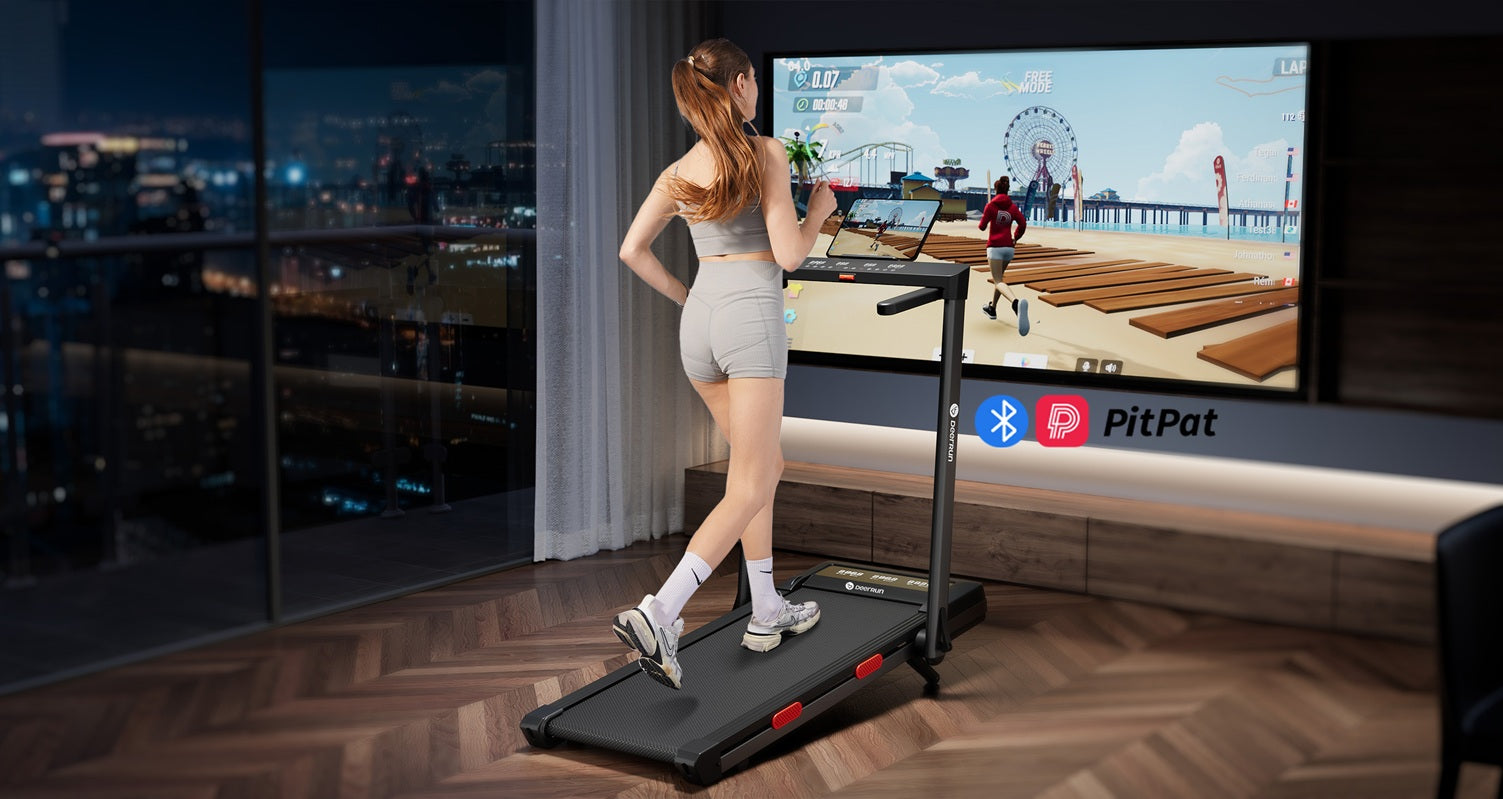
The biggest hurdle to sustainable joint-friendly running is monitoring your training load to avoid accidental overtraining. The integrated PitPat App pairs with all DeerRun smart home fitness equipment to log weekly frequency, session duration, incline intensity and cumulative impact stress metrics. Real-time data feedback alerts you if your mileage spikes too quickly, guiding you to adjust your plan before knee discomfort develops. Whether you use a slim walking pad or full-size performance treadmill, PitPat creates personalized training reminders that align with safe, joint-protective running principles for consistent long-term progress.
Final Takeaway: Does Running Damage Your Knees? Poor Training Habits Matter More
Knee degeneration from running is almost always triggered by rapid mileage jumps, weak stabilizer muscles, flawed landing mechanics and lack of recovery—not moderate consistent jogging itself. Safe running relies on four core rules:
- Follow gradual, controlled increases to support running injury prevention
- Master soft, balanced running form to distribute impact evenly
- Schedule mandatory rest and strength training weekly
- Train on cushioned surfaces like DeerRun home treadmills to cut joint shock
Movement supports joint health; unregulated, unbalanced training creates unnecessary risk. With intentional planning and low-impact home equipment, running can remain a pain-free part of your lifelong wellness routine.
Start Your Joint-Friendly Home Running Journey
Skip harsh outdoor pavement and unpredictable terrain with DeerRun’s full lineup of shock-absorbing treadmills and walking pads. Pair your indoor workouts with the PitPat app to track safe training volume and avoid knee strain long-term.



Leave a comment
This site is protected by hCaptcha and the hCaptcha Privacy Policy and Terms of Service apply.