






Word Account: Approx. 1,200 words | Read Time: About 6 mins
When you first start adjusting your diet and exercise routine, your weight may drop fairly noticeably. But after a while, the number starts moving more slowly—or barely changes for a week or two.
The most common reaction at this point is:
Am I still eating too much?
But hitting a weight-loss plateau doesn’t mean your only next step is to eat even less. It’s more useful to first check whether your weight trend has actually stalled, whether your eating pattern has become less consistent, whether your daily activity has decreased, and whether your workouts have stayed exactly the same for too long.
Start by remembering this order:
Check the Trend → Review Your Diet → Restore Daily Activity → Adjust Your Training Last
1. A Few Days Without Weight Loss Doesn’t Necessarily Mean You’ve Hit a Plateau
Body weight doesn’t naturally decrease in a straight line every day.
Changes in hydration, sodium intake, carbohydrate storage, digestive contents, and even how much you exercised the day before can temporarily move the number on the scale up or down.
So if your weight hasn’t changed for two or three days, immediately responding by “eating even less” isn’t necessarily the right approach.
Instead of focusing on one day’s number, it’s more meaningful to look at the overall trend across a longer period:
Has your weight genuinely stayed within the same range, or is this simply a short-term fluctuation?
Confirm the trend first, then decide whether anything actually needs to change. This can help you avoid constantly adjusting your diet every time the scale temporarily moves back up.
2. Eating Less Doesn’t Mean Your Diet Is Better Structured
During a plateau, the problem sometimes isn’t that you’re “eating too much.” It’s that your eating pattern has gradually become less consistent.
For example:
You eat smaller meals but get hungrier in the afternoon. You cut back heavily on carbs but start snacking more at night. Your three main meals look very light, but drinks, sauces, and small snacks throughout the day start adding up.
So instead of making your meals even smaller, take another look at your entire day of eating.
Check four things:
✓ Are you frequently skipping meals?
✓ Does each meal include a consistent source of protein?
✓ Have you cut back too much on staple carbohydrate foods?
✓ Have snacks, sugary drinks, or high-energy sauces increased?
First, get your eating pattern back to something stable. Then decide whether further adjustments are actually necessary.
3. Don’t Immediately Cut Carbs or Skip Another Meal During a Plateau
If you’re already eating very little, cutting back even further may affect your fullness, workout performance, and everyday activity at the same time.
A more practical approach is to maintain a basic structure for each meal:
Protein + Staple Carbohydrate + Vegetables or Fruit
Protein can come from eggs, fish, meat, soy foods, or dairy products. Staple carbohydrates don’t need to be eliminated completely. Vegetables and fruit can help make your overall diet more complete.
The goal isn’t to make every meal smaller and smaller. It’s to make your eating pattern more stable and sustainable.
If you regularly skip meals in an attempt to lose fat, your overall eating rhythm may actually become harder to maintain.

4. If Your Weight Isn’t Moving, Check Whether Your Daily Activity Has Quietly Decreased
Some people actually become more sedentary during the day after they start exercising regularly.
The workout gets done, but commuting decreases. After an evening run, you don’t feel like moving anymore. Distances you used to walk gradually become car rides instead.
As a result, your structured workouts may still be happening while your total daily activity decreases.
If that’s the issue, you don’t necessarily need to add another high-intensity workout right away.
Start by bringing some easy walking back into your day.
For example:
10 minutes in the morning + 10 minutes in the afternoon + 10–20 minutes of easy walking in the evening
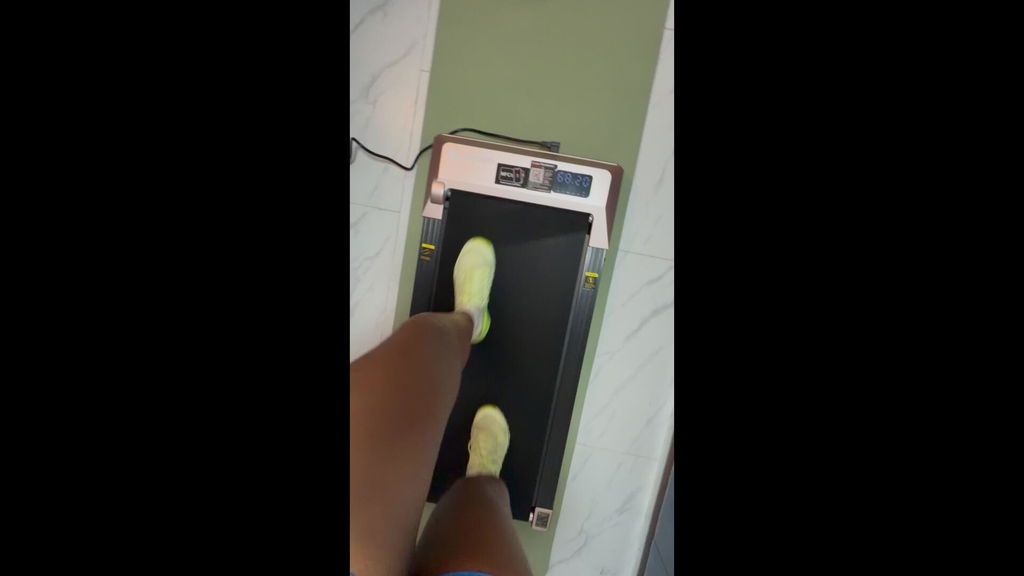
The DeerRun Q2 Urban supports 0.6–3.8 MPH, making it easier to fit walking into work, TV time, or other small gaps in your day without needing to set aside an additional full hour for exercise.
A plateau doesn’t always mean you need to train harder. Sometimes, simply restoring the everyday movement that has gradually disappeared is a more practical place to start.

5. Already Exercising Regularly? Check Whether Your Training Has Stayed the Same for Too Long
If your diet is relatively consistent and your daily activity hasn’t noticeably decreased, the next thing to check is whether your workouts have been following exactly the same pattern for too long.
If you complete the same workout every day at the same speed and for the same duration, your body becomes increasingly familiar with that training stimulus.
At that point, you can introduce some variation instead of simply making every workout longer.
If walking is your main form of exercise, the DeerRun Z10 Pro’s 0.6–7.5 MPH speed range and up to 12% Auto Incline allow you to add different incline levels to your usual flat walking sessions.
The purpose of incline is to add training variety—not to suggest that “a higher incline automatically means faster fat loss.”
If you already have a regular running habit, the A1 Pro’s maximum speed of 10 MPH is better suited to introducing easy runs, pace changes, or shorter running sessions to vary an otherwise fixed training routine.
6. Try a 7-Day Plateau Check Before Changing Everything at Once
Instead of cutting carbs today, adding another run tomorrow, and reducing your food intake again the day after that, spend seven days observing four areas first:
| What to Check | What to Look For |
|---|---|
| Diet | Are you skipping meals, making main meals increasingly smaller, or consuming more snacks and drinks? |
| Protein | Does each meal include a consistent protein source? |
| Daily Activity | Are you walking less and sitting more? |
| Training | Have your workouts stayed exactly the same for a long time? |
Identify which area has changed the most, then adjust that one first.
If your daily activity has decreased, restore some walking. If your eating pattern has become less consistent, start by returning to regular, balanced meals. If your training has stayed unchanged for a long time, then introduce some variation in speed, incline, or workout type.
A plateau isn’t a signal to increase everything at once. It’s a reason to find out which part of your routine has actually changed.
Conclusion | If Weight Loss Slows Down, Don’t Treat “Eat Less” as the Only Answer
What you really need during a weight-loss plateau isn’t to keep shrinking your meals. It’s to take another look at your overall daily routine.
First, determine whether the scale is showing a short-term fluctuation. Then review your diet structure, daily activity, and training changes.
Remember these four steps:
Check the Trend → Review Your Diet → Restore Daily Activity → Adjust Your Training Last
If the problem is that you’re not moving enough during the day, start with easy walking on the Q2 Urban. If you already have a consistent walking routine, use the Z10 Pro to introduce incline variation. If you’re already a regular runner, use the A1 Pro to vary your running pace.
Instead of “eating less and less, and training harder and harder,” identifying what has actually changed in your routine makes it easier to keep both your diet and exercise sustainable over the long term.
Don’t Focus Only on the Number on the Scale
When weight loss starts to slow down, look at what actually needs adjusting.
Explore DeerRun Treadmills →


Leave a comment
This site is protected by hCaptcha and the hCaptcha Privacy Policy and Terms of Service apply.