






Word Account: Approx. 1,300 words | Read Time: About 6 mins
You’re training for a 5K or 10K, but on most weekdays, you only have 20–30 minutes to work out. You get home late, it’s already dark, or the weather turns bad—and that day’s run can easily get canceled altogether.
The most important job of a home treadmill isn’t to replace outdoor running. It’s to keep those easily interrupted weekday workouts going—so you can still complete an Easy Run, short tempo run, or recovery run after work and keep it connected to the rest of your weekly training plan.
When choosing one, prioritize three things: Is the speed range enough? Does it provide enough training variety? Can your training record stay consistent?
1. Start with Treadmill Speed: Can You Actually Run at Your Usual Pace?
If your regular training includes easy runs, tempo runs, or short faster intervals, your treadmill needs enough speed range to support them.
The DeerRun A1 Pro reaches a maximum speed of 10 MPH (about a 6:00/mile pace), covering everything from easy jogging to faster-paced running.
That means when a weekday workout moves indoors, you don’t have to turn your planned run into low-speed walking simply because the treadmill can’t go fast enough.
Ideally, the speed range shouldn’t just barely meet your current needs either. As your training progresses and you start adding faster efforts, having some extra room to adjust is more practical than constantly running into the machine’s limits later.
| 5K/10K Training Type | Approx. Pace (/mile) | Treadmill Speed Needed |
|---|---|---|
| Recovery Run / Easy Run | 12:00–10:00 | 5.0–6.0 MPH |
| Everyday Tempo Run | 10:00–8:30 | 6.0–7.1 MPH |
| Short Faster Efforts / Intervals | 8:00 or faster | 7.5 MPH+ |
2. Treadmill Incline and Pace Changes: Make a 20-Minute Workout More Effective
5K/10K training doesn’t require every run to be hard, especially when you only have 20–30 minutes on weekdays.
A more practical approach is to give different weekday sessions different jobs: an Easy Run maintains your running frequency, a Controlled Run adds a small amount of pace variation, and a Recovery Run stays easy so you have enough recovery for the training ahead.
Incline can add another layer of variety.
The A1 Pro supports up to 6% Manual Incline. You don’t need to set it to the maximum every time. Instead, you can add some gentle elevation changes during a short workout so that increasing difficulty doesn’t always mean running faster.
Within the same 20-minute session, you might spend a few minutes at a slight incline and keep the rest relatively flat.
The point is to give different runs throughout the week different purposes—not to make every workout harder.

3. Only Have Half an Hour on Weekdays? Being Able to Start Immediately Matters
The workouts most likely to get interrupted are the ones on days when you only have 20–30 minutes after work.
If you still need to find a route, change your plan, or wait for better weather, it becomes very easy to cancel the workout altogether. That’s where a home treadmill becomes useful: it reduces the number of steps between deciding to run and actually starting.
The A1 Pro Move+ is well suited to short weekday workouts: its 0.6–10 MPH speed range covers everything from warm-up walking to short faster efforts. When you want to increase the intensity, you can also preset the 6% manual incline to add more variety to a 20-minute run.
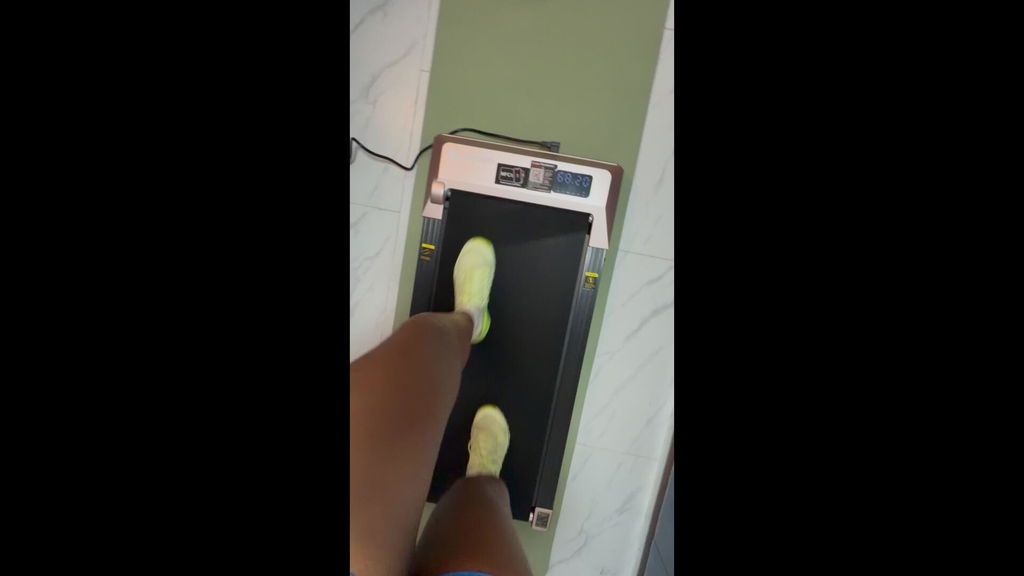
Setup and storage also affect how quickly you can start running. The A1 Pro requires no assembly and is ready to use right out of the box, with no complicated setup required.
When folded, it is about 8 inches high, and the built-in transport wheels make it easy to store under a bed, under a sofa, or against a wall when not in use. That way, the next time you want to run, you don’t need to plan a new route or rearrange your workout space first.
Planned a 20-minute Easy Run? Just get it done. Only have 15 minutes left? You can still fit in a short recovery run.
If you use the 2026 updated NFC pairing and PitPat App, it also becomes easier to connect each completed run to the rest of your weekly training.
For weekday training, the A1 Pro doesn’t make running itself easier—it reduces the friction before you start running.
4. Keep Your Distance Training on Track: Use PitPat to Connect Your Workout Records
One slower run won’t determine the success of your entire training week. But if you repeatedly miss weekday sessions and then suddenly try to make up for them with a long run on the weekend, your weekly training rhythm can become much less consistent.
That’s where PitPat AI Coach can help connect your weekday indoor runs with your weekend outdoor training.
It can help record completed workouts so you can see more clearly how many times you’ve run that week, which sessions you’ve already completed, and how your next workout fits into the plan.
That way, your weekend outdoor runs and weekday indoor sessions don’t become two completely separate training records.
A1 Pro helps you complete your weekday workouts.
PitPat helps keep your weekly training connected.
5. Train for Frequency Indoors, Run for Distance Outdoors on Weekends
Training for a 5K or 10K doesn’t mean you have to do all your future running on a treadmill.
Usually, only two or three shorter weekday sessions need to happen indoors, while the rest of your running can still stay outdoors.
A more practical approach is to give indoor and outdoor running different roles:
Weekday Indoor Runs
Better suited to Easy Runs, short tempo sessions, recovery runs, and backup workouts when time is limited. You can vary the difficulty through speed and up to 6% incline, while avoiding the disruptions caused by working late, darkness, or bad weather.
Weekend Outdoor Runs
Better suited to longer distances, real routes, terrain changes, and gradually adapting to the rhythm of outdoor running. You also usually have more time available.
With this setup, the treadmill doesn’t replace outdoor running. It becomes a supporting part of the overall training plan.
When the weather, your schedule, or work gets in the way, you still have another way to complete the workout.

6. Weekly Training Template: 3 Short Runs + 1 Outdoor Run
If your weekday time is limited, start with three sessions of 15–30 minutes each week:
| Day | Training | Focus |
|---|---|---|
| Monday | 20–30 min Easy Run | Keep it comfortable and maintain running frequency |
| Wednesday | 20–25 min Controlled Run | Add a small amount of speed or incline variation |
| Friday | 15–20 min Recovery Run | Keep it easy and save energy for the weekend |
| Weekend | Outdoor Longer Run | Increase distance and adapt to outdoor routes |
You don’t need to turn every day into a high-intensity workout.
Weekdays keep your training going. Weekends extend the distance.
If you’re not feeling your best, reduce the speed. If you’re short on time, shorten the session. The priority is to keep the training moving forward instead of skipping it completely just because the workout can’t be perfect.
PitPat can also continue recording these indoor sessions, giving you a clearer picture of your training across the entire week.
7. Which 5K/10K Runners Is the DeerRun A1 Pro Best Suited For?
If your training pattern is “weekend outdoor runs + weekday indoor backup sessions,” the role of the A1 Pro becomes fairly clear:
✓ Maximum speed of 10 MPH: supports a wider range of running workouts.
✓ Up to 6% incline: adds more variety to short training sessions.
✓ PitPat AI Coach: weekday workouts can continue to be recorded and connected with the rest of your training.
This combination isn’t designed to answer, “How can I completely replace outdoor running?”
Instead, it solves a more practical problem:
When you don’t have time to go outside today, how can your training plan still continue?
The decision is fairly simple. If you usually have only 20–30 minutes on weekdays, your training mainly consists of Easy Runs and short tempo sessions, and you want those workouts to remain part of the same training record, the A1 Pro is well suited to filling those weekday training gaps.
Conclusion: Connect Your Weekly Training to Build Toward a Stronger 5K or 10K
Training for a 5K or 10K doesn’t mean you need to run long every day.
For people with limited weekday time, a more practical approach is to use a home treadmill for shorter workouts and leave longer distances and real outdoor routes for the weekend.
The A1 Pro helps make sure your weekday runs actually happen, while PitPat keeps track of your training rhythm throughout the week.
If there’s one thing to remember, it’s this:
Weekdays keep the training going.
Weekends build the distance.
Keep Your 5K or 10K Training Moving
Use the DeerRun A1 Pro + PitPat AI Coach to keep shorter weekday runs connected to your weekly training.
Explore DeerRun A1 Pro →


Leave a comment
This site is protected by hCaptcha and the hCaptcha Privacy Policy and Terms of Service apply.