






Word Account: Approx 1,300 words
Reading time: About 8 minutes
It’s 6:30 p.m., and you’ve just finished dinner.
You check the time. There are only 30 minutes left before your 7:00 p.m. workout. Your running plan for today is already set: should you change into your running shoes and start running now, or simply postpone the workout?
For many people, the first thought is:
“Don’t you have to wait two hours after eating?”
Actually, “two hours” is not a hard-and-fast rule that applies to everyone. How long you should wait before running after eating usually depends on how much you ate, what you ate, what intensity of workout you plan to do, and how well your digestive system tolerates exercise.
So instead of simply memorizing “two hours,” it's better to first consider whether your dinner and your workout are a good match.
1. How Long After Eating Can You Run?
You can use the following approach as a general guide when deciding how long to wait to run after eating:
If you only had a small portion of food, such as a banana, toast, or yogurt, and you normally tolerate exercise well, you can usually wait around 30 minutes before starting an easy walk or jog. Still, adjust based on how your body feels.
After a regular dinner, it's generally better to wait around 1.5–2 hours before an easy run and start at a lower intensity. Starting a normal running workout just 30 minutes after eating may make bloating or discomfort more likely.
For interval running, sprinting, tempo running, or incline training, it's generally better to wait at least 2–3 hours and make sure you no longer feel noticeably full.
If you already feel bloated, have acid reflux, nausea, or abdominal discomfort, don't force yourself to exercise just because a certain amount of time has passed.
So, if you have just finished a normal dinner, “2 hours after eating” can be used as a relatively conservative guideline, but it doesn't have to be a strict countdown.
What really matters is what intensity of workout you plan to do and whether your body is already ready to exercise comfortably.
2. Why Isn't “2 Hours” the Standard Answer for Everyone?
How long you should wait after eating isn't determined by time alone.
Meal Size: The More You Eat, the Longer You May Need to Wait
A small portion of food and a large dinner naturally place different demands on your stomach during exercise.
If you only ate something small, such as a banana or some milk, and plan to do easy exercise, your waiting time may be relatively short.
But if you have just finished a full dinner, you shouldn't simply apply a fixed waiting time because you only have 30–60 minutes before your workout.
“30 minutes after eating” and “2 hours after eating” cannot be judged separately from how much you actually

Food: What You Eat Can Also Affect How Comfortable You Feel While Running
What you eat before exercise is also worth considering.
A study published in the Journal of the International Society of Sports Nutrition found that gastrointestinal discomfort is not uncommon among runners, and some runners may intentionally reduce their intake of foods such as high-fiber foods before competition.
Eating foods that are very high in fat or fiber, or foods that are more difficult to digest, may make some people more likely to experience bloating, acid reflux, abdominal discomfort, or bowel-related issues during exercise. Consuming too much protein or a large amount of food at once may also increase the burden on your stomach.
By comparison, small amounts of low-fat, easy-to-digest foods are generally more suitable before running.
If you already know that certain foods tend to make you feel bloated or uncomfortable, it's even more important to avoid having them too close to a high-intensity workout.
Workout Intensity: Easy Walking and High-Intensity Running Are Not the Same
Even if it's been exactly “1 hour after eating,” easy walking, an easy jog, and sprint intervals place completely different demands on your body.
The higher the exercise intensity, the more sensitive you may be to discomfort during digestion. During an easy jog, the overall physical demand is relatively low. If you didn't eat a large meal and don't feel uncomfortable, you may be able to gradually get started even when it's relatively close to mealtime.
However, interval running, sprinting, tempo running, and incline training significantly increase your breathing, heart rate, and abdominal workload. The impact and effort involved in running may also make bloating, acid reflux, nausea, or abdominal discomfort more likely.

3. What If Dinner and Running Always Conflict?
If your workout time frequently overlaps with dinner, the real problem you need to solve may not be “How long should I wait after eating?”
It may be how you schedule your workouts.
If possible, you can schedule your workout before dinner.
If you can only exercise after dinner, you can:
- Plan your dinner time in advance
- Avoid eating until you're overly full
- Leave more time before high-intensity workouts
- Take an easy walk after dinner
- Adjust your workout intensity based on how your body feels that day
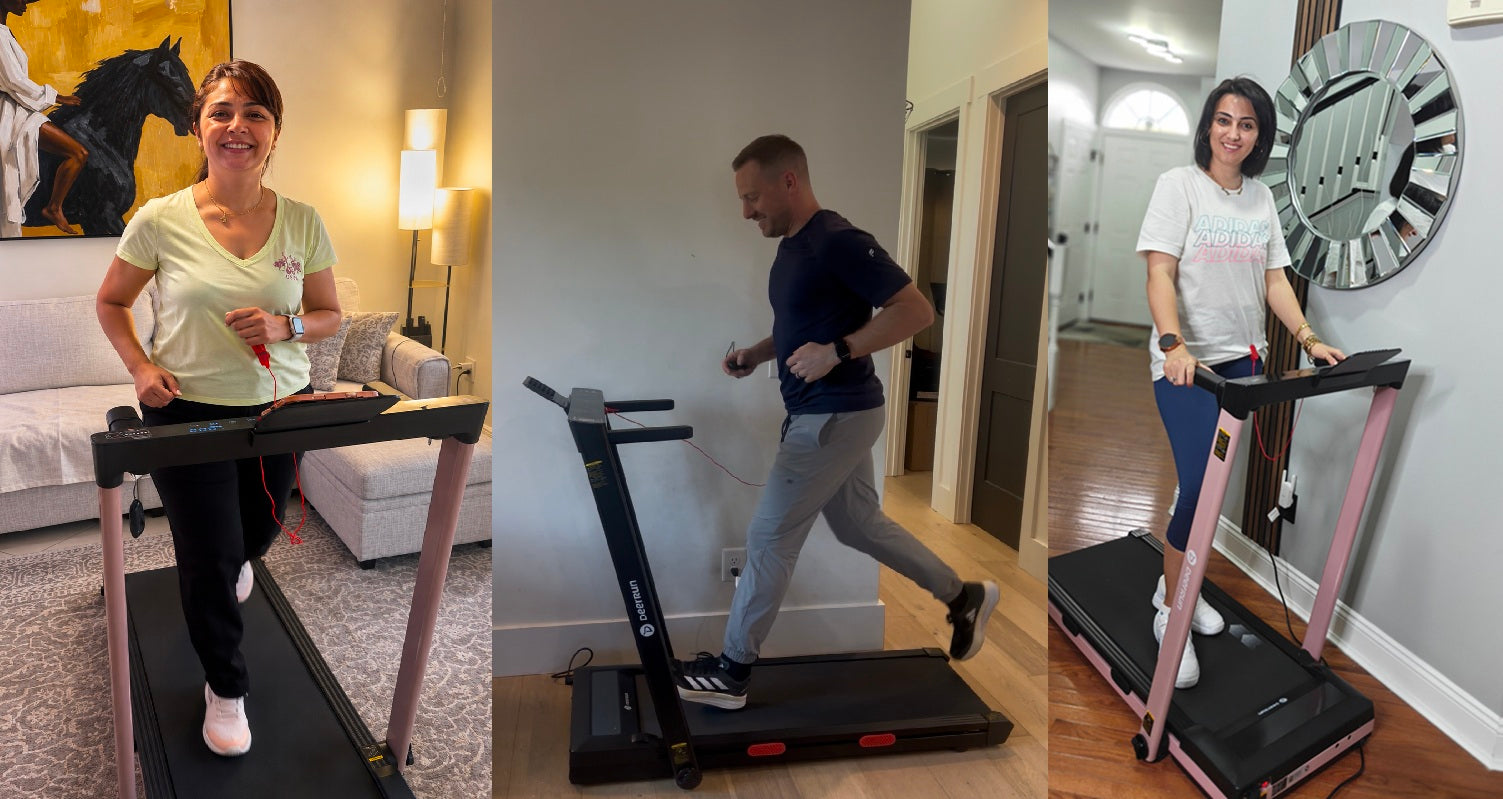
In addition, using a treadmill at home can make your workout schedule more flexible.
You don't need to spend extra time traveling to a gym, and you don't have to worry about the weather or outdoor routes. If you realize after dinner that your body isn't ready for the workout you originally planned, you can simply lower the speed, adjust the incline, or postpone the workout instead of rushing out the door.
For users who want to incorporate walking, jogging, and everyday workouts into their home routine, the DeerRun A1 Pro Move+ can be a flexible option for home training. It supports speeds from 1–12 km/h and up to 6% incline. Its LED display can also show speed, workout time, distance, and calories burned in real time, making it suitable for everyday walking, easy jogging, and different levels of home workouts.
If you don't feel quite ready after dinner, you can start at a lower speed and decide whether to continue based on how your body feels, rather than jumping straight into a high-intensity workout.
With PitPat, you can also track workout time and exercise data, helping you understand your training habits—for example, which workout times are easier for you to stick to and how your activity changes at different training intensities. This can help you gradually find a workout schedule that better fits your routine.

4. Don't Just Memorize “2 Hours”
So, how long should you wait to run after eating?
The answer isn't one fixed number that applies to everyone.
How long you should wait before running after a meal depends on how much you ate, what you ate, your workout intensity, and your individual tolerance.
If you've just finished a normal dinner and only have 30 minutes before your workout, especially if you're planning a high-intensity session, instead of forcing yourself to start, you can:
The most important thing isn't to “strictly wait a certain number of hours.” It's to make sure your workout plan actually fits your physical condition that day.
Make Your Training Time Work for You
Dinner and running don't necessarily have to conflict.
When your workout time is limited, instead of rushing into your workout just to meet a fixed schedule, give yourself more flexibility and adjust your workout intensity based on your dinner time and how your body feels.
Ready to Make Your Running Routine More Flexible?
If you want a flexible way to fit walking, jogging, and everyday workouts into your home routine, the DeerRun A1 Pro Move+ can help you adjust your workout speed and incline based on your schedule and how your body feels after eating.
Explore DeerRun A1 Pro Move+


Leave a comment
This site is protected by hCaptcha and the hCaptcha Privacy Policy and Terms of Service apply.