





Word Account: Approx 1,500 words
Reading Time: About 8 minutes
At 6 a.m., the alarm goes off.
You planned to run for 30 minutes, but you didn’t sleep well last night. After work, you still have chores to finish, so you may only have 20 minutes today. When you first started running, you could only manage an easy pace. A few weeks later, your energy may suddenly dip, and a pace that once felt comfortable starts to feel difficult.
That’s what real training looks like—your time changes, your energy changes, and your fitness changes.
So when buying a treadmill, don’t just ask, “How fast can it go?”
Ask a more important question:
Can it still work for you when your time, energy, and fitness level change?
A treadmill worth using long term shouldn’t only serve you on your best days. It should adapt as you change—and give you room to keep moving forward.
1. Your Condition Changes Every Day: Can the Treadmill Adjust With You?
For people who are used to working out early in the morning, getting up early doesn’t mean having the same amount of energy every day.
Some mornings, you may feel great and be able to complete your normal running workout. Other mornings, your body may not be fully awake yet, and lowering the intensity may be more appropriate.
That’s when the flexibility of a treadmill becomes important.
When shopping for a treadmill, pay attention to a few details:
- Can you start at a lower intensity?
- Does the speed range cover different stages of your training?
- Besides increasing speed, can you increase the training difficulty by changing the incline?
- Is it easy to adjust the speed and incline?
For example, the DeerRun Z10 Pro supports speeds of up to 7.5 MPH and features 12% automatic incline. You don’t necessarily need to run faster every day. You can also adjust your workout based on how you feel that day by changing the speed and incline.
For people who work out in the morning, noise is also important. The DeerRun Z10 Pro operates at less than 45 dB, helping reduce disruption to your surroundings during everyday home workouts.
A good treadmill shouldn’t force you to maintain the same intensity every day. It should give you the freedom to adjust your training.

2. Your Time Changes Every Day: Can the Treadmill Keep Up With Your Lifestyle?
For people with busy jobs and household responsibilities after work, the biggest obstacle to training may not be “I don’t want to exercise.” It may simply be how much time you can actually make available that day.
Sometimes you only have 20 minutes. Other days, you may have a full 30–40 minutes.
If a treadmill only works for one fixed training mode, it can easily end up unused when your daily routine changes.
So when buying a treadmill, ask yourself:
If I only have 20 minutes today, can I still use it effectively?
And if you have more time, can you continue increasing your workout time, speed, or incline?
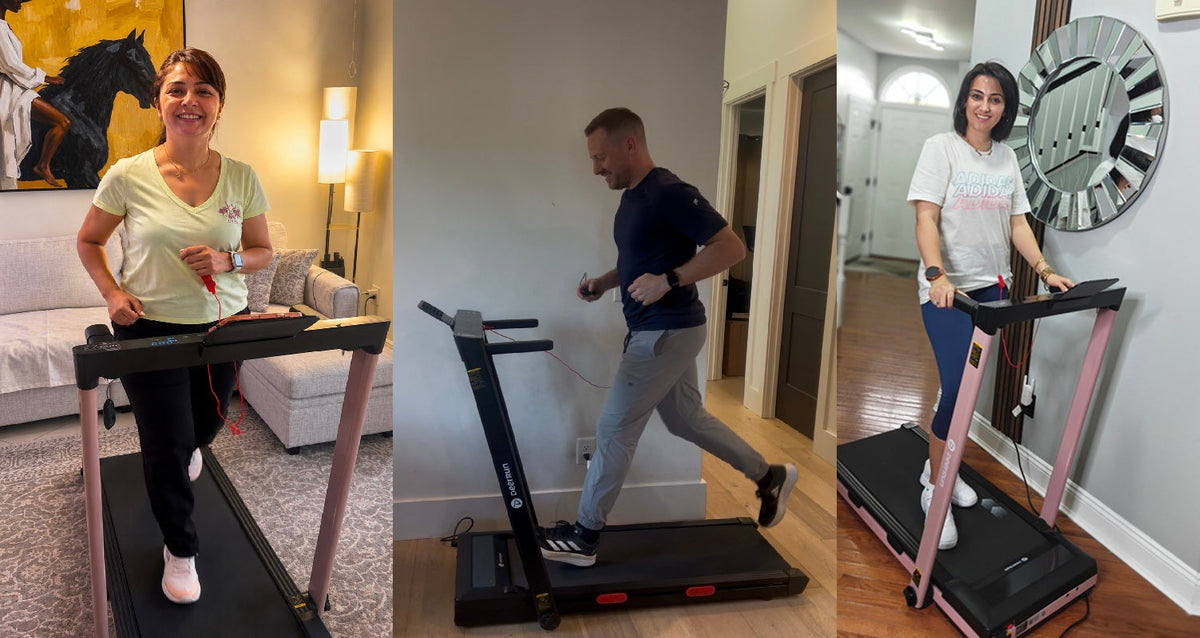
The DeerRun Z10 Pro features a 2-in-1 walk-and-run design, allowing you to gradually transition from everyday walking to running. When you have limited time, you can complete a short workout. When you have more time, you can further increase the training intensity.
More importantly, it doesn’t necessarily need to take up your living space all the time.
TheDeerRun Z10 Pro measures approximately 51.34 × 26.77 × 47.01 inches when in use, with a footprint of approximately 9.55 square feet, which is close to the floor space occupied by a small desk. When folded, it measures approximately 54.41 × 26.77 × 5.63 inches, with a thickness of only about the height of a thick book. It can be stored beside a sofa, under a bed, or against a wall, and it also comes with built-in wheels.
This means that after your workout, you can fold it and move it to a more suitable location instead of allowing the treadmill to permanently occupy the main activity area of your home.
For people with changing daily schedules, this matters:
A treadmill that is truly suitable for long-term use shouldn’t only be convenient during workouts. It should also be easy to integrate into your life when you’re not exercising.
3. Your Ability Changes: Can the Treadmill Start From Where You Are?
Someone who is running for the first time may need to start with walking, gradually add jogging, and then slowly increase speed and workout duration.
So when buying a treadmill, you shouldn’t only consider:
“How fast can I run right now?”
You should also consider:
“If I keep training, will I still be able to use this treadmill six months from now?”
That’s the value of having room to grow.
The DeerRun Z10 Pro offers speeds of up to 7.5 MPH and features a 400 × 1050 mm running belt. For someone just starting to train, they can begin at an intensity they can comfortably handle and gradually increase speed, workout duration, or incline as they build a consistent training habit.
It also supports a maximum weight capacity of 300 lbs (136 kg), allowing the treadmill to meet a wider range of household training needs.
Of course, growth doesn’t mean you have to constantly chase higher speeds.
Real progress may mean starting with walking, gradually adding jogging, extending your workout time, increasing your running speed, and eventually trying incline training.
Just because you run slowly now doesn’t mean you’ll always have to run at the same pace.
When buying a treadmill, find the right starting point for yourself today, while also leaving enough room for the person you’ll become tomorrow.
4. There Will Always Be Off Days: Can the Treadmill Adjust With Your Condition?
This is something many people overlook when buying a treadmill.
People who train consistently cannot stay on an upward trajectory forever.
You may go through several weeks of heavy work stress and poor sleep. Or you may simply accumulate training fatigue, causing a pace that once felt easy to suddenly feel difficult.
At times like these, what you need isn’t a machine that constantly pushes you to break through your limits. You need equipment that allows you to adjust your training.
One bad workout shouldn’t turn into an interruption of your entire training habit.
Beyond the hardware itself, smart training features can also help you make these adjustments.
With PitPat, you can record your training data, track your long-term progress, and receive more personalized training recommendations based on your goals.
For example, when your recent training performance changes, instead of simply thinking, “I’m not feeling good today, so I won’t work out,” you can use your training records to adjust the timing, intensity, or goal of your next workout.
That’s where smart training becomes truly valuable.
It doesn’t require you to complete the same task every day. Instead, it helps you determine what the right next step is based on your current condition.
5. Consistent Training Isn’t Just About Completing a Plan: Your Running Experience Should Keep Changing
There’s another question that is often overlooked:
Even if a treadmill can adapt to your training, will you feel like every run is the same?
Long-term consistency requires not only the right training intensity but also some variety.
That’s another area where PitPat can complement your treadmill experience.
In addition to workout tracking and AI Coach, PitPat can also provide different interactive experiences, such as live online competitions, leaderboards, challenges, and immersive virtual running environments.
You can complete a workout on your own or interact with other runners through online challenges.
For someone who is just starting to run, the initial goal may simply be to complete 20 minutes today. After training for a while, they may start paying attention to their workout records. Later, they may want to challenge themselves with faster speeds, longer workouts, or even participate in an online race.
The same treadmill can support different training goals at different stages.
This means running becomes more than just a 30-minute workout. It becomes an experience where you can see your progress, receive feedback, and keep trying new goals.
For people who want to stay consistent over the long term, that kind of change matters too.

6. It’s Not Just About Completing One Workout—It’s About Supporting You Through Different Stages
You don’t need to be at your best every day.
If you’re not feeling your best in the morning, slow down.
If work is too busy, make your workout shorter.
When you’re running for the first time, start at a lower intensity.
When you hit a training low, adjust instead of giving up.
Then, when your condition improves and your ability grows, keep moving forward.
A good treadmill isn’t just suitable for who you are today. It should help you move toward who you’ll become tomorrow.
Choose a Treadmill That Can Grow With You
Your schedule will change. Your condition will change. Your training ability will change too.
Sometimes you need to slow down. Sometimes you only have 20 minutes. Other times, you may be ready to challenge yourself with higher speeds and greater intensity.
A treadmill that is truly suitable for long-term use shouldn’t only meet your needs today. It should also leave room for future progress.
Choose a DeerRun treadmill that fits who you are now and can continue to support you as you move into the next stage.
Choose a Treadmill That Grows With You
Your routine, energy, and fitness level will change over time. The DeerRun Z10 Pro gives you room to adjust speed, incline, workout time, and training intensity as you progress.
Explore DeerRun Z10 Pro →


Leave a comment
This site is protected by hCaptcha and the hCaptcha Privacy Policy and Terms of Service apply.