





Word Account: Approx. 1200 words | Read Time: About 6 mins
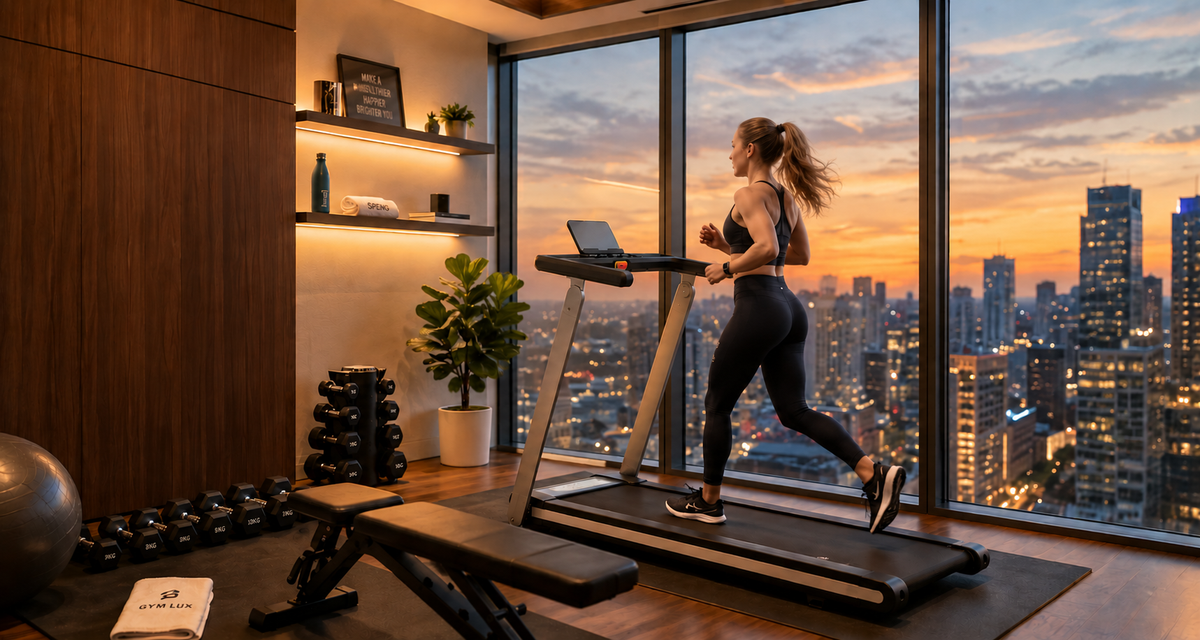
Once you have a dedicated Home Gym, choosing a treadmill is no longer just about whether you can squeeze it into the living room. But that doesn’t mean you need to immediately chase the highest speed or the longest list of features.
A more practical way to choose is to look at how many times you’ll use the treadmill each week, how long each workout will be, and whether the room will still function properly once the treadmill is placed alongside your dumbbell rack, workout bench, yoga mat, and other equipment.
If you only need 5–10 minutes of walking before strength training, a smaller treadmill may already be enough. But if you plan to use it 2–4 times per week for incline walking, jogging, and running, then speed, incline, belt size, weight capacity, and folding design are all worth looking at more carefully.
1. Using It 2–4 Times a Week? That’s When a More Complete Setup Starts to Matter
How often you’ll actually use a treadmill in your Home Gym largely determines how much treadmill you really need.
If you only walk for eight minutes before leg day or cool down with a 10-minute walk after strength training, higher speeds and steeper inclines may rarely get used.
But if your week looks something like this:
15-minute walk after strength training
30-minute continuous run
Incline walking
Easy Run
Then the treadmill is no longer just an occasional warm-up tool. It has become a regular part of your training setup.
At that point, having enough speed range and being able to adjust incline easily will directly affect how many different types of workouts you can fit into your week.
2. A Wider Speed and Incline Range Gives You More Ways to Train
The DeerRun X20 supports speeds from 0.6–11.3 MPH and up to 15% Auto Incline.
The wider speed range covers everything from easy walking and jogging to everyday running. Incline gives you another way to increase training difficulty without simply continuing to run faster.
Auto Incline also makes adjustments easier during a workout. For example, during an incline walk, you can start at 3% and gradually increase to 6% or 8% without stopping your workout to manually reset the treadmill.
Here’s one way to use those ranges:
| Workout Type | Suggested Speed | Suggested Incline |
|---|---|---|
| Easy Walking | 2.0–3.0 MPH | 0–3% |
| Incline Walking | 2.5–3.2 MPH | 5–8% |
| Jogging | 4.0–5.0 MPH | 0–2% |
| Everyday Running | 5.0–7.0+ MPH | Adjust to your workout |
When paired with PitPat, you can also keep the speed, duration, and workout records from different training days together. That makes it easier to see how your training changes across the week instead of only remembering, “I ran for 30 minutes today.”
3. Running for 20–40 Minutes? Pay Attention to Running Belt Space
If you’re only walking for 10 minutes as a warm-up, belt size may not feel particularly important. But once you’re running continuously for 20–40 minutes, the available running space can make a noticeable difference in comfort.
The X20 running belt measures approximately 45 × 130 cm, or 17.7" × 51.2".
A wider and longer running belt gives your stride and foot placement more room. As your speed increases, you don’t have to constantly worry about stepping too close to the edges, making it easier to maintain a more natural cadence and running form.
If you run several times every week, this difference becomes much more noticeable than it would during a short warm-up.
Running belt space is only one part of the overall running experience, though. If you’re also concerned about your knees or impact at foot strike, cushioning, running form, and training intensity should be considered together rather than judging the treadmill by belt size alone.

4. Sharing Your Home Gym? Check the Weight Capacity
A treadmill in a Home Gym often isn’t used by just one person.
If other members of your household will also use it for walking or running, weight capacity becomes another important specification.
The X20 supports up to 400 lbs (181 kg), accommodating a wider range of body sizes and making it more practical for long-term shared use at home.
A higher weight capacity also means fewer body-size limitations when multiple people are using the same treadmill.
5. Don’t Let the Treadmill Take Over Your Entire Home Gym
Your Home Gym probably also needs space for a workout bench, dumbbell rack, yoga mat, and other equipment.
The X20 measures approximately 53.94"L × 30.43"W × 42.83"H when unfolded, with a footprint roughly comparable to a wider small desk.
For a treadmill designed to handle both running and incline training, its footprint doesn’t have to consume the entire room. You can still leave space nearby for strength training and floor-based workouts.
That makes it easier to maintain separate areas for running, dumbbell work, and mat exercises without having each part of your Home Gym compete for the same floor space.

6. Even With a Dedicated Home Gym, Folding Still Matters
During strength training, you may want to move your bench into the center of the room. When it’s time to stretch, you might need enough open floor space to fully lay out a yoga mat.
Your treadmill doesn’t need to stay fully unfolded all the time.
When folded, the X20 measures approximately 53.94"L × 30.43"W × 7.32"H, with a thickness of just 7.32 inches—thinner than many storage bins.
That makes it easier to place against a wall, store near a cabinet, or move behind other larger pieces of gym equipment.
Unfold it when it’s time to run. Fold it away when you need more floor space.
That flexibility can make your Home Gym much easier to use for different types of training.
Here’s How You Could Use It Throughout the Week
| Day | Workout | Suggested Speed / Incline |
|---|---|---|
| Monday | 15–20 min Easy Walk after strength training | 2.0–3.0 MPH, 0–3% |
| Wednesday | 25–30 min Continuous Jog | 4.0–5.0 MPH, 0–2% |
| Friday | 20–30 min Incline Walk | 2.5–3.2 MPH, 5–8% |
| Sunday | 25–35 min Easy Run | 4.5–6.0 MPH, adjust incline based on how you feel |
On days when your strength-training volume is higher, keep your treadmill session easier. When cardio is the main workout, you can gradually increase duration, speed, or incline.
With PitPat, you can keep your walking, running, and incline workouts from throughout the week in one training record, making it easier to review what you’ve done and adjust the following week.
Conclusion | Choose a Home Gym Treadmill as Part of Your Entire Training Setup
If your treadmill will only be used occasionally for warm-ups, a smaller machine may already be enough.
But if you plan to run regularly each week while also incorporating incline walking, jogging, and different training intensities, a setup like the DeerRun X20—with a top speed of 11.3 MPH, up to 15% Auto Incline, a more complete running belt, a 400-lb (181-kg) weight capacity, and a foldable design—can make more sense for long-term use.
Instead of comparing treadmills based on one maximum specification, look at speed, incline, running belt size, weight capacity, dimensions, and folding design together within the context of your actual weekly training.
That makes it much easier to choose a treadmill you’ll genuinely keep using.
Turn Your Home Gym Into a Training Space You’ll Actually Use
Make walking, running, and incline workouts part of your weekly home training routine.
Explore DeerRun X20 →


Leave a comment
This site is protected by hCaptcha and the hCaptcha Privacy Policy and Terms of Service apply.