





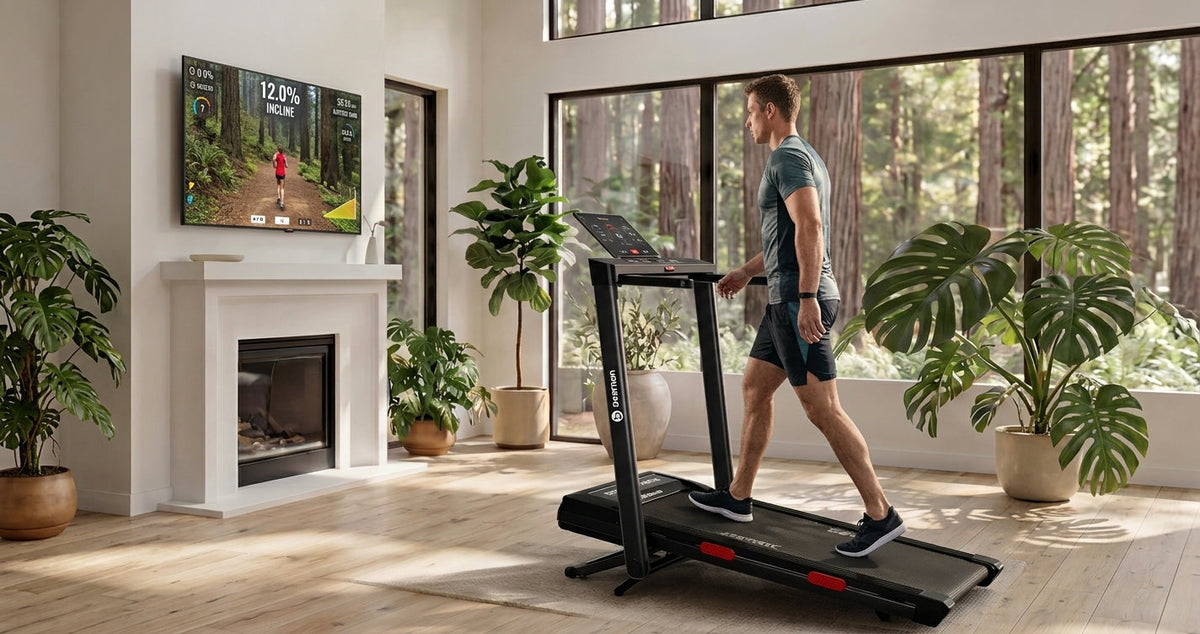
“Does working out harder really mean burning more fat?”
Many people see a faster heart rate, more sweat, and greater fatigue as signs of an effective fat-burning workout. But in reality, how tired you feel during exercise does not directly determine how much fat you burn.
Different workouts vary in intensity, duration, energy expenditure, and energy sources. High-intensity exercise can leave you exhausted in a short amount of time, but that doesn't necessarily mean it uses the highest proportion of fat for energy. Incline walking, on the other hand, may not feel as intense, but it allows you to adjust the training load through speed and incline while maintaining a steady pace.
So instead of trying to make every workout as exhausting as possible, ask yourself:
What type of training can provide enough stimulus while still being sustainable over time?
1. Does More Intense Exercise Really Mean More Fat Loss?
Not necessarily.
During exercise, your body uses both carbohydrates and fat for energy, and the proportion changes depending on exercise intensity.
Generally, as exercise intensity increases, the body relies more heavily on carbohydrates. At low to moderate intensities, fat oxidation may account for a larger proportion of energy use.
So, feeling extremely tired does not automatically mean you're burning more fat.
1.1 High-Intensity Training Doesn't Mean Higher Fat Oxidation
HIIT can quickly raise exercise intensity, which is why these workouts often feel extremely demanding.
However, high-intensity exercise requires rapid energy production, so the body relies more heavily on glycogen. Based on the instrument testing results, glycogen contributed approximately 95%–97% of the energy used during HIIT.
That doesn't mean HIIT has no value for fat loss. It simply shows that:
High intensity is one training method, not the only measure of an effective fat-burning workout.

2. Why Can Incline Walking Help Burn Fat More Efficiently?
If you don't want to keep increasing your running speed, you can also change the training challenge by adding incline.
That's where incline walking can be useful.
According to the instrument testing results, 30 minutes of brisk walking burned approximately 200 calories, with fat contributing up to 80% of the energy used, ranking relatively high among the tested activities.

However, a higher proportion of fat oxidation does not mean that one workout determines your overall fat-loss results. Long-term changes in body weight and body composition are still influenced by overall energy balance, total activity, diet, and recovery.
For most people, one of the biggest advantages of incline walking is:
You can increase the training load without having to run at a high speed.
For beginners, people who aren't comfortable with running, or those looking for a lower-impact cardio option, this approach can also make it easier to control speed and training pace.
3. What Should You Look for in a Treadmill for Incline Walking?
If you're planning to make incline walking part of your regular routine, you don't need to focus on every specification.
The key factors are speed range, incline, stability, space, and workout tracking.
3.1 Different Speed and Incline Combinations Can Help the Whole Family Train More Efficiently for Fat Loss
If a treadmill only supports flat walking, changing the workout difficulty mainly means increasing your speed.
A treadmill with incline adjustment gives you another option: you can increase the training challenge while keeping your walking speed relatively stable.
The DeerRun Z10 Pro offers a 0.6–7.5 MPH speed range and 12 levels of automatic incline adjustment.
For users who mainly want to perform incline walking, this allows you to adjust speed and incline according to your current fitness level. As your ability improves, you can also gradually progress from brisk walking to jogging and running.

3.2 Don't Forget About Storage
For a home treadmill, you need to consider not only how much space it takes up during use, but also how you'll store it when you're finished.
The DeerRun Z10 Pro measures 51.34 × 26.77 × 47.01 inches when unfolded, with a footprint of approximately 9.58 sq. ft. That's roughly comparable to the floor space of a small single-person desk.
When not in use, its folded dimensions are 54.41 × 26.77 × 5.63 inches, with a folded thickness of approximately 5.6 inches, making it easier to store in spaces such as under a bed or in a narrow storage area.
For home users, having enough room to use the treadmill and enough flexibility to store it afterward are equally important.
3.3 Workout Tracking Makes Long-Term Training Easier to Adjust
The real value of incline walking isn't occasionally pushing yourself until you're exhausted. It's being able to do it consistently.
The DeerRun Z10 Pro supports the PitPat App, which can track daily workout data and provide more personalized AI training plans.
PitPat also offers gamified fitness experiences, community challenges, and club interactions, giving long-term workouts more structure and motivation.
If you want to stick with incline walking over time, consistently tracking your workout data can also help you better understand your training progress.
4. Want to Use Incline Walking for Fat Loss? How Can Beginners Start?
When you're new to incline training, there's no need to start with the highest speed and incline settings.
You can begin with a 5-20-5 incline walking routine and gradually adjust it as your body adapts.
The warm-up phase shouldn't be about making yourself tired. If it feels too difficult, lower the speed or incline as needed.
This is the main training phase. If you're new to incline walking, you don't need to start at the highest speed and incline. Begin at a level you can complete steadily, then gradually adjust as you adapt.
The goal isn't to push the numbers as high as possible. It's to maintain a pace you can sustain.
Gradually lower your speed and incline after the workout to allow your body to transition out of exercise.
When you're just starting out, try changing one variable at a time: slightly increase the incline, raise the speed, or extend the main workout duration.
5. Effective Fat Loss Isn't About Making Every Workout as Hard as Possible
“More exhaustion means more fat loss” isn't a reliable rule.
HIIT can provide high-intensity training stimulus, jogging can increase energy expenditure, and incline walking offers another training approach where you can adjust the challenge through speed and incline.
If your goal is long-term fat loss, it's more important to focus on:
Appropriate exercise intensity + sufficient workout duration + reasonable overall energy expenditure + a training routine you can maintain over time.
If you're just getting started, you don't need to chase high-intensity workouts right away. Starting with incline walking that you can complete consistently, then gradually adjusting the speed and incline as your body adapts, may be more practical than trying to push yourself to exhaustion every time.
What matters isn't how exhausting one workout is, but whether the training approach can become part of your lifestyle.
Ready to Start Your Incline Walking Routine?
Choose equipment that lets you control speed and incline, is easy to use and store at home, and can track your workout progress—so every session has a clear goal and useful feedback.
Explore DeerRun Z10 Pro →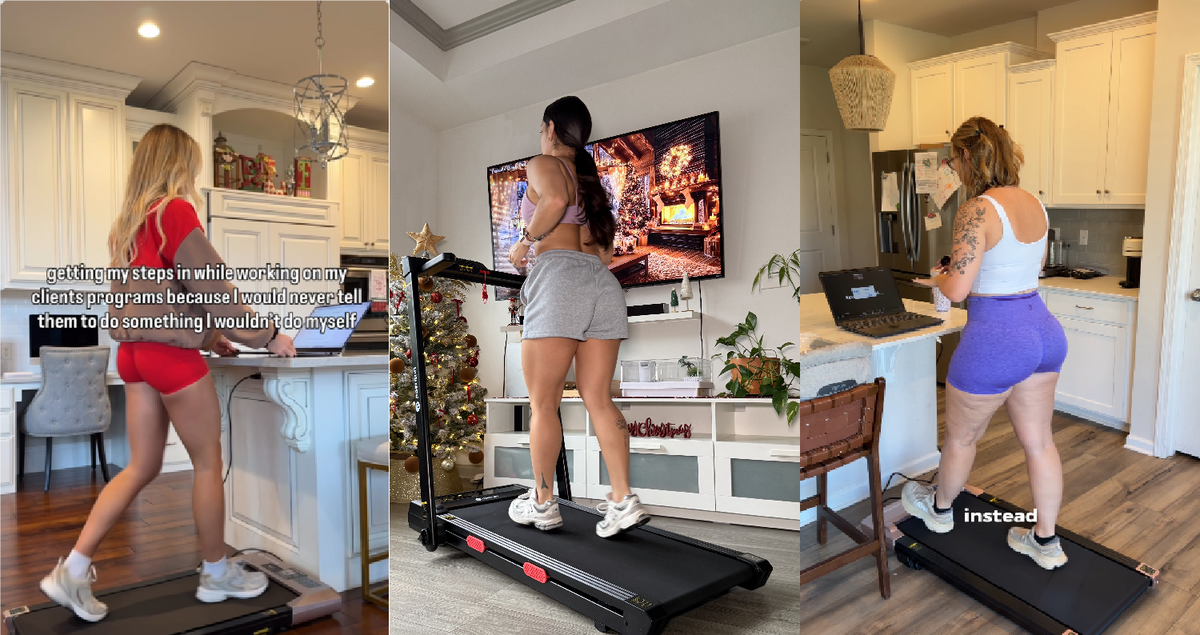


Leave a comment
This site is protected by hCaptcha and the hCaptcha Privacy Policy and Terms of Service apply.