






Word Account: Approx 1300 words
Read Time: About 6 mins
It’s 7 p.m., and you’ve just finished a 30-minute run. You take a few sips of water, but then start wondering: Should I eat something now? Is water alone enough? Will eating right away affect the training I just completed?
In fact, post-run recovery doesn’t have to be complicated.
For most everyday runners, remembering three key things is enough:
Fluids + Carbohydrates + Protein.
1. What Does Your Body Need After Running?
1.1 Fluids: Replenish the Water Lost During Exercise
During running, your body continuously loses water through sweating and breathing. The longer you exercise, the higher the environmental temperature, and the greater the exercise intensity, the more you typically sweat as your body regulates its temperature, resulting in greater fluid loss.
Therefore, the amount of fluid you drink after running should be determined based on your exercise duration, how much you sweat, and changes in your body weight, rather than simply the distance you ran.
For short-duration, low-intensity runs, drinking water normally is generally enough. If your training lasts longer or you sweat significantly, you should pay more attention to fluid and electrolyte replacement.

1.2 Carbohydrates: Replenish the Energy Used During Training
During running, your body uses some of its stored glycogen. When training lasts longer or the training volume is greater, consuming an appropriate amount of carbohydrates after running can help restore energy stores.
For training that requires more complete recovery, carbohydrates can be consumed at around 1.0–1.2 g/kg of body weight.
Bananas, bread, oats, rice, and potatoes are all simple and convenient choices.
1.3 Protein: Support Recovery
Protein provides the amino acids needed by the body for recovery after exercise.
For training that requires more complete recovery, around 20–25 g of high-quality protein per serving is a commonly referenced range.
Eggs, fish, chicken, milk, yogurt, and legumes are all good options.
You don’t necessarily need to drink protein powder. Regular foods can also meet your daily recovery needs.
2. When Is the Right Time to Eat After Running?
“You must eat within 30 minutes after running” is something many runners have heard.
But in reality, there is no fixed time that works for everyone.
What matters more is the duration and intensity of the workout, as well as how long it is until your next meal.
2.1 Within 30 Minutes After Running: Timely Nutrition Matters More After Higher Training Loads
If it was simply a short, low-intensity easy run and your normal mealtime is coming soon, there’s no need to force yourself to eat immediately just because of the so-called “30-minute golden window.”
However, if your training lasted longer, was more intense, or you have another workout scheduled later that day, consuming carbohydrates and protein soon after running can be more helpful. You can choose banana + yogurt, whole-grain bread + eggs, or oatmeal + milk, providing carbohydrates, protein, and fluids. There is no need to prepare a complicated “recovery meal.”
2.2 1–2 Hours After Running: If It’s Mealtime, Just Have a Normal Meal
For most everyday runners, if you are not going straight into another workout, having a balanced meal normally within 1–2 hours after running is usually enough.
A complete meal can include a staple food + a protein food + vegetables, for example:
Rice + Chicken Breast/Fish + Broccoli
Or:
Potatoes + Eggs + Leafy Green Vegetables
Rice, potatoes, and other staple foods mainly provide carbohydrates, while chicken, fish, and eggs provide protein. Vegetables can be included as part of a balanced daily diet.
If there is still some time before your main meal, you can choose fruit, yogurt, whole-grain bread, or other simple snacks first, and then have a normal meal later.
If you frequently train on a treadmill, PitPat can record data such as running time, distance, and pace. Combined with the DeerRun A1 Pro, it can help you understand the amount of training you complete during each workout more clearly.
This way, when considering post-run recovery, you don’t have to focus only on the number “30 minutes.”
3. What Should You Eat After Running? Choose Based on the Situation
3.1 After a Morning Run: Incorporate Your Recovery Meal Into Breakfast
You can simply use breakfast as your post-run recovery meal, combining carbohydrates and protein.
For example:
Oatmeal + Milk + Banana
Or:
Whole-grain Bread + Eggs + Fruit
Oatmeal, bread, and fruit mainly provide carbohydrates, while milk and eggs provide protein.
3.2 Running Right Before Mealtime: Have a Normal, Balanced Meal
If it happens to be lunchtime or dinnertime when you finish your run, simply have a normal, balanced meal.
For example:
Rice + Fish + Vegetables
Or:
Whole-grain Pasta + Chicken + Vegetables
Staple foods provide carbohydrates, while meat and fish provide protein. Vegetables help add variety to your overall diet.
Post-run recovery does not require a special diet. The key is making sure your everyday diet keeps up with your training.

3.3 Can’t Have a Full Meal Right Away: Choose a Suitable Nutritional Snack
If you temporarily cannot have a full meal, choose foods that contain both carbohydrates and protein.
For example:
Banana + Yogurt
Whole-grain Bread + Milk
Eggs + Whole-grain Bread
When conditions allow, have a complete and balanced meal as normal.
4. Should You Drink Water or Electrolytes After Running?
4.1 Short-Duration, Low-Intensity Exercise: Water Is Usually Enough
If your run is short, the intensity is not high, and you don’t sweat much, water is usually enough to meet your post-exercise hydration needs.
This is because short-duration, low-intensity exercise generally results in relatively little fluid and electrolyte loss, while your regular diet can also help replenish some electrolytes.
Therefore, you do not need to drink a sports drink after every run. For ordinary short-duration runs, simply replenishing an appropriate amount of fluid in a timely manner is enough.
4.2 Longer Duration, More Sweating: Consider Electrolytes
If your training lasts longer, is more intense, or you sweat significantly, you can consider replenishing electrolytes based on your actual situation.
Sweat contains electrolytes such as sodium and potassium. During prolonged exercise or heavy sweating, the loss of these electrolytes also increases. Therefore, when you sweat heavily, in addition to replenishing fluids, you should also pay attention to electrolyte replacement to help maintain normal fluid balance.
For example, incline training on a treadmill is usually more challenging than easy flat running. If you use the DeerRun Z10 Pro for incline walking or incline running, you can adjust your hydration approach based on the duration of your workout and how much you sweat.
For workouts involving more sweating, you can estimate fluid loss based on changes in body weight before and after exercise. The amount of fluid replenishment after exercise can be referenced at 100%–150% of the body weight lost during exercise.
However, this is not a fixed standard that needs to be followed after every run. For ordinary short-duration workouts, there is no need to drink large amounts of water just to reach a certain number.
Replenish fluids based on your training volume and how much you sweat, and drink small amounts frequently.

💧 Want to Know Whether You Should Drink Water or Electrolytes After Running?
If you are still unsure how to hydrate under different training conditions, continue reading to learn how to choose a more suitable hydration method based on exercise duration, training intensity, and levels of sweating.
Read the Hydration Guide5. How Do You Know What You Need to Replenish After Running?
You don’t need to remember a long list of rules. Just look at your training volume.
Short-Duration, Easy Run
Post-Run Focus: Water + Normal Diet
30–60-Minute Regular Run
Post-Run Focus: Fluids + Carbohydrates + Protein
Long-Duration, High-Intensity Run
Post-Run Focus: Fluids + Electrolytes + Carbohydrates + Protein
Incline Training
Post-Run Focus: Adjust based on intensity and amount of sweating
First look at how much you ran, then decide how much to replenish.
Make Every Run Fit More Naturally Into Your Daily Routine
Post-run recovery doesn’t need complicated rules.
If you want data to reference after every workout, DeerRun treadmills combined with PitPat can help record your running time, distance, and pace, giving you a clearer understanding of your actual training volume.
Ready to start your next workout?
Find a Treadmill That Fits Your Routine
Build a workout routine that fits your goals, schedule, and training needs with a DeerRun treadmill designed for everyday movement.
Explore All Treadmills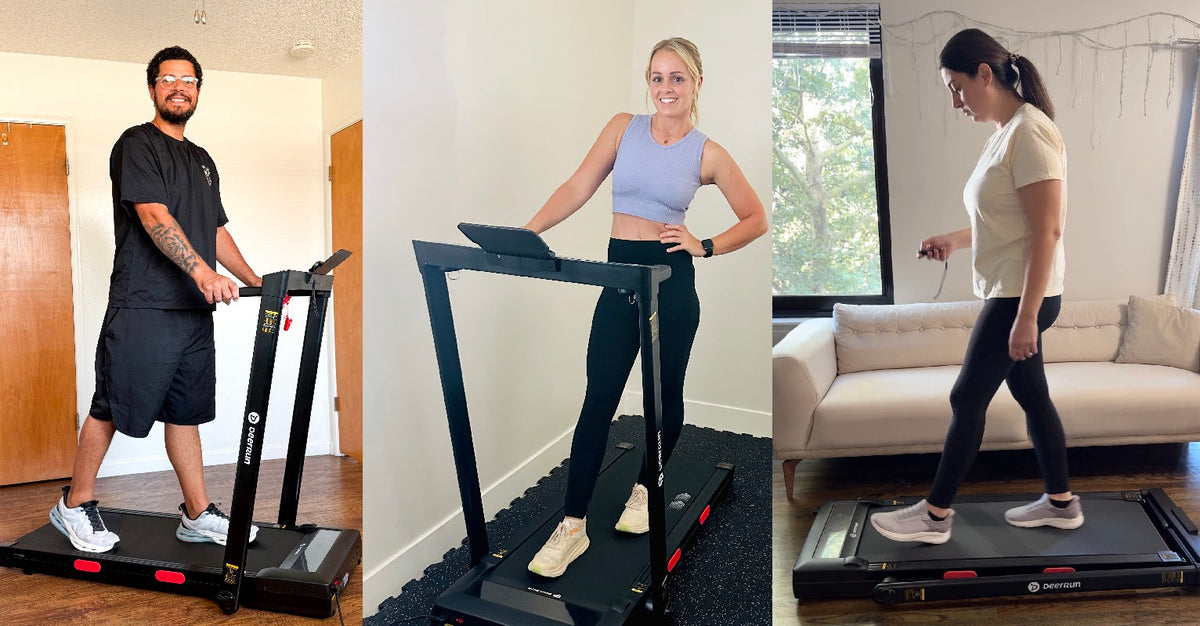


Leave a comment
This site is protected by hCaptcha and the hCaptcha Privacy Policy and Terms of Service apply.