





Word Count: Approx 1,300 words | Reading Time: About 6 minutes
Many people don’t start exercising not because they have no time, but because they don’t want to rearrange their lives around exercise.
You want to watch TV after work, you only have 10 minutes between work tasks, your lunch break is limited, and you have other plans on the weekend. When you expect yourself to complete a 30-minute or even 1-hour workout every time, your exercise plan is actually more likely to be postponed.
The problem may not be that you don’t have enough time, but that you think of “exercise” as something that has to be completed in one full session.
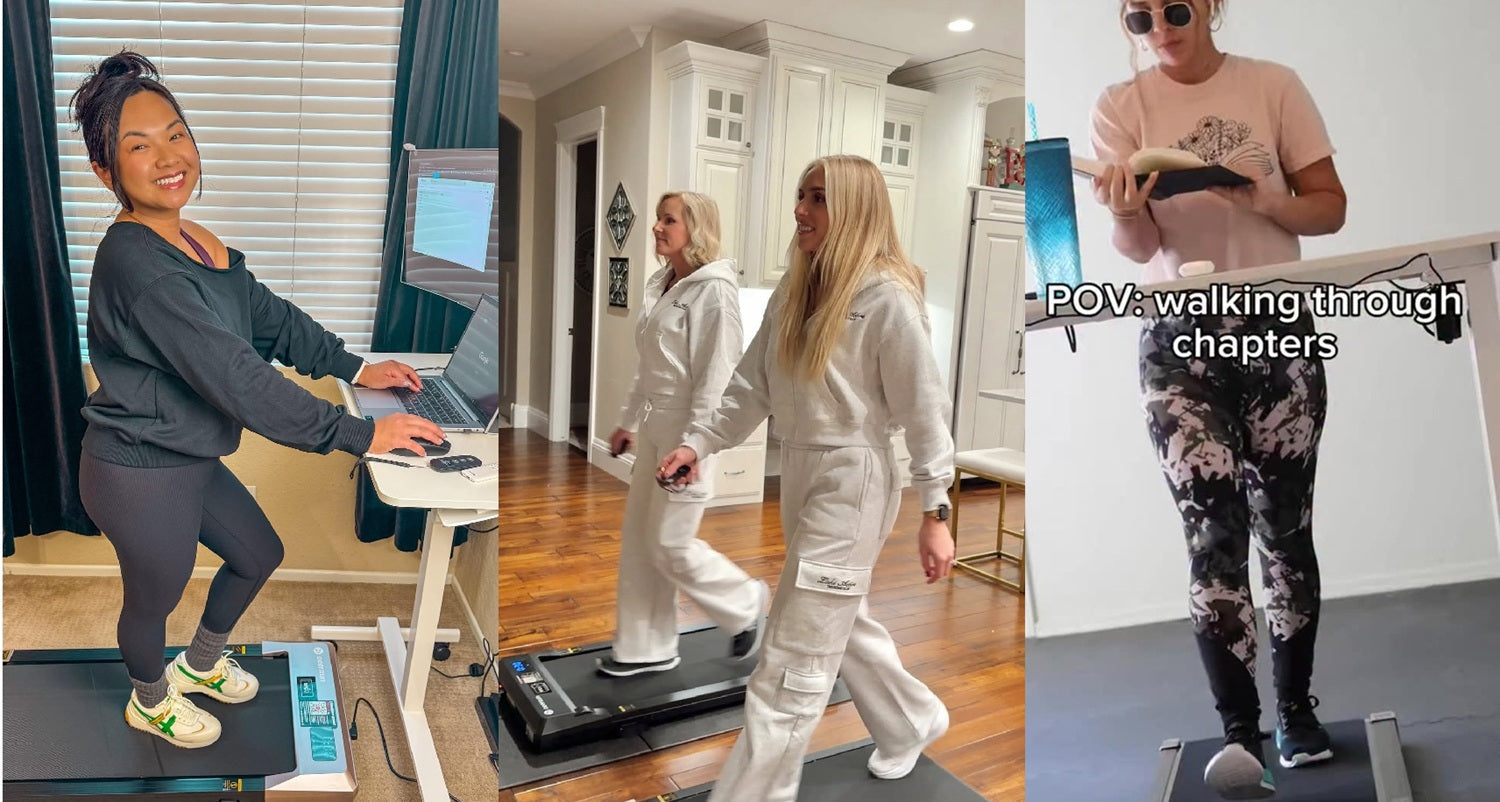
Don’t wait until you have a full block of free time to exercise. Instead, fit movement into your existing routine. Walk for a while while watching TV, walk for 5–10 minutes during a break, or take another short walk during lunch. These short periods can all become part of your daily activity.
The core idea of Start Easy is not to lower your exercise standards, but to reduce the resistance to getting started.
Start with easy walking, make use of small pockets of time, and then use the right tools to plan and maintain your workouts. You don’t need to change your entire lifestyle all at once.
1. Don’t Change Your Life First—Let Exercise Fit Into Your Daily Routine
1.1 Watch TV, Listen to Podcasts, and Walk at the Same Time
If you only have one hour of free time in the evening, you may be more willing to watch TV than to set aside 30 minutes specifically for exercise.
But low-intensity walking can be combined with some everyday entertainment, such as watching TV, watching videos, listening to music or podcasts, or reading.
For example, once an episode of a TV show starts, you can walk for 15–20 minutes while watching it. If you listen to a 30-minute podcast, you can also turn that time into an easy walk. The point is not to pursue high intensity, but to add more movement to time that would otherwise be spent sitting.
The DeerRun Q2 Urban has a speed range of 0.6–3.8 MPH, allowing you to start with easy walking. Its operating noise is below 45 dB, so it will not create noticeable noise interference when used at home.
It weighs approximately 35.05 lbs and measures about 1082.5 × 500 × 100 mm when unfolded, with a footprint of approximately 0.54 square meters, roughly equivalent to the area of a small desk. It also has built-in wheels, making it easier to move between the living room, bedroom, or workspace. For people who need to arrange their home space flexibly, these designs address the more direct questions of “where to put it” and “how to use it” rather than simply adding more complicated features.
If your main goal is to increase your daily activity level, a treadmill does not necessarily have to become a separate “workout area.” It can also be placed where you already watch TV, listen to podcasts, or relax.

1.2 Don’t Have 30 Minutes? Break Your Exercise Into Smaller Time Blocks
A “complete 30-minute workout” is not the only option.
If it is difficult to find 30 consecutive minutes each day, you can break the time up: walk for 10 minutes in the morning, walk for 5 minutes during a work break, walk for another 10 minutes during lunch, and continue walking for 15 minutes while watching TV in the evening.
That adds up to 40 minutes of activity throughout the day.
This approach is especially suitable for people with busy schedules. You don’t have to wait until you “finally have 30 minutes free” to start. Instead, make use of the 5-, 10-, and 15-minute periods that are already available.
Of course, fragmented exercise does not mean every session has to last only a few minutes. As the habit develops, you can gradually extend one or two of these sessions, or adjust your speed and workout intensity according to your goals.
For this type of use, a treadmill should be ready whenever you are.
The Q2 Urban requires no assembly, has built-in wheels, and its slim 3.94-inch body makes it easier to place and store. The simpler it is to get the equipment ready, the easier it is to walk for a few minutes whenever you have time, rather than giving up because you “don’t have enough time to complete a full workout today.”
So, when choosing a treadmill for everyday use, you can ask a different question:
Don’t just ask, “How intense a workout can it help me complete?” Also ask, “Will I actually use it every day?”
If the answer is yes, it is more likely to become part of a long-term exercise habit.
2. Don’t Know How to Train? Let AI Help You Find the Next Step
Once you start exercising, another question quickly appears:
How long should I walk today? What speed should I use? When should I increase the intensity?
If you have to plan everything yourself every time, it is easy to turn simple exercise into something that requires research.
PitPat AI Coach can provide personalized workout suggestions based on your individual goals and exercise situation, helping you arrange your workout content and pace.
Its value is not to make every workout more complicated, but to reduce the mental effort of deciding “what should I do next?”
For people who are just starting to exercise, it does not solve the question:
“How can I train harder?”
Instead, it answers:
“How should I train right now?”
For example, you can start with easy walking and then gradually adjust your workout plan according to your goals and exercise situation. This means your workout plan does not have to be created once and then remain unchanged. It can be adjusted as your exercise habits and needs change.
With the Q2 Urban, you can start with daily walking and then use PitPat AI Coach to gradually build a clearer workout rhythm.
Start easy, then move toward smarter training.
3. Exercising Alone Is Boring? Add a Little Interaction
The hardest part of sticking with exercise is often not the first day, but several weeks later.
At the beginning, the novelty can make you want to exercise. But when you face similar workouts every day, your motivation may gradually decline.
At this point, in addition to AI Coach, PitPat’s online social features can add more interaction to your daily exercise.
You can participate in online competitions, leaderboards, and community challenges, check your exercise performance, and interact with other users.
This interaction does not necessarily mean competing with others. For some people, seeing changes in their data, completing a challenge, or participating in an activity with other users can itself provide a little extra motivation to keep exercising.
Compared with “I must complete a high-intensity workout today,” these small goals may be easier to incorporate into a long-term exercise habit.
So, motivation for exercise does not have to come from willpower alone. It can also come from goals, feedback, and a sense of participation.
Move from smart training to lasting workout motivation.

4. Start Easy. Move More. Keep Moving.
Exercise does not need to begin with a complicated plan.
You can walk while watching TV, break 30 minutes into several shorter periods, let PitPat AI Coach help you plan your workouts, or use online competitions and community interaction to add motivation.
As your habits develop, you can gradually adjust the way you exercise.
It’s okay if you only walk for 10 minutes today. Next week, you can try 15 minutes. Once easy walking has become a habit, you can increase the duration, speed, or workout intensity according to your goals.
When choosing a treadmill, instead of chasing a long list of features you may never use, ask yourself:
Will it make it easier for me to get started?
Can I easily fit it into my daily routine?
Will I actually want to use it regularly?
If the answer is yes, exercise no longer has to wait for the “right time.”
Start Easy does not mean staying at an easy level forever.
It simply means turning exercise from “a big task on your schedule” into “a small thing you can do every day.”
Start Easy. Move More. Keep Moving.
Explore DeerRun Q2 Urbanand make it easier to move every day →



Leave a comment
This site is protected by hCaptcha and the hCaptcha Privacy Policy and Terms of Service apply.