





Word Count: Approximately 650 words
Estimated Reading Time: 5 minutes
Walking 30 minutes on a treadmill every day is a fantastic habit. But if the scale hasn't budged in weeks, the problem is usually not the duration of your workout—it is the intensity. When you walk on a flat deck at a leisurely pace, your body barely registers it as a challenge, and the calorie burn stays stubbornly low. Raise the incline, and those exact same 30 minutes suddenly ask much more of your body.

1. Why "walking longer" often is not the answer
Calorie burn depends on more than just how many minutes you log. It depends on the energy cost of the movement. For example, a light flat walk sits around 3.0 METs (Metabolic Equivalent of Task). However, a moderate uphill walk easily reaches 4.0 to 4.3 METs. This means that in the exact same timeframe, your body is expending significantly more energy. Add a real grade, and the difference grows even further.
Furthermore, the human body is incredibly efficient at adapting. If your daily 30 minutes are always flat and easy, your muscles and cardiovascular system quickly get used to the load. Once adapted, the calorie burn drops to a minimum, and the scale stops moving. To break through this plateau, you must introduce a new stimulus.
2. Incline is the hidden intensity switch
When the treadmill deck rises, you are no longer just moving forward—you are working directly against gravity on every single step. Your heart rate climbs, more muscle fibers (especially in your glutes, hamstrings, and calves) fire, and energy expenditure goes up. And the best part? You achieve all of this without needing to run faster.
That makes incline the easiest way to raise workout intensity while keeping the session sustainable for your joints and lungs.
- Flat walking, easy pace: low burn, easy to maintain, but easily adapted to.
- Moderate incline (8%): clearly higher burn, still conversational, great for steady-state fat loss.
- Steeper incline (12%): strong burn, closer to hiking, challenges your posterior chain.
- The Golden Rule: Raise incline before you raise time — change only one variable at a time so you can accurately measure your progress.
3. A simple way to start: the 3-3-3 incline routine
You do not need a complex, intimidating plan to start seeing results. In one 30-minute session, try the "3-3-3" method: keep your speed steady around 3 MPH, and slowly raise the grade every 10 minutes.
3.1 Minutes 0-10
Walk at 8% incline to warm up and activate the muscles.
3.2 Minutes 10-20
Increase to 15% incline to push your heart rate into the fat-burning zone.
3.3 Minutes 20-30
Finish strong at 22% incline to maximize the calorie burn.
If 22% feels too challenging at first, stay at a lower grade and build up over several weeks. Consistency at a sustainable grade will always beat a single, punishing session that leaves you too sore to return the next day.
To amplify your results, combine this routine with "movement snacks." Simply walk for 5 minutes after every 45 minutes of sitting. This turns a flat, passive "walking habit" into an active routine that actually moves your numbers.
4. Choose a treadmill that makes incline easy
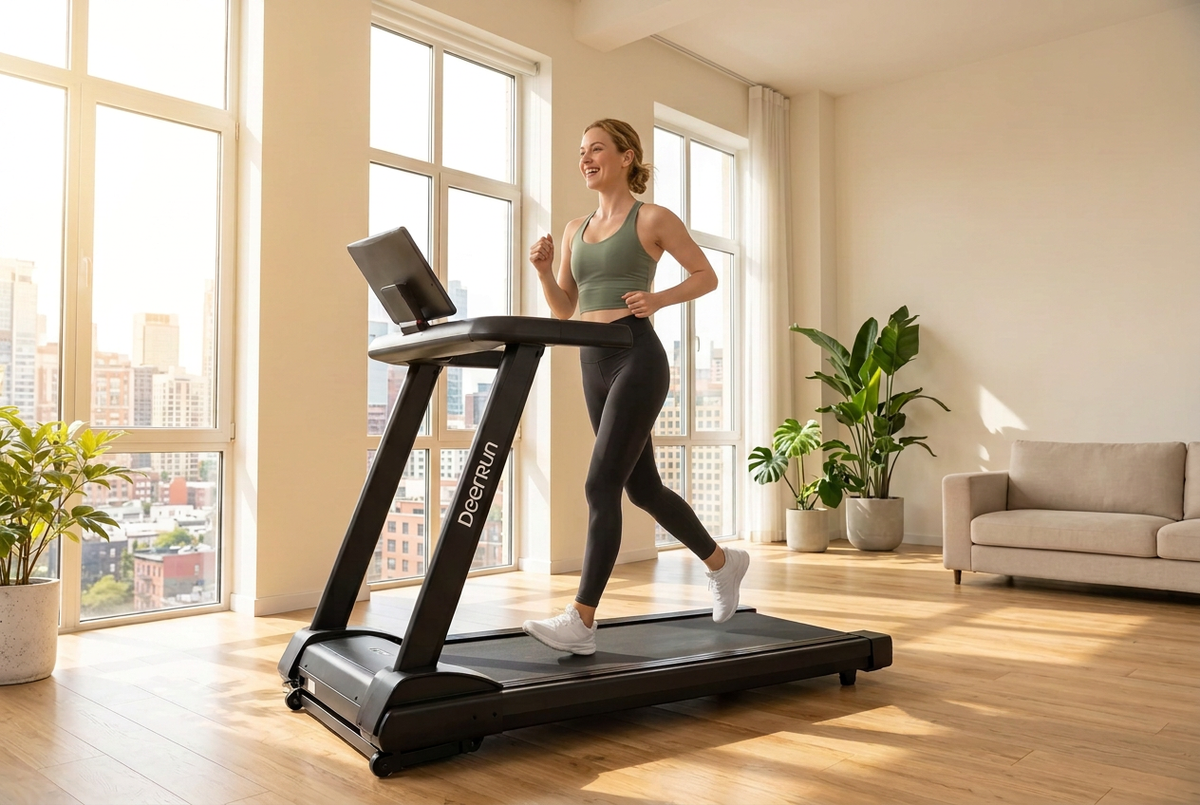
The entire 3-3-3 method depends on one crucial factor: your ability to control the grade precisely and quickly. The DeerRun Z10 Pro gives you up to 12% automatic incline at the touch of a button. Whether you are following the 3-3-3 routine or just nudging the grade up as you get stronger, it makes your daily walk burn more without forcing you to run faster.

Table: incline intensity comparison (~3 MPH, 150 lb / 68 kg adult, estimated calories in 30 min)
| Workout | Incline | Intensity | Est. Calories (30 min) | Best For |
|---|---|---|---|---|
| Flat walking | 0% | Low, near strolling | ~60–80 kcal | Beginners, recovery days |
| Moderate incline | 8% | Moderate, still conversational | ~140–180 kcal | Those raising intensity |
| Advanced incline | 15% | Mod-higher | ~180–240 kcal | Those with some base |
| High incline | 22% | High, like hiking | ~200–300 kcal | Those up for a challenge |
Note: Estimates reference the Compendium of Physical Activities; actual burn varies with body weight, gait and fitness level.
5. Frequently Asked Questions (FAQ)
-
Why am I not losing weight on the treadmill?
The most common reason is low intensity. Easy, flat walking burns very few calories. By raising the incline, you increase the burn significantly in the same amount of time. -
How much incline should I use?
Start around a 0–8% grade. As your fitness adapts over a few weeks, work your way up to 8–15%. Always prioritize comfort over grinding through pain. -
Is walking 30 minutes a day enough?
It is a great foundation, but intensity is the key driver of change. Add incline and stay consistent, and those 30 minutes will become vastly more effective. -
Can incline training really help me lose weight?
Yes, it raises your daily energy expenditure. However, for true weight loss, you must pair your incline workouts with an overall calorie deficit in your diet.
6. Start Walking Taller Today
Do not add another flat, monotonous 30 minutes to your day—add incline. Keep your pace steady, let the grade do the heavy lifting, and stay consistent. Start today at a grade you can handle, and watch the results follow.


Leave a comment
All comments are moderated before being published.
This site is protected by hCaptcha and the hCaptcha Privacy Policy and Terms of Service apply.