





Word Count: Approximately 535 words
Estimated Reading Time: 4 minutes
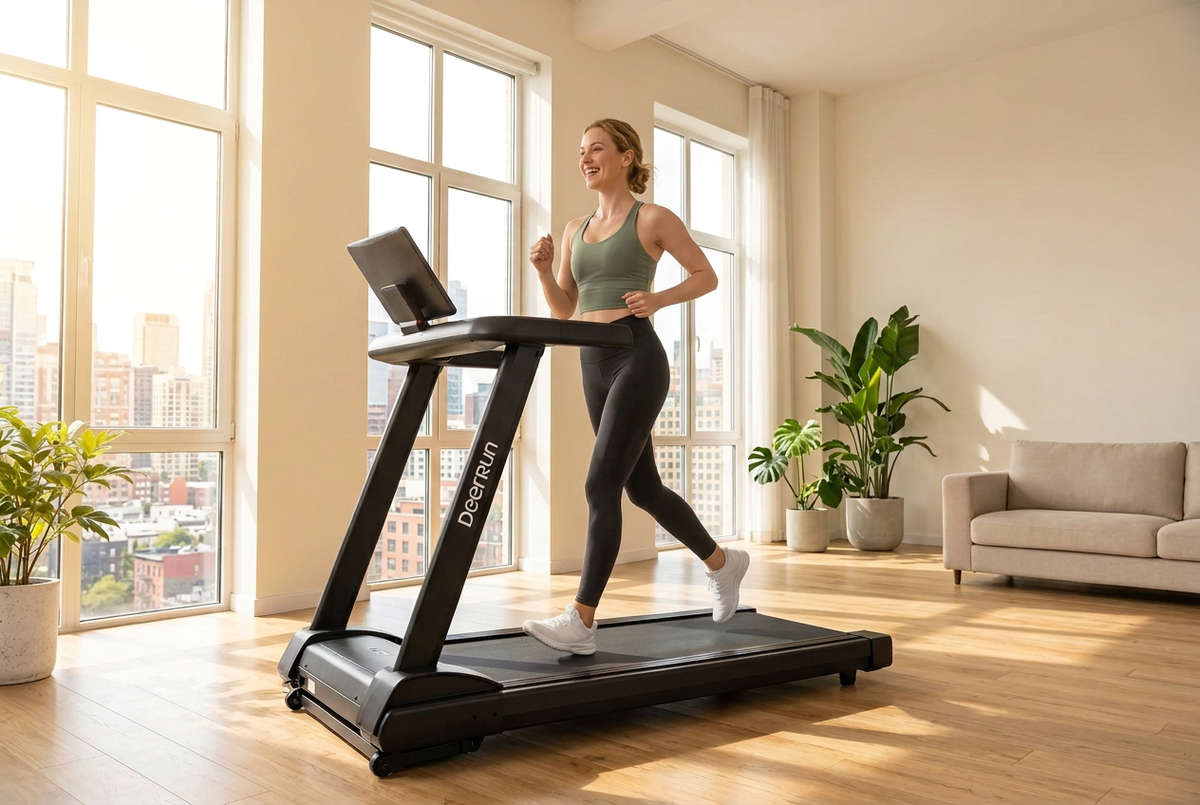
If you only use your treadmill for flat running, you are leaving a big training effect on the table. Adding incline does more than raise your heart rate — it changes which muscles do the work. Here is what incline actually trains, and why it hits your glutes harder than running on a flat deck.
1. Why incline targets your glutes more than flat running
On a flat treadmill you mainly move your body forward. The glutes stay relatively passive. The moment the deck rises, your hips have to extend against gravity to push your body upward — and that is exactly what the gluteus maximus does. The higher the grade, the more your glutes, hamstrings and calves are forced to fire.
- Flat running: mostly forward momentum, moderate glute activation.
- Moderate incline (8%): clear glute and hamstring involvement.
- Steeper incline (15%): strong posterior-chain work, closer to hiking or stair climbing.
- Extreme incline (22%): maximum glute activation, simulating a steep mountain trail.
- Core: the steeper the grade, the more your core works to keep you upright and balanced.
1.1 Incline turns hip extension into the main move
Walking up a grade forces your hips to extend against gravity on every step, and hip extension is the gluteus maximus's primary job. The steeper the grade, the more your glutes have to contract to push your body upward — which is why the effect shows up fastest between 8% and 22%.

1.2 Why flat running leaves the glutes underused
On a flat deck your legs mostly swing forward, so your glutes stay relatively passive. Many runners also fall into a short, forward-leaning stride, which shifts the work onto the quads and takes the glutes out even further. That is the core reason flat running rarely shapes the glutes the way incline does.
2. What incline walking does — and does not — train
Incline walking is excellent for the glutes, hamstrings, calves and core. It is a fantastic option for home cardio and for anyone who dislikes high-speed running. But it will not build the same upper-body strength or explosive sprint power as dedicated resistance training or sprint work. If your goal is stronger glutes and better conditioning at home, incline is one of the most effective and easy-to-control tools you have.
3. How to choose the right incline for your goal
Start lower than you think. If you are new, walk 10–15 minutes at 0–8% to get comfortable, then build the grade gradually over weeks. For fat loss and conditioning, a steady 8–15% at a brisk walking pace works well. For glute focus, a slower pace with a steeper grade (15–22%) keeps the muscles under tension longer. Change only one variable at a time — incline, speed or duration — so you can tell what is actually working.
3.1 For fat loss and conditioning: a steady 8–15%
To raise your heart rate and daily burn without extra speed, walk a brisk pace at 8–15% for your full session. You get the conditioning benefit of a harder workout while keeping a pace you can sustain for 30 minutes.
3.2 For a glute focus: slower pace, steeper grade
If your goal is glute strength rather than cardio, slow down and use a steeper grade (15–22%). Slower steps keep your glutes under tension longer on each stride, which drives muscle focus rather than quick burn.
4. Pick a treadmill that makes incline easy to control
Incline training depends on three variables: speed, grade and time. A treadmill lets you set each one precisely instead of hunting for hills outdoors. The DeerRun Z10 Pro offers up to 12% automatic incline, so you can dial in a consistent grade and progress at your own pace — ideal for building stronger glutes and better cardio at home.
Table: what each incline level mainly trains (reference)
| Incline | Main involvement | Intensity | Best For |
|---|---|---|---|
| 0% | Quads, calves | Low, near strolling | Beginners, recovery days |
| 8% | Glutes, hamstrings, core | Moderate | Those raising intensity |
| 15% | Glutes, hamstrings, core (posterior chain) | High, like hiking | Those up for a challenge |
| 22% | Max glute and posterior chain | Extreme, steep mountain trail | Advanced users |
5. FAQ
-
Does incline walking really work the glutes?
Yes. Rising grades force hip extension against gravity, which activates the glutes far more than flat walking. -
What muscles does incline treadmill work?
Primarily glutes, hamstrings, calves and core. -
Is incline better than running for glutes?
For glute activation, yes — incline engages the posterior chain more directly than flat running. -
Can incline replace strength training?
No. It is great for conditioning and lower-body endurance, but not a replacement for dedicated resistance work.
6. Start Your Incline Training Today
You do not need to run faster to train harder. Set a grade, keep a steady pace, and let the incline do the work. Find your ideal intensity and start today.


Leave a comment
All comments are moderated before being published.
This site is protected by hCaptcha and the hCaptcha Privacy Policy and Terms of Service apply.